
Are contactless payments making us less human? - Daxa Patel
I have been thinking a great deal about the language we now use without hesitation. Words such as contactless, cashless, self-service, virtual and social distancing have slipped so easily into our vocabulary that we rarely pause to consider what they might be doing to us.
We adopt them because they are convenient, make life faster and promise efficiency. Yet beneath their usefulness sits a quieter question: what happens to the human heart when we repeatedly tell ourselves that less contact is normal, and service actually means paying to serve ourselves?
Contactless payment is a marvel of modern life. It saves time, reduces queues, and allows us to glide through transactions without speaking to another person. But have we also absorbed a subtle permission to become contactless in our human interactions? If we can buy groceries without speaking, travel without engaging and manage our affairs without looking another person in the eye, does the mind begin to accept that human contact is optional? And if it becomes optional, does it eventually become unnecessary?
Social distancing was born from necessity. It was a public health measure in an unprecedented moment. Yet I cannot forget older people behind windows, their loved ones masked and unable to touch them. Nor can I forget stories of final moments spent behind protective equipment, where the last human touch was mediated by latex and fear. It was necessary, yes, but it was also a profound rupture in the human experience, and I do not think we have fully reckoned with what it did to us.
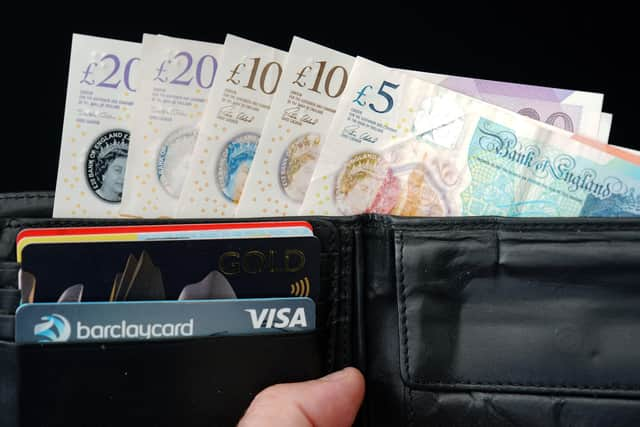

Then came cashless systems, self-service checkouts, and virtual meetings. Each has made life easier. But together they have created a landscape in which human interaction is no longer woven naturally into daily life. It is something we must choose. When we remove the smile at the till, the brief chat with a stranger and the shared moment of recognition, we remove more than inconvenience. We remove some of the texture of being human.
Fulfilment does not come from speed. It comes from connection and kindness, from the simple reassurance of being acknowledged by another person.
Last week, while doing my weekly shop, I saw a mother in a wheelchair attached to a trolley. Her daughter, I presume, was guiding her through the aisles, and in the trolley were more than two dozen bottles of water. I smiled and asked, “Mum, are you taking all that water?”
She smiled back and said, “Should I share?”
I laughed and told her no, and she laughed too. Her daughter thanked me for stopping. I told her that I used to shop like this when my dad was in a wheelchair and added, “Isn’t it a magical experience for the favourite child?”
It was a tiny, unplanned moment, yet three human beings connected. No app facilitated it, no algorithm predicted it.
We are fortunate in the North as we still chat. Yet I increasingly see people walking towards me with their heads lowered, eyes fixed on screens, unaware of the world around them. They do not look up, smile, or greet. They are present in body but absent in spirit. Is this becoming the new norm?
This week I deleted my Facebook and Instagram accounts. It may not be forever, but it was a conscious act of reclaiming space. My work requires me to be online, but my work is about people, conversation, interaction, and solving problems together. I do not want my attention siphoned away by platforms that encourage performance rather than presence.
We cannot go back. Technology has transformed lives in extraordinary ways and artificial intelligence will take this to another level. But progress must not come at the cost of seeing a smile or a tear. We must find ways to embrace innovation without surrendering our humanity.
Ease and convenience should not come at the cost of being present and respectful. I am surprised that the Speaker of the House of Commons has not banned the use of mobile phones in the Commons. I see backbenchers looking at their phones during key debates. What kind of example are they setting for the rest of us?
When Boris Johnson said in his resignation speech, “when the herd moves, it moves,” there was an uncomfortable truth in those words. We absorb language and then absorb it into our behaviour. What was once considered disrespectful can quietly become normal. Picking up a mobile phone at the dinner table may be acceptable to some, but should it be?
Progress must come, but going on autopilot is not an option. We must find ways to create contact, to serve and to be present rather than assume technology will suit everyone. A card payment on a phone may be effortless for many, but I wonder whether it will feel quite so effortless to a 99 year old.
I do not want to die in a contactless society, I am fortunate that my dog is a great ice breaker, but I think of those who are totally alone.
Daxa Manhar Patel is a leadership coach, author and solicitor.