
Assisted dying: Why the NHS should not be entrusted with administering death - Dr Nadia Khan
With the assisted dying Bill Committee now concluded, and the legislation’s fundamental safety and workability now increasingly exposed, one awful irony has become crystal clear.
Wrongful deaths will be signed, sealed, and delivered by the NHS via the very professionals that have dedicated their lives to safeguarding against the premature death of people at their most vulnerable.
Healthcare professionals of all backgrounds are deeply inspired by the values of caring and healing for the sick and dying. No-one goes into healthcare for the money. It is a vocation - a calling - to serve those in need of care.
For some this innate desire to save lives and alleviate suffering is inspired by events in their personal lives, for others still it comes from their faith. That’s why the NHS has one of the most diverse workforces in the country.
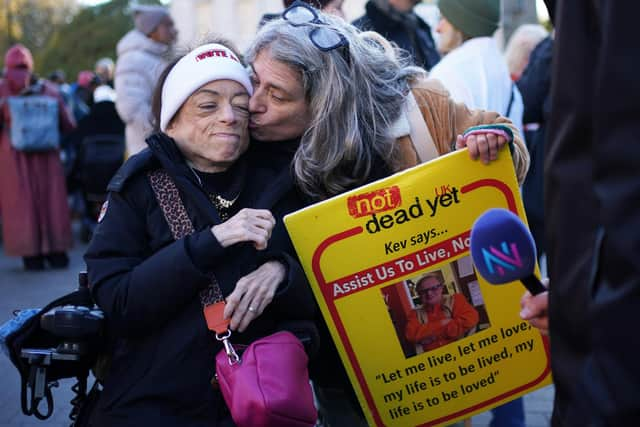

It is also why many organisations, including the British Islamic Medical Association (BIMA), recognise the inherent threat that assisted dying poses in eroding these core, shared, values of the medical profession – which, in fact, act as an additional safeguarding layer against individual misuse of the power differential that is inherent within caring.
Professional codes of conduct and ethical frameworks have evolved and exist because of the collective insight and honesty to acknowledge that despite training, skill and experience, we as doctors are not immune to error or fallibility of judgment – yet are still entrusted with the power of life, and now soon to be, quite literally - death.
The unambiguous ethical principle of do no harm in medical practice is imbued with the notion that all life, no matter how limited, restricted or even diminished, is worth the time and effort to move towards a state of healing, or at the very least, comfort that, when it comes down to it, people’s lives should be seen not just through the lens of economic productivity or burden and cost.
Any legislation that compromises this moral safeguard risks us all by disrupting the very nature of healthcare. Doctors will be required to not only think of saving lives, but how to take it. It is a fundamental altering of the social contract with our healthcare institutions. The desire that patients have for control over their lives and deaths is understandable – but the weak scaffolding around this bill only provides the illusion of choice and control.
Such a seismic shift in the core principles of our country’s much loved healthcare system deserves better discussion and more scrutiny, not just a few hours of debate by MPs. I agree with Cardinal Nichols, President of the Bishops’ Conference and Archbishop of Westminster, that this is deeply irresponsible.
Healthcare scandals highlight the fallibility of institutions and human error intrinsic to the real world outside theoretical debates in Parliament. If we, as a society, outlawed capital punishment because we could not trust the judicial system to never make a mistake, and that the risk of the wrongful taking of even one life was too great to bear – then how can we give the power of death to institutions and people that have been shown to come up short time and again.
One such example was the Liverpool Care Pathway, a well-meaning approach to improve end of life care that reduced over time to mere processes that substituted nuance, careful judgement and well-placed care.
This led to patients suffering days of dehydration, or to be left sedated, unable to even ask for food or drink. This all without the additional pressures of impending privatisation and being measured on success metrics of the bottom line.
The public trust in healthcare institutions and medical professionals is fragile at best, and these scandals highlight the importance of transparency, accountability and ethical standards in maintaining that trust.
We have already seen the ‘safeguards’ for assisted dying reframed through the committee process and it is likely that the parameters for eligibility for assisted suicide will increase in ambiguity after the legalisation has passed, as has happened in other jurisdictions.
By that time, it will be too late - when the definition of "eligible" becomes ambiguous - it will only add to the risk of ‘miscarriages of assisted death’ taking place.
Another key medical ethical principle is justice and is a tightly held value in any civilised society.
Yet the other irony of assisted suicide is that well-meaning proponents cannot see, or will not acknowledge, the multi-faceted layers of inherent injustice embedded within its applied practice.
When the inevitable healthcare crises and inquiries into assisted suicide abuses arise – and they will – British society’s deep-seated commitment to justice will demand answers. Doctors and lawmakers alike will be forced to justify how assisted suicide was allowed to take root under their watch – to those they swore to protect, to their constituents and to their own consciences.
Dr Nadia Khan is a Palliative Medicine Consultant in the West Midlands and is Spokesperson for the British Islamic Medical Association.