
Bold political moves needed from the Labour Government not tinkering around the edges - David Blunkett
Happy New Year. Well, I'm not entirely sure why I'm using the term ‘happy’ because in the political arena, it doesn't look too promising. But for some reason I'm optimistic.
My earlier misery came as Donald Trump was elected, once again, as President of the United States.
Then, in Germany, a vote of no confidence in the German Coalition triggered an election to come in February, which could end up with the far right AFD party, with substantial neo-Nazi roots, coming second.
Equally, I was a little bit pessimistic about my own government’s chances of reversing its unpopularity. Uniquely, in terms of modern politics, they have built up a degree of antagonism within the first six months of having been elected.

The truth – and it's always been the same – is that people remember what they don't like and discount the positive. That is, if they hear it at all.
Not that Keir Starmer and those around him are free of blame. If you start off with doom and gloom, and what I described as ‘miserableness’, it's not surprising that you create a negative aura.
By the time the realisation dawned that the pessimism message had gone too far, it was a little late. The rush to assure the international markets that Labour was going to ‘balance the books’, and follow economic orthodoxy led to the peremptory decision to take away the Winter Fuel Allowance, which had been put in place by Gordon Brown on the back of a mishandled State Retirement Pension increase almost 25 years ago.
Perhaps if the money raised from the withdrawal of the fuel allowance had been ring fenced for social care and palliative care, the politics of the decision might have shone through, and the sting taken out of the political attack?
Very early decisions can have long-term ramifications, and even if there is a clear rationale for the decision being taken, its logic is more in the minds of Treasury officials than it is in the daily lives of tens of millions of people who, after all, have a vote.
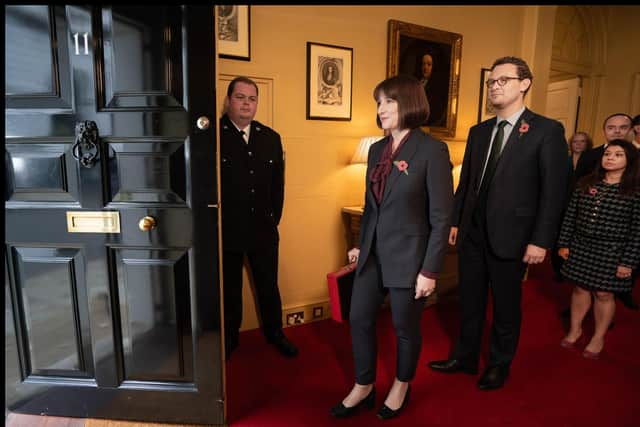
Rachel Reeves’ full budget on October 30 was economically sound and on the day, well presented. There was not, however, a build-up narrative, other than how desperately bad things were. After all, it could have been pointed out that had the Tories not chopped four pence in the pound off Employees’ National Insurance, costing the nation £20bn, the restoration through increased Employer National Insurance would not have been necessary. But in this topsy-turvy political world resentment is almost instantaneous.
My optimism for the future is based on a belief that those around the Prime Minister will start concentrating on who is inspiring, energised and who is a changemaker?
The lesson of what is happening in politics across the world is not only that the incumbent is going to get a drubbing (just as the Tories did in July), but something much more profound. If governments in democracies don't deliver fundamental change, they'll find themselves at the receiving end of voters’ ire.
I might not be forgiven for saying so, but it seems to me that tinkering at the edges, with milestones announced by Keir Starmer in early December, doesn't hack it. What’s required, and – please God – what will come, is bold political moves.
Nothing that Labour has achieved so far, or has promised, is to be dismissed. I'm in favour of the moves that have been made and some of the progress that's been achieved – badly presented as it has undoubtedly been. My point is not that the new government isn't doing good things, but that it's not grasping the real nettle.
With over 900,000 16 to 25-year-olds not in education, employment or training and with one in five pupils out of school at any one moment in time, something seismic has to change.
With rundown neighbourhoods: shabby and uncared for, and crying out for help, substantial resources need to be pumped into local government and community initiatives if there is to be genuine, significant change.
I can hear critics now saying ‘well, what did you achieve?’. I look back and yes, I could have done more. But getting 250,000 unemployed young people into a job and a future wasn't a bad start. 400,000 primary school children reaching the required level for reading, writing and arithmetic at the age of 11 was at least a step forward. Creating Sure Start – which the Institute for Fiscal Studies now says made an enormous difference to the lives of those who experienced those early programmes before it was abolished by the Coalition in 2011 – is testament to real change.
All these things I was responsible for, but so much more was achieved by my colleagues: bringing the National Minimum Wage, transforming the state of social housing and (here I go again) the improvements we made in bringing down, dramatically, crime on our streets and burglary in our homes.
It can be done. It’s often against the odds with the tide running against you.
David Blunkett is a Labour Party politician, and served as the MP for Sheffield Brightside and Hillsborough.