
Brexit has harmed the economy, dynamic alignment with the EU is much needed - Will Kemp
Ten years on from voting in June 2016 to leave the European Union amid claims Brexit would boost UK growth, lower immigration and increase sovereignty, it is right to evaluate its impact, especially since the Government is proposing a ‘dynamic realignment’ with the EU and polls show 63 per cent of voters want to rejoin.
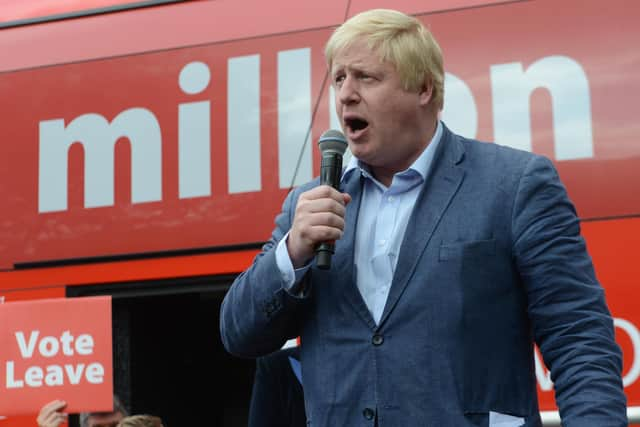
Firstly, economic growth. Prices have risen since leaving the EU in 2020 and a recent study by the Stanford Institute for Economic Policy Research establishes Brexit has reduced Gross Domestic Product (the value of goods and services produced by a nation) by up to 8 per cent. This means a loss of £224bn each year and £90bn less tax revenue for public expenditure (on health, education, defence and so on), thus contrasting with the Vote Leave campaign’s claim that Brexit would bring about a surplus of £18bn and therefore an extra £350m a week to the NHS.
Moreover, the Stanford study estimates that Brexit’s drag on growth will accumulate over time, with GDP falling by up to 10 per cent – the figure The Financial Times put on the likely hit from Brexit in 2016 but which Vote Leave dubbed ‘Project Fear’. Given national debt is £2.9 trillion, which severely limits economic policy options – as Liz Truss discovered in 2022 – the Bank of England considers Brexit will have a ‘negative impact’ on UK growth ‘for the foreseeable future’.
Next, immigration. In 2024 Cambridge Econometrics established Brexit had caused the loss of 1.8m jobs. This led to wage rises to attract staff (especially in agriculture, health, construction and the south-east) and 1.2m immigrants to the UK in 2022 alone – with most coming from further afield than Europe, with dependents, and settling here permanently. This too contrasts with Vote Leave’s claim Brexit would create ‘only tens of thousands’ of immigrants, and shows high immigration was never the fault of the EU.

Lastly, sovereignty. EU law supersedes member states’ law to prevent them by-passing shared commitments and avoid unfair competition within the Single Market. Despite the existence of MEPs and member states’ right to veto legislation contrary to national interests, the ‘supremacy’ of EU law led to some Britons feeling sidelined by Brussels, hence Brexit. But since nearly half our trade is with the EU, and goods and services not aligned with its standards are effectively unsaleable there, and selling them elsewhere raises shipment costs, our ‘Brexit freedoms’ are really quite fanciful – as shown by the 6.4 per cent fall in UK exports since 2020 and 20,000 small businesses going bust or stopping trade with the EU.
Brexiteers blame the ills of Brexit on Boris Johnson’s bad deal with Brussels, but the real problem with Brexit is simply Brexit: it was a flawed idea because the EU provides freedom of trade for member states and related ‘economies of scale’ (lower unitary costs as output rises), so ‘taking back control’ always meant erecting trade barriers with half our trading partners – and therefore disrupting supply chains and raising costs for British producers and consumers. A bit like a cricket team batting ‘its way’ regardless of the match situation and conditions.
As such, Brexit was an own goal based on false premises and misconceptions that has resulted in useless ‘freedoms’ but destroyed nearly a tenth of our wealth, thus fuelling inflation and immigration, and preventing growth. We therefore need to stop the damage by seeking economic realignment with our biggest trading partner.
Will Kemp studied Economics at Cambridge University.