
Britain is showing that wealthy nations can flourish while transitioning to clean energy - Keshab Bhattarai and Hippu Salk Kristle Nathan
This year’s World Environment Day took its cue from nature itself. The theme — ‘Inspired by Nature. For Climate. For Our Future’ — sits comfortably alongside that of the United Nations Development Programme’s forthcoming Human Development Report, which focuses on how planetary systems shape the future of human development, and how human development, in turn, can ease the strain on those systems. Against this backdrop, one country deserves more attention than it has received: the United Kingdom.
Since 1990, the UNDP’s annual Human Development Report has ranked the world’s nations on the Human Development Index (HDI)—a composite measure of health, education, and income. In the most recent rankings, Iceland leads the list of 193 countries, while the UK is in 13th place. The HDI has long been criticised as anthropocentric, blind to the environmental cost of the human progress. As the Mongolian academic Chuluun Togtokh argued in his 2011 commentary in Nature, “Time to stop celebrating the polluters,” the gas-guzzlers tend to crowd the top of the table risking the measure to reward the polluters.
The UNDP responded. In 2020, marking the 30th anniversary of the report, it introduced the Planetary Pressures–Adjusted Human Development Index (PHDI), which discounts a country’s HDI by its per-capita carbon emissions and material footprint. In its debut year, the UK came third, behind Ireland and Switzerland. Since 2021, however, the UK has held first place every year — a feat it repeated in the latest edition.
The scale of that achievement only becomes clear when one checks how far others fall once their environmental ledger is opened. Of the 12 countries above the UK on the HDI, all but Sweden slip down the table when the planetary adjustment is applied. Iceland, Norway, and Switzerland — the top three on HDI — drop 40, 49 and 41 places respectively. Australia tumbles 59 places, Belgium 76, and Singapore an astonishing 90. The UK, by contrast, climbs to the top.
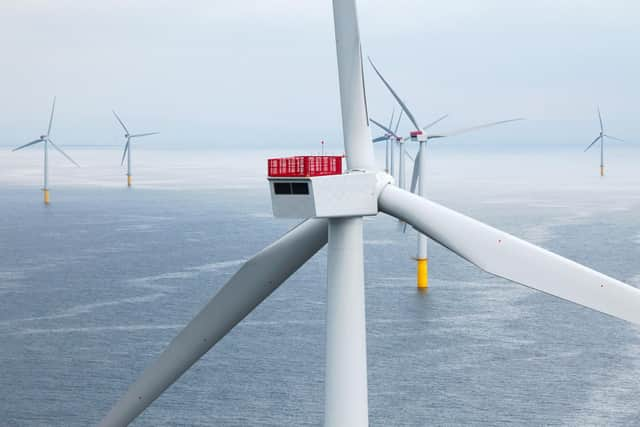

So what has Britain done differently? The first answer is electricity. Britain has executed one of the fastest decarbonisations of any major economy. In 2024, the country closed Ratcliffe-on-Soar, its last coal-fired power station, ending 142 years of coal generation that had begun with Thomas Edison’s Holborn Viaduct plant in 1882. Coal, which still produced 39 per cent of British electricity in 2012, was reduced to just 2 per cent by 2020, and now produces none.
In its place stands the world’s largest fleet of offshore wind farms. Hornsea 2, off the Yorkshire coast, was for a time the biggest in the world; Dogger Bank, now coming online in stages in the same waters, will be larger still. Renewables — wind, solar, biomass, and hydro — supplied more than half of Britain’s electricity in 2024, with gas providing most of the rest. For Hull and the Humber, this is not an abstract national story. The Siemens Gamesa blade factory at Alexandra Dock, the Green Port Hull development, and the cluster of supply-chain firms along the Energy Estuary have turned the region into the manufacturing heart of the offshore-wind revolution and a cornerstone of the UK’s low-carbon record.
The second answer is how Britons travel. With a dense and heavily used rail network — over 1.6 billion passenger journeys a year before the pandemic — the UK leans on trains in a way many wealthy countries do not. London’s Underground, Overground, Elizabeth line and one of the world’s largest bus fleets move millions every day, mostly on electricity. The capital’s Ultra Low Emission Zone, expanded London-wide in 2023, has measurably cut nitrogen-dioxide pollution and accelerated the switch to cleaner vehicles. Outside London, cities from Birmingham to Bristol have followed with their own clean-air zones.
Cars, too, are changing. Electric and plug-in hybrid models now account for more than a quarter of new vehicle sales, supported by one of Europe’s densest public charging networks and a 2035 deadline for the end of new petrol and diesel car sales.
The third answer is policy and it is older than many people realise. The Climate Change Act of 2008, passed with cross-party support, made Britain the first major economy to set legally binding emission-reduction targets. It created the independent Climate Change Committee, the rolling system of five-year carbon budgets, and, in 2019, the legally enshrined commitment to reach net-zero greenhouse-gas emissions by 2050.
Between 1990 and 2023, the UK roughly halved its territorial emissions while its economy grew by more than 80 per cent - a decoupling that few large economies can match.
Britain’s top placing on the PHDI will not solve the climate crisis. However, it shows, against a chorus of pessimism, that a wealthy society can make different choices and still flourish.
Keshab Bhattarai is a senior lecturer in economics at the University of Hull and Hippu Salk Kristle Nathan is a development researcher.