
Britain’s lack of firepower has become painfully apparent during the Iran war - Andrew Vine
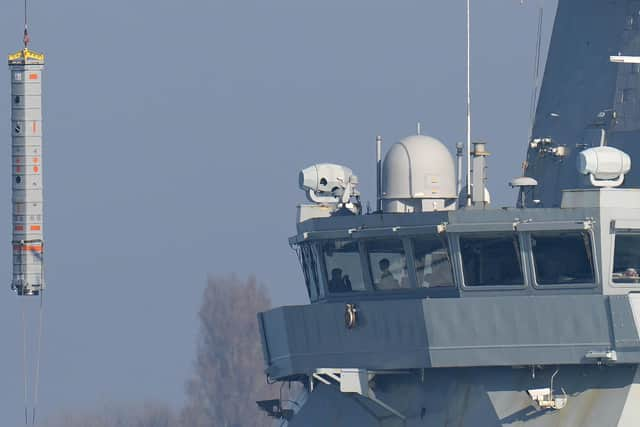
In the next few days, the Royal Navy destroyer HMS Dragon is due to arrive off the coast of Cyprus to provide protection for the two British military bases on the island.

Her presence acts as a reassurance for everybody there as the conflict in the Middle East rages on, and there is absolutely no doubt that Dragon’s crew will serve with bravery and professionalism in the face of whatever awaits them.
The good wishes - and hopes for a safe return - of everyone at home should go with this ship, as they go to the RAF personnel flying missions to shoot down drones and missiles targeting civilians.
But the delayed deployment of a solitary warship and a handful of warplanes dispatched to Qatar to take defensive roles in a conflict that has already been intensifying for a week and a half underlines an uncomfortable truth about Britain’s military capability.

It is that our armed forces have been hollowed out due to decades of neglect by both Labour and Conservative governments, to the point where Britain’s historic status as a military power to be reckoned with is no longer deserved.
The state of the navy is a painful example of this. Britain has only 13 surface combat ships, a paltry force to begin with, but one which has been further undermined by maintenance problems and shortages of trained personnel to crew them.
Of our six destroyers, only three are currently capable of being deployed.
Four decades ago, when a naval task force sailed from Britain to recapture the Falkland Islands from Argentina, which had invaded, it included 43 warships and even with those numbers the battle to retake the territory was perilously close.
Below the waves, our fleet of four ageing Vanguard nuclear submarines has also been beset by maintenance issues, which means a reduced number of vessels are having to undertake patrols much longer than they or their crews should, with some deployments at sea lasting for seven months at a stretch.
The notion of Britannia ruling the waves now exists only in the anthem sung at the Proms in the Royal Albert Hall every summer.
On land, things are no better. As Europe has been forced to consider how it would respond if Russia’s aggression extends beyond Ukraine, Britain’s lack of firepower has become painfully apparent.
Our army is at its smallest for 200 years and would struggle to field a large-scale combat force. Its weaknesses are aggravated by shortages of heavy guns and armoured vehicles.
We’re undoubtedly capable of putting on a jolly good ceremonial show at state occasions when massed ranks of troops march to the accompaniment of stirring military bands, but pageantry doesn’t deter aggressors.
Successive Prime Ministers since the end of the Cold War saw a drastic shrinkage in Britain’s armed forces and have continued to talk big about our military prowess, but the reality is that we’re all bark and no bite.
First Ukraine, and now Iran, have underlined the dangers of a new and unpredictable world order. The isolationism of the United States under Donald Trump has made it explicit that Nato can no longer rely on its support in the event of conflict.
That makes it essential for Britain to have strong armed forces on land, sea and in the air, to act as a deterrent, safeguard our territory, keep trade routes secure and contribute to wider European defence.
Yet again and again, governments ducked out of these responsibilities after the collapse of the Soviet Union appeared to end the West’s need for substantial armies, navies and air forces.
Slowly but surely, our armed forces were either allowed to dwindle or weakened by short-term thinking.
Tony Blair and David Cameron both cut programmes to replace ageing warships, and a succession of so-called strategic defence reviews under Labour and the Conservatives resulted in the shrinking of armed forces.
And now we’re left scrambling to repair the damage, at least partly because of Trump’s open contempt for America’s longstanding European allies.
The government has pledged to increase defence spending from its current 2.4 per cent of gross domestic product to three per cent by the end of this parliament, but whenever it is pressed on how that will happen, avoids answering.
That isn’t fooling anyone. The public knows the increase will either involve paying more tax or cutting spending elsewhere, just as it does for funding everything from the NHS to fixing potholes in the roads.
Defence is a hard sell for any government, but the disgraceful and decades-long mismanagement of our armed forces cannot be allowed to continue.