
Burnham’s cost of living measures draw attention to the problematic trajectory Britain is on - Ismail Mulla
I must confess that I’d thrown in the towel many moons ago regarding the cost of living crisis. Supermarket shops were reduced to the basic essentials and treats have been off the menu other than for those rare special occasions, occasions that are only getting rarer.

Like many families, we’ve done everything possible to protect ourselves. From shopping around at various supermarkets for the essentials to get the best possible deal, after surmising that the switch to just the German discounters wasn’t yielding the same benefits it once did, to being frugal with car journeys.
I’m guessing that there will be many families now asking where do we turn to next? Even previously well-to-do middle income families are having to tighten their belts, nevermind those who are having to go without even the basic essentials.
That’s the problematic trajectory that this country is on. More and more hard working families are going to end up with nowhere to turn to.

For every perennially online parent posting about their latest foreign jollies, there are several others having to make do with no getaway this summer. Instead they are thinking of how they can stimulate the minds of their children over the summer holidays without dropping into the red.
Normally, thrift would come with its rewards. A better tomorrow. Less debt in the future. More spending power to enjoy experiences down the line. Or even an investment in retirement. That is increasingly not the case. Instead it is a case of survival.
Indeed research by the Joseph Rowntree Foundation (JRF) suggests that the number of households unable to afford basic essentials such as food and heating is at a record high.
An estimated 7.4 million low-income UK households were not able to afford at least one essential item in the last six months, the JRF found, the highest number since it began running its cost-of-living tracker survey in 2021 and is an increase from 7.1 million a year ago.
Its analysis shows that more than half of households not on means-tested benefits such as universal credit (UC) are struggling, 53 per cent, up from 47 per cent, two years ago.
That is a grave injustice. At a time when the welfare bill is spiralling out of control, those wanting to just earn their way are the ones that are being punished. The scales are weighted against them, regardless of how hard they try.
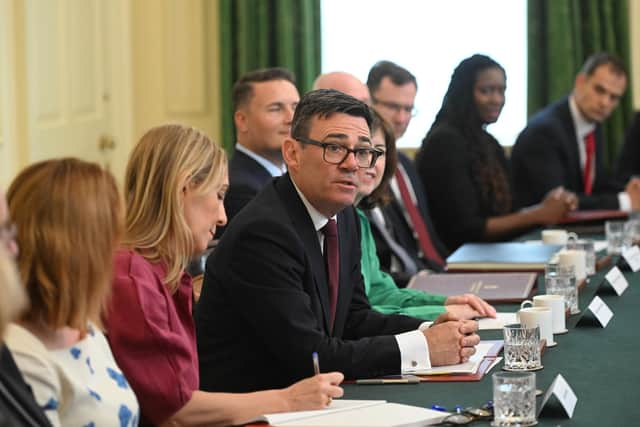
It’s little wonder then that new PM Andy Burnham’s first cost of living policy announcement barely made a ripple. From October 1 electricity bills will be VAT free, saving households about £45 a year. The £850m tax cut on electricity bills sounds enticing on paper but lets boil this down to what it means for households.
The equation is simply an extra 86p per week in the pocket. It might just get you a pint of milk, if the supermarkets haven’t ramped the cost of all the other essentials.
A lot of people are jaded at the constant pressures that they’re encountering. Unless the Government finds a way of putting £45 a month into the pockets of families, while tackling inflation, then the pain and suffering will continue.
That will only fuel resentment towards this Labour Government and Burnham will be in no position to even start realising his so-called 10-year plan.
To an extent, you have to feel sorry for the Government. I do believe that Burnham wants to do what’s right for families. But we’ve taken a very wrong turn as a country since the pandemic. Inflation became sticky inflation. Cost pressures increased on businesses. And ultimately the ordinary people ended up paying the price.
In the not so dim and distant past, even an administrative role allowed people to earn a salary needed for a comfortable life. Now we’re at a stage where even managers are looking over their shoulders.
The idea of reindustrialising Britain may be welcomed by some but that is inevitably going to take time.
It’s not all doom and gloom for Burnham’s Government. If they want to wrestle back the narrative of decline then taking control of the failing water industry, for instance, might win voter confidence. Instead of trying to find pennies at the back of the Treasury’s sofa, the Government could be bold and reform the energy market, decoupling electricity from gas prices.
Unless Burnham is willing to upset the apple cart then families will continue to be impoverished through no fault of their own. Until then measures that put a few pennies into people’s pockets is not going to cut through.