
Climate change is not theoretical anymore, it is Yorkshire’s new reality - Arnold Warneken
It’s been a bitterly cold May in Yorkshire. Grey skies, cold winds, heating back on. And because it doesn’t fit the stereotype people expect from ‘global warming’, some will say: ‘So much for climate change’. But this is climate change.
Because climate change doesn’t mean that everything gets steadily hotter. It means weather becomes more unstable, more extreme and more unpredictable. Scientists have warned for years that a weakening and more erratic jet stream could produce exactly the kind of strange seasonal swings we are now seeing: heatwaves one month, unseasonal cold the next.
And here in Yorkshire, we can already tick off the consequences one by one.
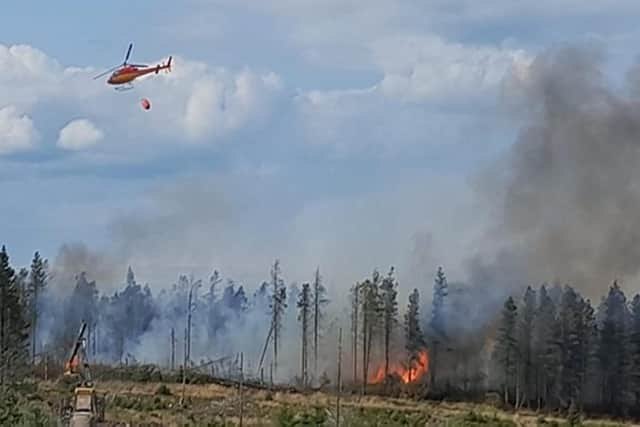
Flooding? Tick. Wildfires? Tick. Coastal erosion? Tick. Extreme heat? Tick. This is not theoretical anymore – it’s Yorkshire’s new reality.

That’s why the People’s Emergency briefings happening across the country matter. Whatever your politics, I’d strongly recommend going to one. Because the debate has moved beyond whether climate change exists. The question now is whether we are prepared to deal with it. The evidence is no longer coming only from environmental campaigners or climate scientists. Even the insurance industry is sounding the alarm.
This year, Aviva published its Building Future Communities 2025 report, warning that climate risks across the UK are escalating rapidly. The report identifies flooding, extreme heat and wildfire risk as some of the country’s biggest emerging threats.
For Yorkshire, the warnings are stark. York itself is highlighted as a national case study because of its growing flood risk. Aviva warns that by 2050, the number of properties facing surface water flood risk in York Central could rise by 30 per cent, affecting an additional 2,375 properties. The report also warns that flood risk across England could rise by 27 per cent by mid-century, potentially putting 8 million properties at risk.
And then there are the wildfires. A parliamentary inquiry has now been launched into the growing wildfire threat across the UK after 2025 saw the highest number of wildfire incidents ever recorded. The National Fire Chiefs Council says this year has already surpassed the previous record set in 2022. We have already seen major moorland fires in North Yorkshire, including near RAF Fylingdales. Our moors are beautiful, but after long dry spells they become tinderboxes waiting for a spark. The Climate Change Committee says extreme-weather wildfires are now six times more likely because of climate change. And frankly, this part is not rocket science. More heat plus more drought equals more fires.
Meanwhile, our close neighbour in Holderness has the fastest eroding coastline in Europe, losing around two metres a year to the sea. Entire stretches of Yorkshire coast are literally disappearing.
So we know there's a problem. And deep down, we know why it is happening — even if many of us dislike the answer and keep searching for easier alternatives.
The real question is: what are we going to do about it? And that’s the big challenge for North Yorkshire Council.
A climate emergency has been declared. But too often, climate action is still treated as a side issue rather than the foundation of decision-making. North Yorkshire Council’s climate policy sits isolated with influence limited to ticklist formalities, while the rest of the system carries on unchanged.
That approach no longer works. Climate resilience cannot be a side project. It has to shape everything: planning, transport, housing, drainage, economic development, flood prevention and land management.
As my Green colleague Councillor David Noland recently pointed out, we currently operate with a contradiction at the heart of policy. On one hand we tell people to plant trees and on the other, development rules still allow mature trees and natural landscapes to be removed far too easily. Development and nature are not enemies; good design exists. Occasionally we even get a glimpse of it.
The proposed new 3,000-house settlement Maltkiln, for example, originally came wrapped in the language of a “garden village” vision. But too often these ambitions are gradually chipped away until what remains is simply another housing estate with less greenery and more pressure on infrastructure. Yorkshire deserves better than that.
Imagine if councils genuinely used every lever available to them: planning policy, procurement, flood management, green infrastructure, transport and economic development all pulling in the same direction. Development could enhance landscapes rather than erode them. Economic growth could be built around resilience rather than short-term extraction. That creates a virtuous circle: attractive places, stronger communities, greener infrastructure, better investment and more sustainable business growth.
Yorkshire has the expertise, the landscapes and the communities to lead on climate resilience. But first we have to stop pretending this is somebody else’s problem, or something that belongs in the distant future.
Arnold Warneken is a Green Party councillor on North Yorkshire Council.