
Community assets are important for our towns but can the rot be stopped? - Ismail Mulla
Walking around Dewsbury town centre makes the heart sink. I remember as a young boy the delight of going out with my parents on a Saturday to get our weekly shops. Wandering from one market stall to the next. The eclectic sights, sounds and smells. To say it is now a ghost of its former self would be unfair to ghosts.

Bookies, vape shops and boarded up properties are commonplace. The diversity of the market stalls has disappeared with many of them sitting completely empty.
To compound matters the whole town is being choked off by roadworks. No one can really get in or out without getting stuck. The Transpennine Route Upgrade has led to road closures. Understandable. What is not understandable is utilities companies digging up different roads at the same time. Talk about making a place that is already struggling to provide the welcome it once used to pride itself on even more unwelcoming.
This isn’t a lament or an attempt to kick a market town whilst it’s down. Rather it is a depiction of the reality that many communities face.

The Government has obviously identified this issue. Its Pride in Place programme will look to provide communities new powers to seize boarded shops, save derelict pubs and block gambling and vape shops on their high street.
The Ministry of Housing, Communities and Local Government (MHCLG) recently said: “We want more communities across the country, including Yorkshire, to take ownership of their cherished local assets, but the current system is failing them.
“Our new community right to buy powers will make this a reality, helping communities thrive and ending the blight of empty shops on our high streets, as well as a £5bn investment into communities.”
However, there is a question mark as to whether this will be enough and where the cash is going to come from. The problem really is that many towns have suffered so badly from decay that it’s hard to see them ever being restored to former glory.
There are those who argue that town centres could become an answer to the country’s chronic housing shortage. However, that does not meet the challenge of delivering shared spaces where people have a reason to go and end up interacting with one another.
The importance of community assets should not be underestimated. The widespread discord seen across the country can be attributed to people seeing their communities gutted.
Town halls falling into decay, pubs closing, the village green being built over. All of these are threats to British identity, an identity that the majority of people in this country care deeply about and want to preserve.
That is why those communities that do take it upon themselves to protect their local assets deserve immense credit. Not only are they preserving important assets but also helping safeguard a sense of community. We should celebrate all those who have played a role or tried to play a role in protecting community assets.
However, the issue with expecting communities to take up the slack is that some are better placed than others to take over these assets.
Ed Wallis, director of policy for Locality, a membership network, supporting thousands of community groups nationwide with resources, advice and campaigns, told The Yorkshire Post last week that “there’s a real risk that affluent communities might have more opportunities to raise the funds than those in more disadvantaged neighbourhoods”.
He added: “Community ownership is absolutely crucial. Research shows there are nearly 6,000 public buildings and spaces sold off by local authorities – things like playing fields, community centres, libraries. When they are gone they are gone forever.
“They are spaces at the heart of their communities. It’s where people come together, access vital services, and support each other. It’s that sense of power and ownership. It’s absolutely crucial that communities get the right powers and support.”
A big piece of the puzzle is funding. With the best will in the world, there is unlikely to be change in fortunes without money.
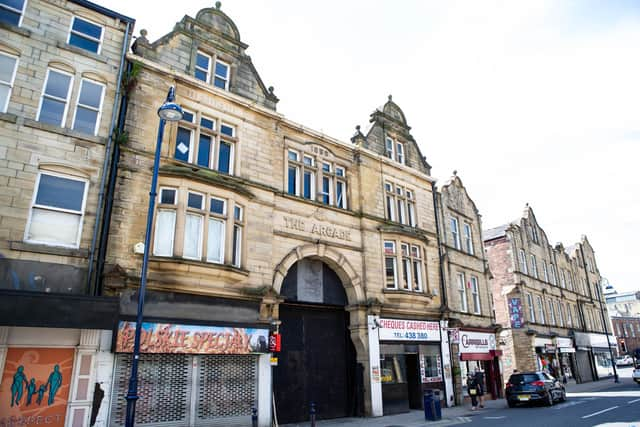
Back in my hometown of Dewsbury there is a ray of hope. The Grade II listed Dewsbury Arcade is set to reopen in the spring of 2026. The Victorian shopping arcade is currently undergoing a £10m revamp.
Once refurbished, the Arcade will be a community-run shopping centre. It’s a building that many people still have an affinity for. So here’s hoping that it can be a catalyst for change.