
Councillors voted out at the next local election should also remember their positive contributions - David Blunkett
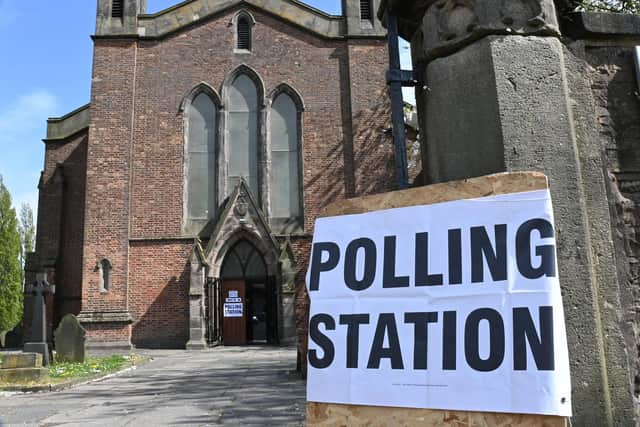
In three weeks’ time, the first session of this Parliament will be prorogued until the King's Speech on May 13. During that recess, there will be significant elections right across Britain, with many local authorities having all the councillors up for election, whilst in places like Leeds and Sheffield, one third of members will put their future on the line.
Outside Scotland and Wales, where the nationalists are expected to do extremely well, the battle in England will be, in many places, a five-way contest. Labour, Conservatives, and the Liberal Democrats will be challenged from the populist right in the form of Reform UK, and on the left from a regenerated Green party.
The vagaries of political fortunes have set me thinking about my own contribution over a lifetime in public service. Being in a position of authority and responsibility, no matter how minor, begs the question as to whether you are ‘still managing to deliver change’.
This question was easy to answer in the eight years I was in Tony Blair's Cabinet. Being in government allows you the unprecedented opportunity to make things better for the people you serve. Learning how to actually achieve something, rather than filling a space, is clearly a fundamental tenet of success. Having something to celebrate many years later, however, can be tricky because so much of what you do might easily be undone by others.

In my case, some of the foundations I helped to lay are still with us. The massive improvement in early years’ education and childcare provision; the surge in outcome in English and Maths and for primary school children more generally; and greater access to higher education stand out as things which have lasted.
But the Sure Start programme – which was all about nurturing children from the moment they were born, working alongside parents and developing a community-based approach to overcoming inequality – took a terrible knock from 2010 onwards in the years of austerity.
This was also true of the Child Trust Fund. That programme was abolished in 2011, but there are still hundreds of thousands of youngsters who are entitled to draw down an important cash bonus who have not yet done so, despite having passed the age of 18.
Many things in the Home Office for which I was responsible have come and gone, but others, like the massive reduction in crime and unauthorised migration across the Channel, are still things that I can remember with pride.
So, what about the present moment? In this last session of Parliament, what have I managed to do in the House of Lords, other than to act as voting fodder – often late into the night to pass bills that have come from the Commons?
In thinking about this, I have picked out some small nuggets. One is to have had an amendment agreed with the Government to ban parking on pavements. It might not sound earthshattering, but outside London and Scotland – which have had this power for many years – councils and the police have not been able to act.
This is not just about people with no or poor sight, for which such parking can be a lethal nightmare. It is also about mums with prams, people in wheelchairs or just pedestrians putting their life at risk on very busy roads. I doubt if anyone will remember precisely how this came about, but it is something to look back on.
Equally, on the Children’s Wellbeing and Schools Bill, I persuaded the government to accept an amendment that the Office for Standards in Education could inspect Multi-Academy Trusts and not just individual schools. This is important because Ofsted have had the power to inspect Local Authorities and Children's Services, but not the running of large numbers of schools which now fall into Trusts.
Sometimes as Lords we join up across parties. One example is the work that Lord Ken Baker – former Education Secretary under Margaret Thatcher – and myself were able to effect.
This time, to give appropriate freedom for University Technology Colleges (UTCs) to adapt the national curriculum.
Sometimes in the House of Lords, you can get the Government to rethink – not by moving specific amendments, but just by dint of a damned good argument.
So, what about those unsung individuals committed to make a difference at a local level. There will be many councillors on May 8 who find themselves out on their ear as the electorate take out their political frustrations on them.
Many of them should and will be able to look back positively on what they've done locally to make life better and in responding to the needs and campaigns of local people. Too many of them will not have had their successes acknowledged, or remembered, but, like me, they will know that they made a difference to the lives of those they served.
David Blunkett is a Labour Party politician, and served as the MP for Sheffield Brightside and Hillsborough.