
Delivering carbon capture at Drax Power Station will reduce the costs on reaching net zero - Bruce Heppenstall
It’s rare that we give much thought to turning the lights on. We press a button and the bulb comes to life. But the power that surges forward at the flick of a switch is right at the top of the new Government’s agenda.
The Labour Party has pledged to accelerate the decarbonisation of our electricity system and make it net zero by 2030 while also launching a new organisation, GB Energy, to support the rollout of renewable power.
Both of these initiatives could further transform the UK’s grid, turbocharge economic growth and play a critical role in delivering the country’s legally binding climate targets.
They also signal that we are on the precipice of a big phase of change, permanently removing polluting fossil fuels from our energy supplies sooner than expected and the state potentially becoming an electricity generator for the first time since nationalisation.
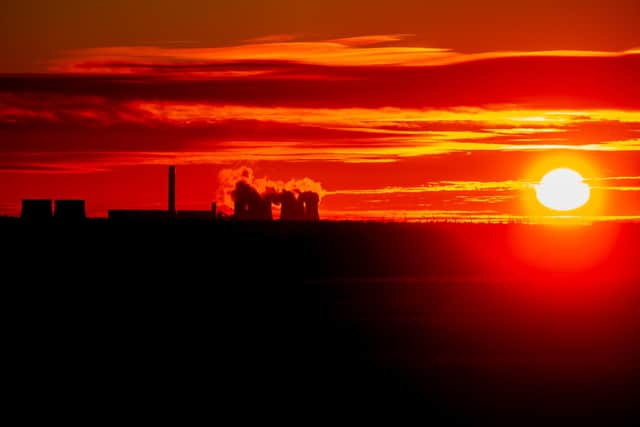

When I started in the power industry in the late 1980s this was inconceivable.
I have dedicated my career to supporting energy security. For 35 years, I have worked in this sector and while the overriding goal has stayed the same, there has been a genuine revolution in the way we generate electricity and I am excited about the one to come.
In the past, power came, largely, from the UK’s fleet of coal-fired power stations, including the plant I run today in Selby, Drax Power Station. Though Drax has subsequently been converted to generate energy with sustainable biomass instead.
As recently as 2013, nearly 40 per cent of the UK’s electricity came from coal, and this era will come to an end in October when the last power station of this kind stops generating.
The secure power coal delivered has been largely replaced by a surge in intermittent renewable generation, wind and solar, international interconnectors and gas power plants.
When I started in the sector, one of my first roles was assessing the chemical mix in the smokestack of a coal power station.
We focused on measuring for sulfur and nitric oxides, chemicals that harmed the o-zone layer and caused acid rain, and, at the time, we paid little attention to the levels of carbon dioxide the power station was producing.
Saying that today sounds almost unbelievable. But it is true. There was limited political and societal consensus or proper understanding about the impact of climate change, how our actions were contributing to it and what we needed to do to stop it.
The closure of coal power stations and the decarbonisation of our energy system has had a material impact on our country’s carbon emissions. In 2023, they fell to the lowest level since 1879. That is an incredible achievement that we can all be proud of.
However, shutting down these sites was not cost free. Doing so removed sources of jobs, skills and growth from local communities.
When I was growing up, I recall my grandfather, who was leader of Selby District Council, telling me about the importance of Drax Power Station to the local area. He spoke about the reciprocal relationship the plant had with the regional economy. I am proud that the site continues to have a strong relationship with North Yorkshire, employing hundreds of people and donating thousands to local charities and schools.
That is why Drax’s conversion to biomass was so important. Not only did it slash the emissions the power station produces, but we are now into our 50th year of operation providing security of energy supplies while continuing to serve the local community and national economy.
Drax has a solution to guarantee our power station can play these roles for the long term. What we want to do is install bioenergy with carbon capture and storage (BECCS) at the site. BECCS is the only technology which can deliver negative carbon emissions while also generating renewable power.
Our plans would see, what was once the UK’s largest coal fired power station, transform into the world’s largest engineered carbon removals plant, capturing CO2 emitted from the site’s flue and sequestering it permanently under the North Sea.
If Drax can deliver BECCS, it would be a powerful statement on the reinvention of traditional industries in a net zero future, so that they remain at the heart of their communities, creating and supporting thousands of jobs whilst combating climate change.
Our North Yorkshire BECCS project would be capable of removing up to 8 million tonnes of carbon dioxide from the atmosphere per year. That is equivalent to stopping all departing flights from Heathrow or taking three million cars off of the UK’s roads.
The first unit alone could deliver 80 per cent of the UK’s ambition for 5 million tonnes of engineered greenhouse gas removals by 2030 – no other negative emissions project in the country comes close to this.
Meeting climate targets is important and analysis from economic consultancy Baringa has shown that delivering BECCS at Drax Power Station will cost £15bn less to reach net zero by 2050 compared to other more complex measures.
At the start of this year, we were awarded planning consent for our BECCS project, but to begin preparatory work we need to work with the new government to agree the right support for the scheme, to enable our investment in this multi-billion pound project. The support we need includes the development of a bridging mechanism from the end of our current renewable support in 2027 to BECCS operations starting at Drax in 2030.
With this in place I am confident that we can transform the site to BECCS.
Bruce Heppenstall is Drax plant director.