
Did Hamas deliberately lay a trap for Benjamin Netanyahu to walk into? - Dr Jason Aldiss
When Hamas launched its brutal and shocking attack on Israel in October 2023, the world saw yet another eruption in a long, tragic cycle of violence. But as the dust refuses to settle, with Gaza reduced to rubble, international outrage shifting in unpredictable ways and global recognition of a Palestinian state inching from fringe to mainstream, one cannot help but ask - was this horror a spur-of-the-moment insurgency, or a meticulously designed provocation? And if so, to what end?
We must begin by being clear: the atrocities committed by Hamas were indefensible. Nothing justifies the mass murder of civilians - not history, not oppression, not ideology. But that does not mean we shouldn’t attempt to understand the motivations behind such violence.
Because Hamas, for all its fanaticism, operates from a strategic playbook, one rooted in a disturbing but intellectually consistent logic common among radical revolutionary and terrorist movements: that the ends justify the means — no matter how horrific the means may be.
In classical insurgent doctrine — from Mao to the mujahideen — there is a belief that violent acts must be more than symbolic. They must provoke. They must destabilise. They must render the existing order so intolerable that the population, or key international actors, shift their allegiances or outlooks.

In the Hamas context, this strategy is not new. But the October 2023 attack may have been their boldest and most Machiavellian application of it yet.
Consider the geopolitical landscape at the time. Benjamin Netanyahu, embattled by corruption charges, was clinging to power with the support of Israel’s most extreme right-wing elements. His government’s fragility was no secret — nor was the volatility that would follow any large-scale national trauma. Hamas may well have calculated that a spectacularly violent assault would yield a precisely calibrated overreaction — a response not just of defence, but of fury.
And they were right.
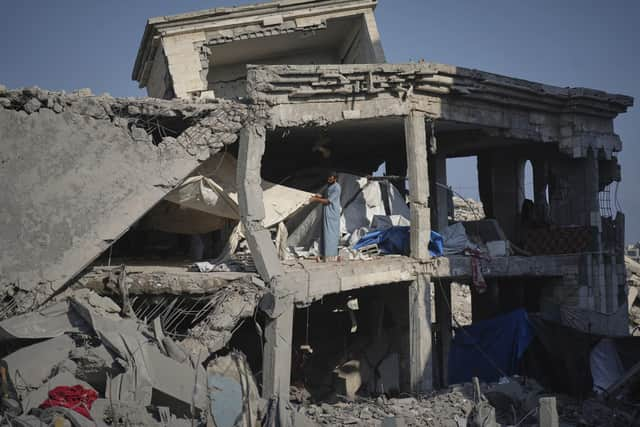
Israel’s response has been relentless and devastating. Gaza has become synonymous with human suffering on an unprecedented scale. The IDF’s military campaign has obliterated swathes of civilian infrastructure, fuelled accusations of war crimes and triggered a humanitarian crisis that now commands headlines across the globe. The moral high ground, once almost instinctively granted to Israel in the wake of Hamas' massacre, has eroded rapidly in the face of the scale and longevity of the Israeli response.
This erosion is not accidental. It is the strategic jackpot Hamas may have been aiming for.
In traditional Western logic, the idea that a leadership would willingly sacrifice its own people, its own land, for geopolitical gain feels unthinkable. But in the doctrinal worldview that drives groups like Hamas, martyrdom is not collateral — it is currency. Victimhood becomes weaponised. Catastrophe becomes leverage.
Could it be that Hamas — or at least its ideological architects — viewed the destruction of Gaza as an acceptable price for achieving the unachievable? International recognition. Global sympathy. Delegitimisation of Israel’s global standing. The fracturing of Western unity around Israel. The rebranding of the Palestinian struggle from militant threat to moral cause.
It is striking that in the months since, a growing chorus of nations — France, UK, Canada, and others — have begun taking steps toward formally recognising Palestinian statehood. Public discourse in the West has shifted. Israel, once seen as defending itself, is now fighting a battle not just in Rafah or Khan Younis, but in the court of global public opinion — a battle it is slowly losing.
Hamas, like any sophisticated actor, knows its enemy’s pressure points. Netanyahu’s premiership is propped up by ultra-nationalists and extremists whose instinctive response to Palestinian provocation is total force. The democratic and liberal checks that once tempered Israel’s military calculus have been strained. And when the moderates in Israel’s own system are sidelined, Hamas wins again — because it strengthens the narrative of Israel as an unyielding, repressive aggressor, not a democratic state under siege.
Could it be that Hamas designed a trap that Netanyahu could not politically afford not to walk into?
None of this is to excuse Hamas or diminish the suffering of Israeli civilians. But understanding the strategic logic of terror is essential if we are ever to stop its cyclical repetition.
In viewing Hamas' October attack not just as an eruption of hatred, but as a calculated geopolitical move designed to reshape the conflict's terrain, we open our eyes to a deeper, darker reality. One in which human suffering is not a regrettable consequence — but a deliberate mechanism.
And if that’s the case, then the most haunting question of all is this: are we all just pawns in someone else’s endgame?
Dr Jason Aldiss BEM is the former chair of Pudsey Conservative Association.