
Does anyone trust this Government to deliver for school children? - Jayne Dowle
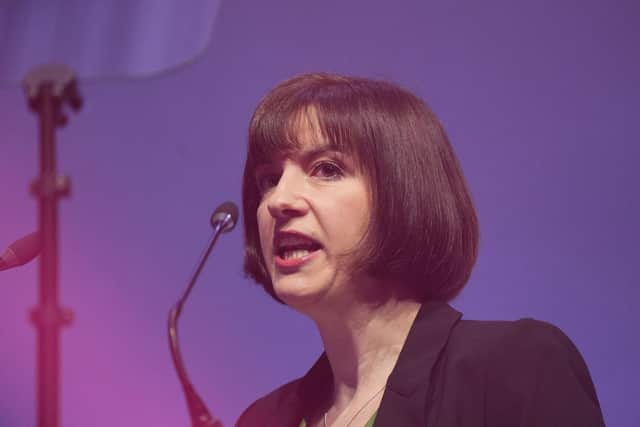
The government’s proposals to reform schooling for children and young people with Send (special educational needs and disabilities) have finally arrived, delivered by Education Secretary Bridget Phillipson with the look of a rabbit trapped in headlights.

No wonder. She knows that everything about these proposals rests on trust. And trust is in very short supply; the government is mired in allegations about Lord Mandelson, appointed by Prime Minister Sir Keir Starmer as US ambassador, simmering challenges regarding Labour party leadership, rabid factionalism amongst backbenchers and – how many is it now? – perpetual policy U-turns.
Ask yourself, if you were the parent of a child with special needs, would you trust anyone in this Labour government to put your child’s interests first, even if they wanted to?
Phillipson was supposed to deliver the Send White Paper late last year, but under the looming shadow of the Autumn Budget, it was put off.

With the Denton and Gorton by-election today the government knew it had to get the highly-contentious matter of Send out there and on the table to help persuade wavering Labour voters that it knows what it’s doing, and before potential political disaster strikes.
Interestingly, in interviews this week, Phillipson has barely touched on the biggest row, the touchpaper that lit the whole debate over how much special needs education costs; school transport for Send pupils, previously estimated to cost councils the sum of £3.4bn by 2030, according to the County Councils Network (CCN), and whipped up by Reform UK to incite the wrath of council tax payers.
Sadly, children and young people with Send have become a political target of the far right. Do you remember Reform UK chairman, David Bull, claiming on national television that “many of these kids are naughty kids, bad parenting”? And leader Nigel Farage stating that children and young people are being “over-diagnosed” with conditions such as autism?
Rather, in delivering plans which will see the majority of Send pupils absorbed into dedicated units in mainstream schools - therefore not requiring all those costly taxis to special schools that may be miles away - Phillipson has dodged that particular bullet.
However, close analysis of how the White Paper proposes to revolutionise Send leaves more questions than answers.
Phillipson announces that £1.6bn will be spent over the next three years to ensure that special needs of pupils in mainstream schools are “identified early and met consistently”.
A further £1.8bn has been set aside for “speech and language therapists, educational psychologists and wider professionals” who will be brought into mainstream schools to work with those who need help and support. And apparently, a new generation of Sure Start-style family hubs will each have an in-house Send practitioner. No-one has yet mentioned where the money for these is coming from.
Already, critics are saying that although talking in the billions sounds impressive, this is nowhere near enough money to provide all that is promised. Mainstream school leaders, looking at their overcrowded buildings, are wondering exactly how they are going to accommodate all these Send pupils and their attendant professionals.
Also, as part of the reforms the proportion of children with Send granted an education, health and care plan (EHCP), a vital legal document setting out the support they are legally entitled to, will start falling each year from 2030.
By 2035, EHCPs will be reserved for children with the most complex difficulties. The fear is that those granted EHCPs after 2030 will have less say over school choices and fewer avenues for appeal.
Meanwhile, individual support plans (ISPs) will be introduced for children identified as Send, without a formal diagnosis being required. It’s estimated that about one in eight children with EHCPs will be shifted to ISPs between 2030 and 2035.
“Limiting EHCPs to only those with the most complex needs relies heavily on mainstream schools becoming genuinely inclusive, yet much of the detail on how to achieve this remains undefined and none of it has been proven to work at scale,” argues Jolanta Lasota, chief executive of the campaigning charity Ambitious about Autism.
Phillipson’s heart is probably more or less in the right place, but what she proposes will dismantle Send provision as it currently exists.