
Does the Makerfield by-election result spell the end of Nigel Farage’s time as leader of Reform UK? - Jayne Dowle
What now for Reform UK? As the party’s Makerfield by-election candidate tanked and rumours swirl that leader Nigel Farage may even step down, the populist party’s appeal seems to be losing its lustre.

Makerfield had been billed as a very close race between Labour’s Manchester Mayor Andy Burnham and Reform UK’s plumber-turned-politician Robert Kenyon.
However, in the event, Burnham overcame expectations to romp home with a majority of almost 10,000, taking 55 per cent of the vote to Reform UK’s 35 per cent, on a respectable turn-out of 59 per cent.
A crestfallen Kenyon, whose past social media history had been trawled in the run-up to reveal a string of unsavoury comments about women - including TV personality Carol Vorderman - could barely bring himself to clap the victor.
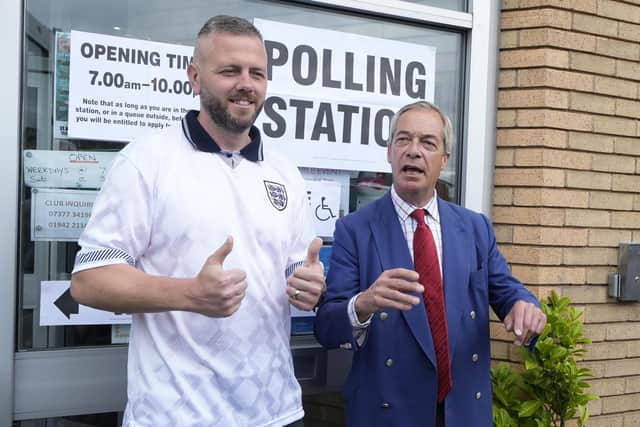

Farage meanwhile, refused - publicly at least - to acknowledge any fault on the part of Reform UK for selecting a questionable candidate for such a vital contest, instead blaming his party's defeat on voters wanting to eject Sir Keir Starmer from Downing Street.
He claimed frustration with the embattled then-prime minister had driven Burnham's “emphatic” Labour victory over his party's candidate.
That and the fact that never before has the bloke-ishness, even boorishness, of this right-wing party been as high-profile, clearly alienating female voters.
“I lost count of being told about Reform-minded women, women who wanted to vote for us, who would not in the end put a cross beside a man who had said those things and never honestly taken them back,” Gawain Towler, Reform UK governing board member and former director of communications has told reporters.
Not only has Reform UK got a ‘woman problem’, as Makerfield exposed, it also has a contender on the further right to deal with, Rupert Lowe’s Restore Britain party.
Restore Britain is known for its outspoken and trenchant hardline anti-immigration policies, including mass deportations. Its platform also includes holding a referendum on bringing back the death penalty.
In Makerfield, Lowe’s party polled only almost seven per cent (3,111) of the votes, almost twice the Conservative share. However, this was nothing short of astonishing for a party which had never actually fought a parliamentary seat before. Splitting the right-wing vote like this does Reform UK no favours at all electorally.
If Reform UK wants to capitalise on all those hundreds of council seats it garnered at the local elections in May, the party leadership needs to do some deep thinking. For a populist party it can often appear woefully out of touch with actual people.
It’s all slightly shrouded in mystery, but Farage is known for selecting electoral candidates personally through people he likes the look of in the rank-and-file membership, which is presumably how the ill-fated Kenyon came to be fighting Makerfield.
A more astute leader would have dropped Kenyon when there was still time, as soon as that dodgy social media history, in which the 41-year-old local councillor claimed women can’t “referee, drive or give instructions”, and gave a ‘thumbs up’ emoji to someone’s sordid fantasies about Carol Vorderman, came to light.
But Farage has been accused by some of simply placing his man in position and then stepping back. It’s probably fair to say Farage is not a natural manager; neither does he appear to be ready to delegate to anyone who is.
Rumblings of a disconnect between the party’s eight MPs in Westminster and the small team of trusted aides around Farage who work out of its glittering modern office in nearby Millbank Tower are growing, according to newspaper reports.
Some political observers point out that one of Reform UK’s biggest problems is finding enough suitable candidates to fight target seats, a problem that will become pressing should the country go ahead for an early General Election.
For all the bluster, Makerfield was the latest in a run of six by-election defeats in a row for Reform UK. There is definitely a disconnect between who voters will support at local level and who they feel confident in backing for national government. Cracking this conundrum should be top of Farage’s to-do list.
But will he be prepared to undertake such long, dark nights of the soul or hop it for an easier and more lucrative life on the international speaker circuit?