
Donald Trump’s Venezuela gamble is a litmus test for post-liberal foreign policy - Cyril Davydenko
With President Nicolás Maduro captured and delivered to the United States without any American casualties, Donald Trump’s Venezuela gamble could scarcely have gone better. Long-term success, however, is far from guaranteed. What will replace the socialist regime, assuming it falls at all, is far from clear. This intervention should, instead, be seen as a litmus test for post-liberal foreign policy.
Unlike either Barack Obama or George Bush Junior, Trump did not frame this operation as motivated by a desire to ‘spread democracy’. Instead, his administration justified it in a distinctly ‘America First’ fashion, with the US Attorney General, Pam Bondi, stating that Maduro will be charged with “Narco-Terrorism Conspiracy”, Trump openly invoking the Monroe Doctrine, and his Secretary of War, Pete Hegseth, promising to take back “stolen” oil.
Of course, from a historical perspective, the substance of this intervention is highly typical of American foreign policy in the region. With the exception of Franklin D. Roosevelt’s brief commitment to the non-interventionist Good Neighbour Policy, Uncle Sam has seldom been patient when dealing with Latin American neighbours seen as acting contrary to America’s interests.
Nevertheless, public justifications for foreign policy decisions can matter as much as the policies themselves, because they define how a nation conceives its place on the geopolitical stage. If a nation’s public broadly accepts, or at the very least tolerates, a particular vision, this will in turn define the limits of which foreign policy actions are considered acceptable and desirable for the government to pursue.
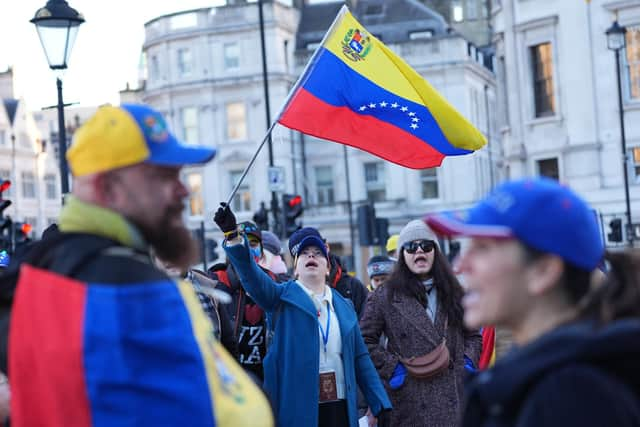

Since the end of the Cold War, the shared commitment to ‘spreading democracy’ remained one of the few issues that garnered bipartisan support in the US. Both Republican and Democratic presidents relied on this idea to justify their foreign interventions. The second Trump presidency is attempting to put a final, unambiguous end to such idealist notions. The President’s approach to the war in Ukraine was already a substantial departure from the existing foreign policy orthodoxy, but the stated justifications for the Venezuela operation clearly put the US’s foreign policy in the post-liberal category.
At January 3’s press conference, President Trump and his Secretary of War, Pete Hegseth, offered numerous explanations and justifications for the operation, from cracking down on drug trafficking to reversing the 2007 expropriation of American oil assets. However, the most notable aspect of the press conference was the total lack of reference to international law. The Administration instead explicitly invoked domestic US law to justify Maduro’s capture. Whilst this administration’s rejection of liberal internationalism is, of course, a widely known fact, the scale of the Venezuela operation and Trump’s promise to “run” Venezuela clearly marked a full-scale commitment to post-liberal foreign policy.
The outcomes of this intervention will only become apparent in the coming months or years. In the best case scenario, the current Venezuelan regime will be replaced by a successful and far less coercive alternative that will dramatically improve its citizens’ lives whilst pursuing a more co-operative relationship with the US. On the other hand, the regime may endure. Worse still, the Venezuelan state could collapse into internal conflict, destabilising the region and providing ample opportunity for cartels to flourish on its soil.
The emergence of a successful regime would force liberals to acknowledge the drawbacks of a rigid commitment to the rules-based order and would demonstrate clear benefits of a more situational approach to foreign policy. At the same time, a swift and bloodless end to this conflagration is also likely to satisfy, or at the very least avoid displeasing, the MAGA base who firmly oppose ‘forever wars’. Success of this intervention would clearly show that a pro-active foreign policy can achieve America’s goals without committing billions to utopian nation-building projects.
With Maduro’s Vice President, Delcy Rodríguez, being sworn into office as interim President and her striking a defiant tone, the most optimistic scenarios for the Trump administration are beginning to look less likely. Failure to orchestrate a bloodless and swift transition of power risks American casualties which would further fuel the MAGA civil war and completely ruin Trump’s chances of being remembered as the ‘President of Peace’.
Furthermore, such a geo-political blunder would be more damaging to the US’s reputation than the prior failed ventures in Libya and Iraq, since, this time, failure would lack even the pretext of noble intentions to justify it. Whilst even the worst possible outcome is unlikely to fully reinvigorate the USA’s commitment to liberal internationalism, it would most certainly further tarnish the reputation of interventionism on the right and undermine the MAGA approach to foreign policy.
It is too early to speculate which of these scenarios is more likely to unfold, but one thing is clear: the stakes are extraordinarily high. This particular policy commitment—more than any that preceded it - will shape the future of the American right’s foreign policy and is likely to be remembered as one of the defining legacies of the Trump Presidency.
Cyril Davydenko is a researcher at the Bright Blue think tank.