
Donald Tusk is right, Britain can’t be lulled into the illusion that Ukraine is some distant war - Patrick Mercer
You know how it is sometimes? You like, even admire someone; you listen to what they say with interest and they impress you. Then they utter something credulous, so naive that it brings you up short and makes you wonder whether everything else you’ve heard from their lips is equally facile.
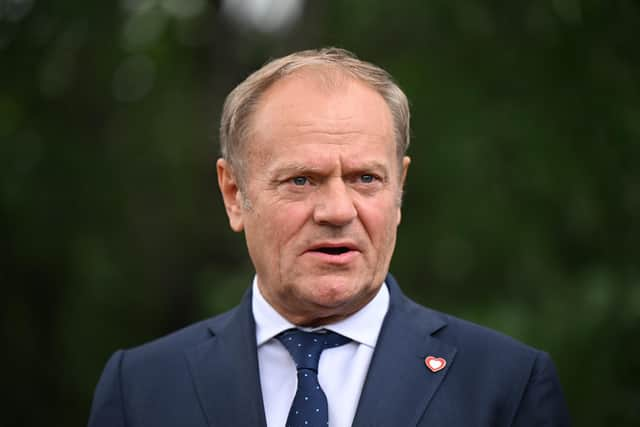
So it was with Donald Tusk, Poland’s prime minister, who gave an interview to the Sunday Times last weekend. Now, I’ve always pricked up my ears when Mr Tusk talks. His first premiership was measured and achieved much; his presidency of the European Council had gravity and I wasn’t a bit surprised when the Poles elected him for a second crack at the top job back in 2023.
He’s been too simplistic for my taste over the Ukraine conflict, but he made sensible preparations for war and was hard headed about the dangers his country faced. So, when he said in the interview that the Russians have a great advantage over the West and Europe in particular because "They are prepared to fight… In times of war, that is the absolutely crucial question… You have no chance of winning if you are not prepared to fight or at least make a sacrifice” I applauded.
Equally sensibly, he cautioned the UK saying we should not be lulled into the "sweet illusion" that the war in Ukraine was very far away. He underlined that Russia could reach any Western capital, including London, with nuclear-tipped ballistic missiles.

So far so good, I thought, someone needs to jolt us out of our dangerous complacency: but then he spoiled it all.
You’ll remember back in the spring that Sir Keir Starmer suffered a series of arson attacks against a property that he owned and where he’d lived until he became our leader. A privately owned car of Sir Keir’s was also torched.
Sometime after that three men were arrested, two of whom were Ukrainian whilst the third had lived in that country but was Romanian by birth.
Only one man, though, seems to have swallowed the embarrassingly specious cover story: that the whole thing was a Russian plot. Of course, once a problem is too tricky to excuse, has dire political consequences or there’s something distantly Slavic about it, swerve and pin it on Moscow.
No one else seems to have bought it except Donald Tusk. I wonder if someone in Westminster told the Polish PM to trot this fib out for a bet. I’m sure it will worry him deeply, but I’ll never be able to take Mr Tusk seriously again.
Perhaps, though, this is just a distraction from the most significant piece of news to come out of Kiev for months - news that has received scant attention in the West. At their latest meeting in Washington it seems that President Trump told Volodymyr Zelensky that he would have to give up any ambitions to retake the parts of his country already conquered by Russia.
In other words, the current frontlines would become the scratch in the sand from which a ceasefire then, perhaps, a firmer peace deal might be conjured up. Shortly afterwards, the countries that make up the ‘Coalition of the Willing’ rowed in, agreeing with The Donald.
And this only added to the rumour that President Putin had discretely abandoned his demands that Ukraine should abandon the remaining Donbas fortresses without a fight and that he too was looking for a ceasefire.
Based on everything he’s said before, President Zelensky might then have been expected to scupper things by sticking to his insistence that there could be no peace talks until Moscow agreed to withdraw its troops from the land they’d already taken - Crimea, Luhansk, the whole shooting match. But he didn’t: suddenly, quietly, a major obstacle in the creep towards peace just vanished.
Very little was said about this in the Western media, but then there wouldn’t be, would there? If you’re an editor who’s spent over three years fanning the embers of war and making people believe that Zelensky was about to defeat Putin, it would be hard to print a U-turn suggesting that Ukraine must now start surrendering land.
If Russia’s gone quiet on her demands for more territory, though, would it be too much to hope for other gestures that might staunch the slaughter? Holding fire whilst Kiev’s troops left the encircled Pokrovsk, meaningful prisoner exchanges or some other sort of olive branch perhaps? But no, Moscow clearly has no intention of compromise; all we got was details of their latest, doomsday weapons.
The one system which seems closest to production is the Burevestnik - or storm petrel - which, according to our Chief of Defence Intelligence is a "sub-sonic nuclear-powered cruise missile system which has global reach allowing attacks from unexpected directions”. Apparently, it would be able to loiter within range of a target almost indefinitely.
The technology of Russia’s newest missile seems almost too good (or bad) to be true until their use of its little brother last year is remembered. Then the quaintly named Oreshnik or ‘Hazelnut’ intermediate range missile wrought terrible damage against a defenceless Ukrainian tank factory.
Earlier I may have mocked Mr Tusk’s innocence, but he seems pretty far sighted about the threat to our hearths and homes.
Patrick Mercer is a former MP for Newark and Army colonel.