
Doncaster Council’s no-fishing signs at Askern Lake should never see the light of day - Mo Metcalf-Fisher
Recently, the City of Doncaster Council informed us that it had taken the decision to suspend fishing at Askern Lake, ordering the installation of ‘no fishing’ signs. The move followed communications with Askern Town Council regarding concerns over alleged anti-social behaviour and environmental impact.
The news came as a shock to local people, including town councillors, who were left scratching their heads in disbelief.
While anti-social behaviour must always be addressed head on, resorting to a blanket ban was a classic example of an overzealous, knee-jerk reaction. Banning angling at the height of summer did nothing to solve underlying issues; instead, it penalised the vast majority of responsible anglers, especially younger children.
Fortunately, the community refused to accept the decision quietly. Within days, over 1,200 people signed a public petition opposing the ban. The local Askern Lake fishing Facebook group, which has an impressive 6,200 members, became a hub of grassroots opposition. Local councillors, anglers, and national campaigners like ‘Big Duffs’ raised their voices to defend the site and the sport.
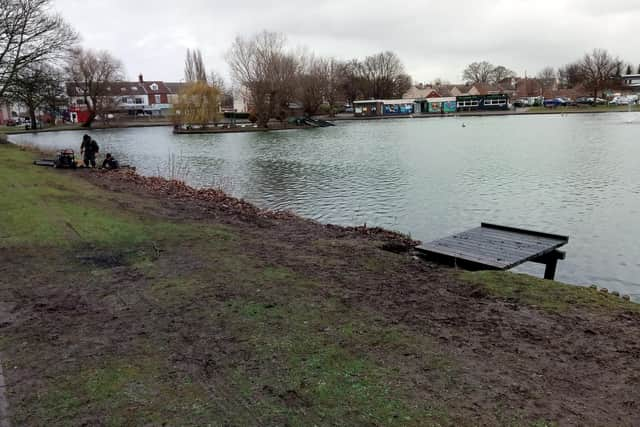

Facing this tidal wave of public outcry, the council rightly paused its plans. It has now confirmed that no ban is in place and that the ‘no fishing’ signage has been put on hold while a “multi-agency action plan” is developed.
This reversal is clearly a victory for common sense. But the fight clearly isn’t over.
On my visit to Askern after the ban was lifted, I had the privilege of meeting John Rowley, a town councillor and local businessman who alongside his wife Jackie, runs an angling supply shop based a stone’s throw away from the lake. It is a hive of activity with friendly anglers of all ages (many of whom are youngsters accompanied by their parents) stopping by to pick up tackle and excitedly boast about their latest catch. Jackie told me that she has noticed an increase in the number of younger girls taking an interest in the sport, something she hopes will continue to thrive.
I was struck by the synergy I witnessed between those young people fishing around the lake and other residents, from an elderly walking group to dog walkers and friends enjoying tea and cake at the waterside café. Everybody got on, greeted one another and were able to appreciate the lake without the heavy hand of the council reigning down to intervene.
In a town like Askern where there aren't a huge number of activities on offer to younger people, banning fishing would clearly have a major negative impact. For many, angling is seen as a vital early pathway away from anti-social behaviour and, in some cases, even criminality.
Angling is far more than just a hobby. It is deeply woven into the identity of towns like Askern. Crucially, it provides a healthy outdoor activity recognised by the NHS for its positive impact on mental health and social well-being. For many, particularly young people, fishing is an essential escape. A structured, nature-focused activity that nurtures patience, resilience, and respect for the environment.
Anglers are often the primary stewards of our waterways. Far from being a threat to biodiversity, angling and conservation go hand in hand. It is anglers who spend countless hours on the bank, observing subtle shifts in water quality, spotting invasive species, and reporting pollution, often long before authorities become aware of it.
When you ban fishing, you remove the very people who act as the eyes and ears of the lake.
The recent events at Askern Lake are sadly not unique. We have seen a similar saga play out before. Only recently, North East Derbyshire District Council attempted to impose a blanket fishing ban at Wingerworth Lido under the guise of creating a ‘biodiversity hub’.
Every day that the council delayed reinstating the sport, the lido was deprived of its friends and allies. Fears quickly spread over the threat of poaching and the overall cleanliness of the lido and surrounding area. It took months of sustained campaigning by the Countryside Alliance, local anglers, and local councillors to overturn that misguided policy. It became a national news story. The leader was eventually forced to issue an apology.
The whole affair should serve as a warning to any council thinking of taking on anglers again in this way. It can be costly, time consuming, embarrassing and politically damaging.
The City of Doncaster Council now has an opportunity to set a positive example. As it works on a multi-agency action plan, it must ensure that local anglers, community representatives, and key stakeholders have a seat at the table. Dialogue and partnership are the way forward to finding solutions that secure angling; not an ill-informed ban. The council’s no-fishing signs should never see the light of day.
Mo Metcalf-Fisher is director of external affairs at the Countryside Alliance.