
‘Drought-flation’ is squeezing Britain dry, that’s why we need to save soil - Praveena Sridhar
According to the Bank of England, food inflation in the UK is set to rise by 5.5 per cent by the end of the year. Items once considered everyday essentials are increasingly becoming luxuries for many Brits.
We often fail to connect the surge of food prices with the state of our soils. As every year passes, British farms are being slowly depleted of their soils’ organic matter. This reduces their ability to retain water, making them more susceptible to both drought and floods.
This is a worldwide phenomenon. Droughts are squeezing yields across the globe, but due to a heavy dependency on imports and ‘just-in-time’ supply chains, Britain has found itself uniquely exposed to international food shocks.
It’s time to pivot focus from short-term efficiency to long-term resilience. For the sake of food, farmers and the future of Britain, it’s time for the Government to place soil health at the centre of its national agricultural policy. Save Soil will be campaigning for this globally at COP30 in Brazil this year.
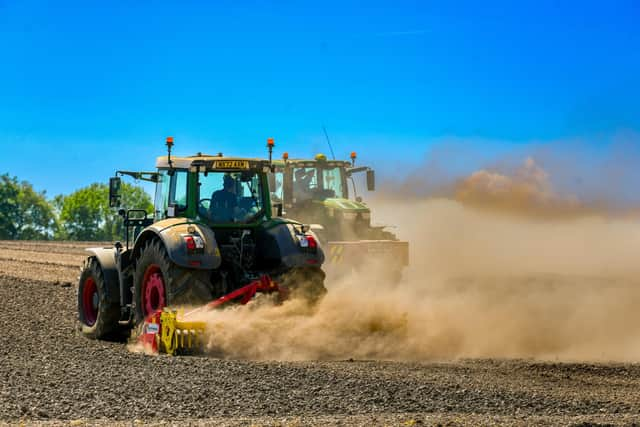

In the UK, approximately 40 per cent of our agricultural land is degraded. This is partially driven by mono-crop agriculture, along with the prevalence of both herbicides and pesticides in our agricultural systems.
Healthy soils retain water like a sponge; soils with 6 per cent organic matter in the top soil can retain three times as much water as degraded soils. Unhealthy soils cannot, which partly explains why British farmland has experienced its most extreme droughts and floods over the past decade.
We can see this impact food prices. In 2024, an Energy and Climate Intelligence Unit Report highlighted that British yields plummeted by 21 per cent for wheat, 26 per cent for winter barley, and 32 per cent for oilseed rape compared with average levels. Both broccoli and potato yields have dropped by more than 50 per cent in some areas due to droughts. This squeeze on domestic supply invariably drives up food prices.
This is a global trend with local implications. Britain imports approximately 40 per cent of its food stock. When we combine high imports with our ‘just-in-time’ supply chain systems, we start to understand just how fragile Britain’s food system is. For example, due to Spanish droughts, the price of olive oil has increased by 89 per cent between 2022 and 2024, which accounts for it’s reputation as ‘liquid gold’. Similarly, the price of coffee has seen a 50-year high due to droughts in Brazil.
Poor soil health can become a magnifier of social inequality. As fresh produce becomes more expensive, poorer families are pushed towards less nutritious options, therefore widening the health gap.
Soil is resilient, and can nourish us if we choose to care for it. British farmers need government support through subsidies for soil-friendly practices like crop rotation and no-till farming, as well as investment in irrigation and drought detection to cope with changing rainfall. But farmers cannot carry this burden alone. Transitioning to regenerative systems requires fair prices, market access, training and protection from being undercut by imports produced to lower standards. Responsibility for soil health must be shared by government, retailers and consumers, ensuring that secure livelihoods go hand in hand with sustainable practices. Healthy soils don’t just protect farms; they also safeguard surrounding towns by absorbing excess water and reducing flood risks to homes, roads, schools and businesses.
Farming is an integral component of the British identity. However, tradition is built on resilience, and resilience is built on reinvention. To keep British farming alive, we cannot apply yesterday’s practices to tomorrow’s crops.
Praveena Sridhar is the CTO of the Save Soil Movement.