
End insidious peer pressure that social media inflicts upon impressionable young minds - David Behrens
Has there ever been a worse time to be young? Anyone brought up in the 1930s, with no money or food and the threat of imminent conscription, might take a view on that. But if you believe everything you read, those were small potatoes compared to the traumas of teenage life today.

There have been updates this week from two groups of researchers studying mental health among the young and somehow they managed to arrive at more or less opposite conclusions.
The Labour politician Alan Milburn, a social mobility expert (whatever that means) who is leading the Government’s review into youth unemployment, believes getting a job is the best cure for the blues. “There’s a difference between a diagnosis and a disorder,” he said. “People might have anxiety or depression but it doesn’t mean [they] should be written off for not being able to work.”
That’s tough medicine. And there will be another dose when he publishes his full report in the summer.

But a consortium of mental health charities pre-empted him on Wednesday and took a more sympathetic view of the problem. Britain had become “the European leader of youth unhappiness, with poor mental health in childhood reaching unprecedented heights,” reported their researchers, for whom the solution lay in vastly expanding the treatments offered by the NHS.
So, to sum up: one report says it’s a medical emergency; the other suggests it’s all in the mind. They can’t both be right. Or can they?
In fact, there is common ground. In particular, the consequence of so much mental ill-health, whether real or imagined, is generally agreed: a generation of sufferers condemned to spend their adult lives outside the employment market. There are now close to a million young people not in work or education and the question is whether the responsibility for each one lies with the state or the individual.
“Parents and children are crying out for help and to find services and the Government is not yet doing enough to reform the system,” says the charities’ report, citing a web survey in which three-quarters of respondents were “concerned” about their child’s mental health.
But that’s a matter of semantics. Every journey through adolescence is a tumult of emotions and every parent is concerned about the way their children deal with their conflicted feelings. What’s at issue is the tipping point at which angst becomes illness.
That threshold has shifted dramatically in the last few years. Parents, alarmed by social media-induced behaviour patterns they don’t understand, are apt to press the panic button sooner and expect the NHS to respond in the same way as if they were reporting a physical condition, and of course it can’t and doesn’t.
And that’s where Milburn and the charities differ: they want the health service to be better resourced; he seems to think sufferers should just ‘get over it’. He points out that most adults – 83 per cent, in fact – could be classified as having a mental health condition but nearly all carry on regardless. That’s because until recently, it never occurred to them to think of the stresses of everyday life as an illness.
It’s a surprisingly un-Labour position for him to take but he’s probably right, in the majority of cases. However, there is no one-size-fits-all distinction between stress and sickness. No two people are alike.
So what is the Government – any government – supposed to do? If the priority is to reduce the number of people reporting unfit for work for any reason other than physical disability, then it’s surely a matter of managing expectations: of dismantling the belief that invoking one’s mental health is like casting a magic spell no-one can gainsay; and realigning the expectancy of benefits as a last resort, not a first recourse.
The NHS even with its present resources can help by teaching parents to recognise the line between normal youthful anxiety and a treatable psychological condition.
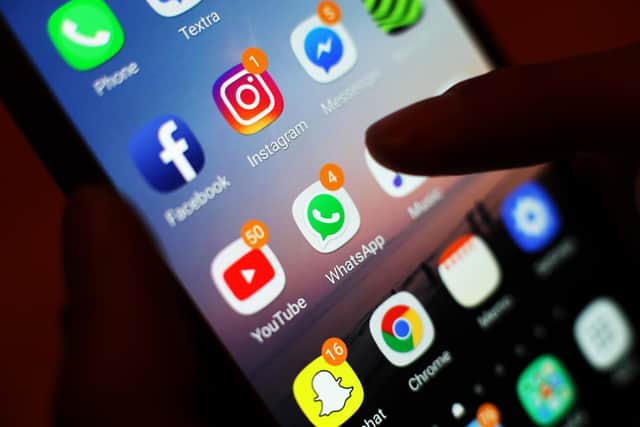
But the most effective course of action is to remove part of the problem at source. The insidious peer pressure that social media inflicts upon impressionable minds is the most preventable crime against adolescence and it is in Ministers’ hands to stop it at a stroke.
Currently more than 60 Labour MPs are calling for social platforms to be restricted to over-16s, and while there are legitimate questions about whether a ban would be completely effective, it would be a start. Australia has already done it.
Here, it would put down a marker that we are taking safeguarding seriously. And if there is one thing that every researcher would agree we should be doing, it is that.