
End of life care is too important to be allowed to become just another overstretched service - Andy Brown
There are certain services which ought to function well in any decent society. All too few of them do in modern Britain. One of them is dentistry. There are still places in Yorkshire where it is virtually impossible to get an NHS dentist and where the cost of receiving treatment can be beyond the means of someone on a modest income.
There never was a day when a politician stood up and told us that the service was going to be dismantled. It just happened slowly over time as availability steadily deteriorated and we drifted to the point where someone suffering the intense pain of tooth ache can be left enduring it for days whilst they struggle to find enough money and someone who is prepared to treat them.
The GP service has gradually drifted in the same direction as small partnerships owned by doctors who were members of the community they knew and wished to serve got replaced by chains of companies that employ jobbing doctors working to strict time limits through excessive case-loads.
Now there is a real risk that end of life care is moving in the same sad direction. A service that focused very much on the needs of the individual during their valuable last days is now beginning to be much more concerned about the bottom line and the challenge of rising demand.
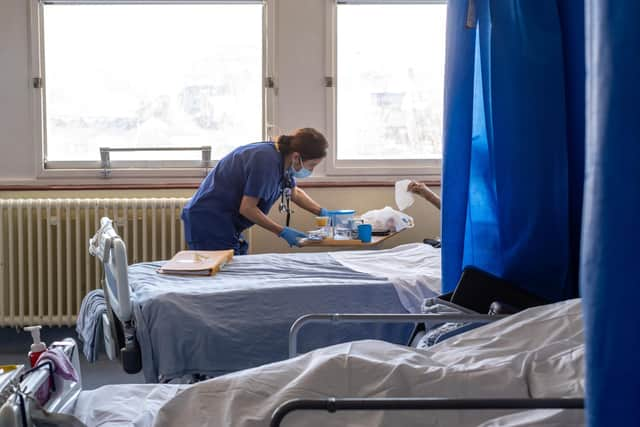

Some of the increase in need is down to the simple reality of having an aging population and too few young people to look after them. Which is one of the key reasons why Britain needs a sensible degree of immigration.
Another key factor is the very understandable determination of NHS bed managers to make sure their scarce resources are used by people who need them and are receiving treatment.
It is a hard thing to be taken into a corner of a busy ward and told that someone you care for has no chance of survival and to be asked whether you want the person to receive pain relief in a hospital bed, a hospice or your own home. I know that all too well as I got that message about my late wife only a few months back.
Making the decision about what is best for someone you care about isn’t easy. I opted for home care and was promised strong back up and a gold service.
Excellent as most of the staff that supported us were it would have been completely impossible to have looked after my wife properly on the basis of the support available. What happened was someone looked in and helped for around 30 minutes four times a day. That was backed up by an efficient call line which enabled me to get in a trained nurse to administer pain relief. It usually took an hour to arrive.
Trying to hold down any kind of job whilst providing the 22 hours of care that was needed in the rest of the day was virtually impossible. It was hard enough to juggle the trips to the pharmacist to collect rapidly escalating pain relief treatments that were needed with genuine urgency.
I was only able to manage by supplementing the service and hiring in extra care to help. I simply don’t know how someone could have coped who couldn’t afford to do that as an end of life patient often needs someone beside the bed 24 hours a day and even the fittest and most patient of family members simply can’t physically provide that day in day out.
Yet even the already stretched hospice outpatient service that backed me up is now under threat.
Up and down the country hospices are finding their budgets pushed beyond the levels which allow them to provide the dignified care they wish to.
Most hospices depend on two prime sources of funding. One is donations from the public who often give generously after relatives have benefitted from the service. My own excellent local hospice of Manorlands on the outskirts of Keighley regularly gains from community fundraising efforts, sponsored runs and the like.
The other source is payments from the government for basic services. It is this second source of funding that is coming under increasing pressure as hospice after hospice is telling anyone who will listen that they simply cannot continue to provide the dignified service that the public expects whilst dealing with the sheer volume of hospital discharges coming their way and the low levels of funding they receive.
Once a service declines beyond a certain point it is hard to bring it back. Even voluntary donations can quickly start to dry up if the public loses admiration for the service.
There aren’t many things that are certain in life but one of them is that sooner or later we will all have to deal with death. Whether it is your own or that of someone you care about it could not be more important that this is a dignified experience.
It will not be if we allow the cost cutters to gradually erode yet another of the critically important services that we rely on. End of life care is too important to be allowed to become just another overstretched service.
Andy Brown is the Green Party Councillor for Aire Valley.