
England's rollercoaster World Cup journey helps reclaim the flag for national unity: Jayne Dowle
Everyone who has enjoyed – if that’s the word for it – England’s progress through the World Cup stages to the semi-final last Wednesday will have their own enduring memories of the campaign.

My most memorable will probably be setting my alarm clock for 1am, then 2am – as the kick-off was delayed due to bad weather - to watch the heroic game against Mexico, hardly daring to breathe for the last 11 minutes. Then when the final whistle blew, sitting staring into space until 5am, hardly daring to imagine that we might be on our way to the final.
As we know, that was not to be. Holding on at 1-0 for most of the semi-final against Argentina, two goals in short order from our opponents put paid to England’s dream and crushed hearts.
Amidst all the furore over England manager Thomas Tuchel’s tactics, the vehement ‘Las Malvinas son Argentinas’ banner protest by some Argentinan players afterwards and a million questions over whether we really could have gone all the way, one thing remains.
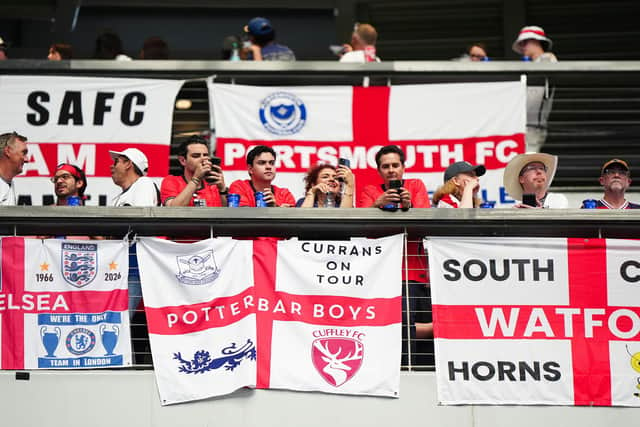

If this World Cup is not remembered for England’s glory, it will be remembered for bringing the nation together under the flag. Yes, that flag, the St George’s red and white cross.
Children interviewed on TV news programmes with face-painted flags, schools bedecked in red and white bunting, banners held aloft on shop fronts and pubs going all out to decorate every square inch of space, the tide of red and white has been impossible to ignore.
Can it really only be last summer when this very same England flag was co-opted by self-proclaimed grassroots groups such as Raise the Colours, which proclaimed it was campaigning “to cover Britain in symbols of unity and patriotism”?
Flags began to appear on lampposts across the country, local social media groups were infiltrated with “patriots” vying with each other to put on the most ‘impressive’ display, sharing photographs of entire streets bedecked.
Then St George’s crosses were painted on roundabouts, including the one at the end of my road, which made me feel very sad for the children who had to walk past it to go to school.
Back then, Reform UK leader Nigel Farage penned a vehement opinion piece in The Sun newspaper along the lines of, “we have had enough of our country and its history being trashed”. Other right-wing voices, including Lee Anderson and Stephen Yaxley-Lennon, AKA Tommy Robinson, joined in to stir up a divisive populist fervour.
Those of us of a more sensitive disposition were anxious that when the World Cup came around, there would be an awkwardness about the white and red. We shouldn’t have worried.
Our squad represented communities from across England, Jude Bellingham was the man of almost every match, and fans adopted Oasis’s anthem Wonderwall instead of chanting anything that smacked of our imperial past.
Whilst perhaps we won’t dwell on England’s exit from the competition, what we can celebrate is how fans, pubgoers, schoolchildren, young people and armchair watchers alike have come together to rescue the flag.
This has been helped in no small part by other nations celebrating their identity in positive ways. Who can forget the impact of the ‘Tartan Army’ of Scottish fans partying in their kilts and the Norwegians making their mark on the world stage with the ‘Viking Row’?
Any squeamishness about the Norway team’s ‘nationalist’ pre-tournament publicity shoot, in which they posed in Viking helmets and Norse battle-dress, was forgotten thanks to the sheer exuberance and dedication of their supporters. And of course, we took Erling Haaland to our hearts, despite his towering presence threatening our quarter-final clash. He’s a Leeds-born lad after all. And he buys raw milk and tomahawk steaks from a local farm near his home in Cheshire, as he shared on his YouTube channel.
Just 12 months on, Farage’s insidious words seem out of touch with the public mood. In the midst of the tournament, Farage resigned as MP amidst a colossal row over funding. He had been under investigation from Parliament's standards commissioner since May after not declaring a £5m gift he received from a billionaire donor to Reform UK before he became an MP.
The grubby circumstances of his decision to resign and provoke a by-election in his constituency of Clacton-on-Sea – and the refusal of any of the main parties to field candidates in a contest dubbed as a farce – has left Reform UK at best in limbo, at worst in chaos.
The secretive nature of the party’s structure and lack of accountability has led to many questions being raised. Meanwhile, the country has come together under one flag, the very flag that not so long ago had been appropriated by those whose only aim is to sow division and distrust.