
Equalising capital gains tax with income tax risks doing more economic harm than good - Dr William Prescott
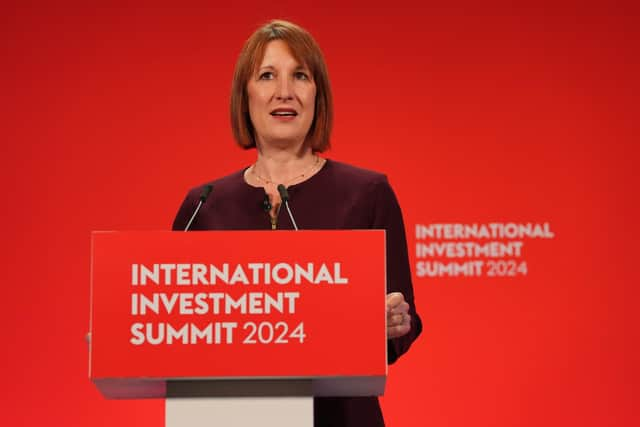
While few were fooled by newly-minted Chancellor Rachel Reeves’s professed shock at the state of the public finances, the lack of fiscal headroom she outlined is real.
To help fill the estimated £22bn hole in public finances, many expect that Reeves will increase Capital Gains Tax (CGT) – the tax levied on profits made from selling assets such as shares or property – possibly to the same level as income tax during the Budget on October 30.
However, while moderately increasing CGT makes sense, the new Labour Government must be wary of going too far.
There is little doubt that the central government finances are in a parlous state. Public debt now equals almost 100 per cent of GDP, the highest it has been for over 60 years. Making matters worse, the former Conservative Government’s cuts to National Insurance were in part funded by severe cuts in public services that were due to fall after the 2024 general election. For Labour to avoid returning to 2010s-style austerity, something must be done, and a larger CGT take represents part of the solution.

It is not hard to argue that the UK tax system falls disproportionately on employment income and consumption rather than wealth. For example, the Institute for Fiscal Studies estimated that Income Tax, National Insurance and Value Added Tax (VAT) – all taxes on people’s incomes – combined made up 63 per cent of total government revenue in 2023-24. By contrast, CGT, which taxes people’s wealth, was forecast to make up just 1.7 per cent. Indeed, the Office for Budget Responsibility (OBR) estimates that CGT will make up just 1.3 per cent of UK tax receipts in 2024-5. In this context, increasing CGT’s share of government revenue could help to make the UK tax system fairer.
There is also a strong fiscal case for narrowing the gap between CGT and Income Tax. CGT is currently levied at rates between 10 per cent and 28 per cent, depending on one’s income and asset class. By contrast, Income Tax rates range from 20 per cent to 45 per cent. As well as depriving the Exchequer of tens of billions of pounds in revenue — up to £16bn according to one estimate — the lower rates of CGT relative to income tax also encourage some taxpayers to shift their income to CGT to minimise their liabilities.
Moreover, relatively few taxpayers are liable for CGT — “less than 3 per cent of UK adults paid capital gains tax over the decade up to 2020” — and those who do pay tend to be far wealthier than average — in 2020 “more than half of all taxable gains in 2020 went to just 5,000 people, who received an average of more than £6.8mn per person in gains”. As such, increasing CGT would be an effectively targeted way to increase central government revenue without further straining those still reeling from the recent cost-of-living crisis.
Further, the UK’s current CGT rate is low compared with other European countries. For example, while the UK’s 20 per cent headline rate of individual CGT rate equals that of the United States, it remains somewhat below that of Germany, Spain, France, or Ireland. This suggests there is scope to increase CGT rates without undermining the UK’s international competitiveness.
However, while there is scope to narrow the gap, equalising capital gains tax with income tax risks doing more economic harm than good.
First, doing so risks driving what the Financial Times calls a “frenzy” of post-election short-term asset sales, as owners try to dispose of assets to ensure their gains are taxed at the existing rate. This could reduce future CGT revenue and hurt the economy. While obtaining real-time data is difficult, accounting firms are reporting sudden increases in clients trying to do this.
This is especially problematic in the real estate market, where it could drive more landlords to sell their properties when there is already an acute shortage of homes to let. Even if the long-overdue planning reforms manage to drive an increase in housebuilding, it would take several years for enough new homes to become available to offset further reductions in supply.
Second, equalising Capital Gains Tax and Income Tax would likely further reduce the UK’s economic competitiveness at a time when economic growth has been stagnant since the 2008 Global Financial Crisis and Brexit has damaged the UK’s attractiveness for investment.
Aligning CGT with the current top rate of Income Tax (45 per cent) would result in UK CGT rates being “among the highest in the world”, making the UK less attractive compared to jurisdictions with more competitive rates.
Ultimately, there is even the risk that, if CGT is raised too much, government revenue from it could fall rather than increase. This is because the UK relies on a tiny proportion of “highly mobile” taxpayers to fund the state. Just “0.3 per cent of all UK taxpayers - pay a quarter of all income tax and CGT”. If some of those taxpayers leave, their Exchequer contributions will leave with them.
Dr William Prescott is senior researcher at think tank Bright Blue.