
Farming and nature go hand in hand so we need to work together - Martin Lines and Rebecca Wrigley
Imagine a countryside where fields teeming with food blend into a wilder landscape, each supporting the other. Picture a farm with rows of crops grown between avenues of trees, while nearby wetlands store carbon, support a myriad of wildlife and prevent floods downstream.
This isn’t a fantasy: rather it’s a real, practical approach to land use that can give farmers new sources of income and stability while tackling the nature and climate crises.
For too long, we’ve treated land use as a rigid choice between farming, conservation and development. Agricultural policy has often forced landowners into making false choices: food or nature, profit or conservation. This outdated, siloed thinking has damaged biodiversity, made farms more vulnerable to the climate crisis and limited income sources for rural economies. If we want to ensure the well-being of future generations, we need to urgently and comprehensively rethink how we use our land.
With more than two-thirds of England’s land used for farming, there’s huge potential to do more - think storing carbon, purifying water, and restoring biodiversity. We seem to forget that nature isn’t separate from farming: we need it to grow our food. And there’s plenty of space to restore ecosystems without compromising food production. In this new approach, farmers are Natural Asset Managers; stewards of soil, water, and wildlife.

Rewilding offers a hopeful solution to the interconnected biodiversity and climate crises. By creating wilder landscapes, we can support the regeneration of rural communities and help restore natural processes. A livestock farmer, for example, could graze cattle using nature-friendly methods alongside wilder areas where missing species are reintroduced and natural processes are the primary product of the land. This proximity helps scale up biodiversity benefits, create wildlife corridors, and enhance ecosystem services - all while strengthening the farm itself.
This is the essence of natural asset management: turning ecological restoration into extra sources of income while sustaining the nature that long-term food production depends on. While markets for nature aren’t perfect yet, farmers can access both public and private funding, from the Government’s Environmental Land Management schemes to growing markets for carbon offsets and biodiversity net gain. To make this work, stable, long-term funding models are essential.
It’s time we defined land use by what it is for, not by what it is not for. Land that’s less productive for food, for example, may be highly valuable for nature, and create new income streams. At the same time, productive farmland will only remain viable if the natural processes within and around it are restored and protected.
The Land Use Framework consultation in England, which closed on April 25, offers an important opportunity to shape the future of land management, including how we best meet the UK's global commitment to manage 30 per cent of its land for nature by 2030. Realising this vision requires a shift in mindset from all of us.
Farmers must be open to new practices, including managing parts of their land to be more wild. Conservationists must champion farmers as both food producers and natural asset managers. And policymakers must back this approach with the right, long-term incentives.
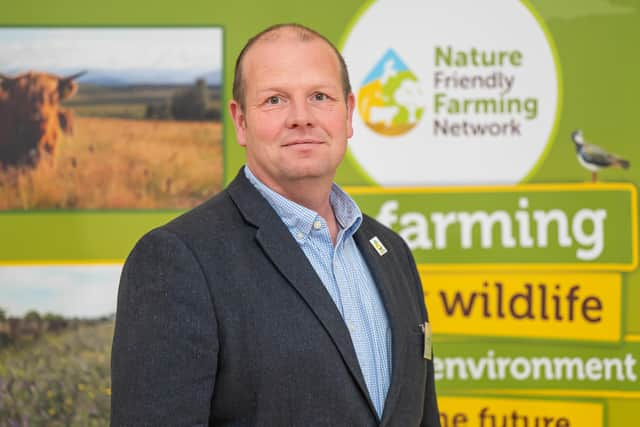
Martin Lines is CEO of the Nature Friendly Farming Network and Rebecca Wrigley is chief executive of Rewilding Britain.