
Fear that Vladimir Putin will turn his attention to recreating the Soviet Bloc - Carl Les
Fifty years ago a young Polish man boarded a cargo ship in Szczecin (Stettin) on the Baltic. Three days later after a rough journey which left other passengers seasick but fortunately not him, he alighted in Liverpool.
He then hitch-hiked over the Pennines to Leeming Bar to work in our hotel for the summer. A connection of friends of his family being friends of my parents had made the introduction.
Another small coincidence in life. Like many students, he wanted to earn some money, but also improve his English. His return journey was just that in reverse. His name was Jerzy, but everybody called him George. A popular boy with a great curiosity, on his day off each week he visited more places in his 10 weeks than many do all year. He returned home safely, a calmer voyage by all accounts, finished his studies, became a successful urological surgeon, married and raised a family.
Thirty years later I received a phone call from somebody who said I would not remember but his father had come from Poland for a summer’s work experience, and his name was…instinctively I said “George”.

This was Tomasz, who wanted to do the same, and he came for a number of summers. Not by ship, but the first time by bus, 35 hours, Warsaw to Darlington, en route via London, Leicester, and Newcastle to Edinburgh, carrying Polish students, waiters, painters and plumbers. Subsequent trips were by WizzAir, around four hours, often discount flights opening up connections between British and Polish regional airports. The world was getting smaller.
Tom got married this year. Unfortunately because of council commitments, I could not attend the wedding. So I was pleased when he said he would like to bring his wife to Yorkshire to show her where he had worked, lived and visited for six summers or so.
Again in a shrinking world they got on a plane in Krakow, a few minutes from where they live. We picked them up at Leeds Bradford Airport two and a half hours later having negotiated with ease the slick short stay carpark which might be expensive (£7 minimum), but less chaotic than the drop off/pick up melee that I remember.
I was particularly interested to talk to Tom and Karolina about their generation’s experiences and opinions of the situation in Ukraine. My views will forever be coloured by lessons learnt from my father`s compatriots. He had a close friend who grew up in the same village, we called her “Auntie”, and she often declared “Never trust the Russians”.
At first we thought this extreme, unfair even, but she recounted her personal involvement in the Warsaw Uprising where the Red Army stood back to allow the Polish Resistance fighters and the German Army to fight each other to destruction. Memories were, and still are, stark, even though there are few of that original generation left today, memories that the Red Army saviours were more brutal even than the Wehrmacht conquerors five years before.
She escaped the communist regime being set up and lived the rest of her life in London, a qualified teacher but working as a seamstress in a small factory.
So memories remain. The first thing that struck me about our conversations was that they refer to the “war”. Not a “major military manoeuvre” or even “an illegal occupation”, they tell it as it is, a war fought on land, sea and in the air, and caused by an aggressor determined to grab land, resources and people, principally to recreate the Soviet Union.
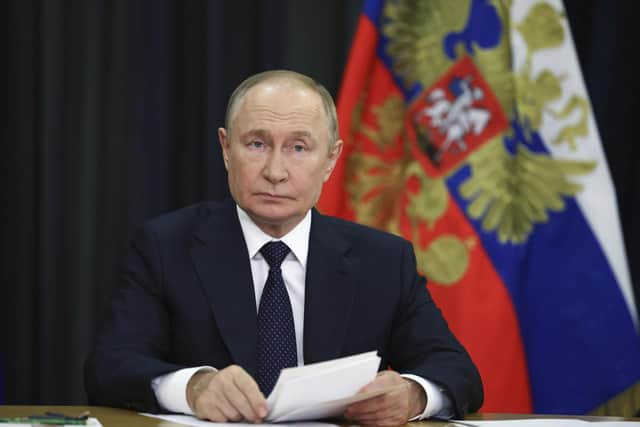
And the fear then is that if Vladimir Putin wins, and if the Headteacher continues to ignore what the school bully is doing, but hopefully now not this weekend`s major targeting of Kyiv’s government buildings, then he might turn his attention to recreating the Soviet Bloc.
That would be much more risky for him, acting against Nato states, especially Poland. However he is now bombing 50 miles from the Polish border, in a city that in 1939 was in post-1918 Poland and still has Polish connections. A misguided guided missile could cover those 50 miles in under a minute.
The risk could be reduced if he can ferment sufficient internal unrest, as he did in Ukrainian territories next to Russia like Crimea. Populist opinion could be focussed on changing the axis of power and influence. “Not our war”. Extreme? Perhaps, but we are living now in a world of extremes, where the trick is to make somebody afraid of something, blame it on others and offer yourself as the solution, however untried.
Just short of a million Ukrainians live in Poland now, down from 1.5 million when the war started. Two thirds are women and children, home-hosted or renting, 78 per cent in work, mainly in transport, services and light industry, often in occupations below their qualifications.
Language is similar, children go to Polish schools, the law on class sizes (25) having been increased (30). Nationalists, right and left, are creating narratives that they are to blame for all ills, often with little factual evidence.
Carl Les is the Leader of North Yorkshire Council.