
Film didn’t mean the end of books, AI won’t mean the end of teaching - Owen Hillier
In 1913 Thomas Edison declared: “Books will soon be obsolete in schools”. He felt technological advances had overtaken the printed word which would be replaced by film within a decade and used for instruction across all schools, negating the need for textbooks or teachers.
Almost a century later in 2012, The Guardian reported the now defunct Apple iBooks would herald the end of book learning. Another decade later and the launch of OpenAI’s ChatGPT in November 2022 prompted more wailing and gnashing of teeth in the education sector.
The end of homework? The end of coursework? The end of the teacher?
Pre-trained generative Artificial Intelligence such as ChatGPT could lead to significant long-term change, both to how we educate young people and how they go on to operate in the workplace.
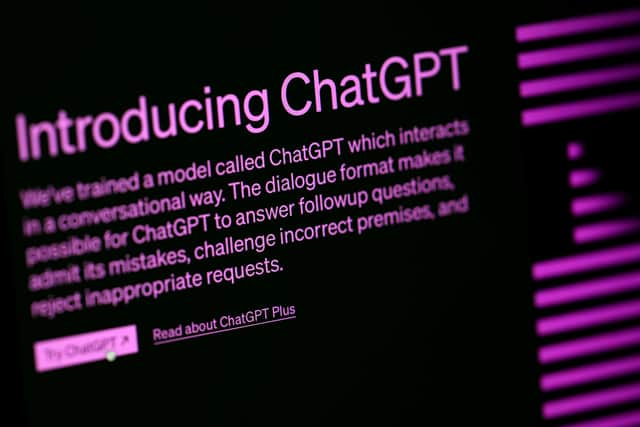

But, in reality and despite the doomsayers, generative AI has been rapidly adopted by teachers and learners from the outset – often whether schools have liked it or not.
At Ashville College, we embrace the opportunities new technology offers young people in the rapidly changing worlds of academia and, ultimately, work. While never losing sight of the fact that learning will always be built on human relationships, we believe AI will be a part of our future tech strategies.
We believe prohibition on its use would both hamper pupils’ future readiness and never be enforceable anyway. But, at the same time, AI-based, teacherless classrooms are very much not on our agenda.
Many of the current debates on AI in education focus on ethical questions but there is another aspect ripe for a discussion: Its almost insatiable appetite for electrical power.
The processing required to run generative AI software such as ChatGPT makes huge demands on electricity, not all of which can be produced renewably or in a carbon neutral way.
It’s estimated every query made to ChatGPT costs OpenAI $0.40 – up to a hundred times what it costs Google per search. The prime reason is the huge electricity demands made by gigantic banks of servers running millions, even billions, of calculations simultaneously.
Just after the new school year got underway in September, Microsoft - which owns a 49 per cent stake in OpenAI - signed a 20-year deal with the owners of the Three Mile Island power plant to supply energy for a new generation of AI servers.
This strikes at the heart of an ethical debate which hovers under most people’s radar. At a time when all organisations and individuals considering how to reduce energy consumption,the computing tools we are developing will hugely increase how much we use.
At Ashville College, we’ve invested time in examining how we can update thermostats and insulation to make our daily operation more energy efficient and therefore more environmentally friendly. While AI tools such as ChatGPT remain free to use, we need to question whether outsourcing huge energy production and consumption to sites thousands of miles away is morally responsible.
Could the development and use of such global energy capacity contribute negatively to climate change and lead to a shift away from environmentally beneficial energy production?
Certainly, this is something we should consider as we move forward with our work with Ashville’s pupils on AI.
When pupils and teachers are choosing which application to use for their research or resource creation, energy consumption should be a factor.
Owen Hillier is deputy head (Academic) at Ashville College in Harrogate.