
Food shortage warnings show why farming should be seen as a critical part of national infrastructure - Andrew Vine
It looks like we’re heading for gaps on the supermarket shelves this summer as the ripples from the conflict in the Middle East continue to spread into everyday life. Shortages of some meats, including chicken, are on the cards and fresh fruit and vegetables may be affected because supplies of the carbon dioxide used to extend their shelf life could be restricted.

Let’s hope matters don’t become so bad that we see a repeat of the worst days of the Covid pandemic six years ago with panic buying, shoppers tussling over much-reduced stocks and shelves cleared within minutes of supermarkets opening.
Even if that doesn’t happen, shortages are becoming increasingly familiar. It’s only a couple of years ago that salads and some fruit became scarce for weeks because unseasonably cold and wet weather hit growers in southern Europe. That was a reminder of how fragile and easily snapped our food supply chain is.
Last week, it emerged the government is drawing up contingency plans to cope with shortages, which suggests that they could become a serious problem if there is prolonged disruption to international shipping, as seems likely.
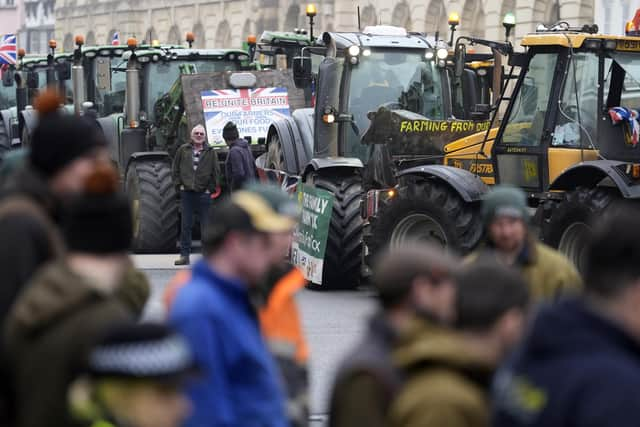

This should be a wake-up call for the government about how Britain feeds itself. One of the things that the Iran conflict – and the war in Ukraine before it, which sent grain prices soaring – have demonstrated is that Britain is far too reliant on imported food.
Despite that, the government – and its Conservative predecessor – have exhibited breathtaking complacency about how the country keeps its shelves stocked and an appalling indifference towards those who produce British food.
A mentality that the supermarkets will somehow maintain plentiful supplies long ago took root in politics, ignoring warnings from both the food industry and farmers.
Those warnings must be heeded. Shelves groaning under the weight of a huge variety of produce from around the world cannot be taken for granted any more, and the government should be doing much more than simply planning for what it hopes is a short-term problem caused by a war.
It ought to be putting a comprehensive long-term strategy in place to safeguard and expand British food production – and that means doing much more to support farming.
Britain’s ability to feed itself is as essential to national resilience as its capacity to defend our shores or maintain power supplies.
Yet while there is increasing debate – and consensus – on boosting defence and our armed forces, hardly a word is said by anybody in government about ensuring the nation has a plentiful supply of affordable food that does not depend on volatile international markets or supply routes thrown into chaos without warning.
There is also a deafening silence about the increasingly serious problems for agriculture already being caused by the Iran war.
Only days before the government’s emergency planning was revealed, farmers warned of food price rises because their costs were soaring.
Diesel for farm machinery has doubled in price, which has also increased the costs of transporting produce from farms, and fertiliser has risen by 40 per cent.
These come on top of already higher bills for gas and electricity, and farmers cannot absorb the increases without putting their livelihoods at risk.
Yet food production hardly seems to be on the government’s radar. Ministers blithely sign off the loss of vast swathes of productive farmland to solar panels that don’t take a penny off energy bills for either hard-pressed households or industries struggling with higher costs without it seeming to occur to them that these fields would be better used for growing crops or raising livestock in the national interest.
We’re spending billions subsidising the solar farms covering the countryside while agriculture has to plead for every bit of support it gets in the face of governmental indifference.
There needs to be a complete change of attitude towards farming by the government. Its record on the industry since taking office is dismal.
There is a lack of any coherent policy for the future of agriculture, and the misguided proposal for a family farm tax that would have driven many out of business showed a worrying depth of ignorance about the vital contribution it makes to this country.
Instead of ministers from urban constituencies regarding farming as some sort of arcane relic of a rural past, they should start seeing it for what it really is – a critical part of national infrastructure we rely on to put food on the tables.