
Football can bring people together like no other sport, Sir Jim Ratcliffe should know that - Jayne Dowle
Apart from the fact that he’s a multi-billionaire with a 30 per cent stake in Manchester United football club, Sir Jim Ratcliffe is just like people I know. These are people, who, like this son of a joiner turned factory manager, who came from a council estate in Failsworth, Greater Manchester, made a packet and decided to flee the country that gave them a break.

Now, from their exalted position overseas – Ratcliffe moved to Monaco in 2020, reportedly to avoid paying £4bn in tax – they consider themselves uber-qualified to comment on life in Britain.
Perhaps you have ‘friends’ like this? I’m thinking of these two I went to school with who have made enough money to move to Spain and now post self-congratulatory social media posts bragging about their early-retired life and pontificate about what they believe immigration has done to their beloved mother country. A country they purport to love so much that they left it?
You might ask why I want to keep people like this in my circle, but let’s just call it a social experiment. I wouldn’t want to have dinner with them, but their corrosive views certainly give me food for thought.
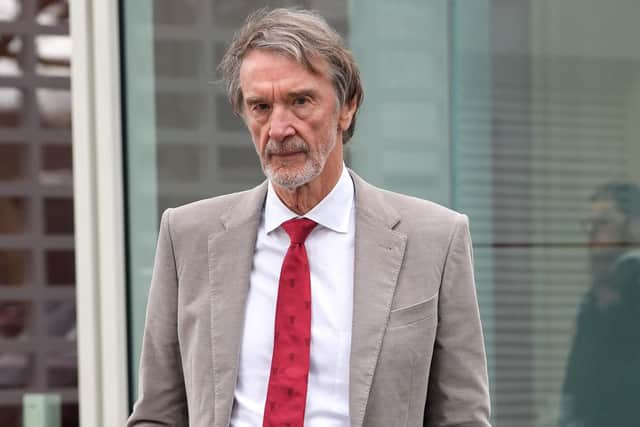

But these are private individuals, not stakeholders in one of the most famous football clubs in the world, holding a peerage granted in the 2018 Queen's Birthday Honours for ‘services to business and investment’.
According to the Sunday Times Rich List, Ratcliffe’s estimated net worth is £17.046bn, the 7th richest person in the UK last year, his money coming from setting up Ineos, a company manufacturing petrochemicals, chemicals and oil products.
His sports portfolio stretches to ownership of the Ineos Grenadiers cycling team and French Ligue 1 football club Nice, plus a third of the shares in the Mercedes-AMG Petronas Formula 1 team.
He’s a powerful man, so people listened when, in an interview with Sky News, he expressed the divisive opinion that the UK has been “colonised by immigrants”.
Under pressure, especially from Prime Minister Sir Keir Starmer and Manchester metro mayor, Andy Burnham, 73-year-old Ratcliffe was forced to apologise. He chose his words carefully, not exactly retracting the opinion expressed: “I am sorry that my choice of language has offended some people in the UK and Europe and caused concern”.
Let’s be realistic. As Reform UK leader Nigel Farage has wasted no time in reminding us, you might hear a version of Ratcliffe’s view in any pub in the land when a group of people of a certain standpoint gather together.
But they don’t own almost a third of Manchester United football club, nor are they in control of football operations, making crucial decisions regarding business matters, as Ratcliffe is. With rights come responsibilities; it’s highly irresponsible for him to opine like this, knowing that the world is listening.
Nor are they a known spokesperson for a national sport that is genuinely celebrated for its diversity and multi-culturalism, embracing players no matter where they were born or how they ended up in this country, whether by multi-million transfer deals or via a tough upbringing as an immigrant child in the UK.
It’s fair to say that no other sport in the UK is as diverse as football, all the way up from kids’ teams and grassroots level to the highest echelons of Manchester United and the like.
The club itself, after a hiatus of almost 24 hours following Ratcliffe’s remarks, eventually posted an online statement, saying Manchester is a city “anyone can call home”, pointing out that the club boasts a "diverse group of players, staff and global community of supporters".
Perhaps Ratcliffe would like to know that rather than being used as a force to set people against each other, it can bring them together. Every Monday evening at Barnsley FC, my son runs a club bringing together asylum seekers and other lads who just fancy a game and time together away from their troubles.
No-one asks where anyone came from, or how they got there, they just play. Last summer, I gave my son and one of the players a lift to training for a local Saturday league team. This polite young man, married with a three-year-old son, introduced himself and modestly admitted that yes, it was true, he was a striker for the Namibia national team. He’d recently been playing in a ‘World Cup’ for asylum seekers from African nations held in Liverpool.
If Ratcliffe wished to look, he would find that rather than being harnessed as a force to foment further dissent, football can bring people together like no other sport. It really could be the beautiful game, if only multi-billionaire co-owners would keep their personal politics out of it.