
For too long politics has been performed rather than lived and the local election results show that the public has had enough - Daxa Patel
There are moments in public life when the noise of politics grows so deafening that it drowns the quieter truth beneath it. This past week has been one of those moments. The headlines have been full of winners and losers, swings and shocks, the familiar choreography of post-election analysis.
Yet beneath the surface, a more consequential question is stirring, who are we becoming as a country, and what kind of leadership are we willing to accept.
For years, Britain has lived with a slow erosion of trust. Not in democracy itself, but in those who claim to speak in its name. The public is not apathetic, it is exhausted. Not disengaged, disillusioned. The message sent through ballot boxes this week was not a love letter to any party, but a warning to all of them.
The three main parties now face a reckoning. Not because of the numbers on the board, but because of what those numbers represent: a country no longer convinced that its political class understands the weight of responsibility it carries. This is not a crisis of ideology. It is a crisis of moral leadership.

For too long, politics has been performed rather than lived. We have been offered slogans instead of strategy, announcements instead of action, personalities instead of principles. Voters have learned to read between the lines. They can tell when a leader speaks from conviction and when they are simply filling airtime.
Into that vacuum has stepped Reform. Some see it as necessary disruption, others as a dangerous flirtation with the far right. An open mind is a civic duty, but instincts matter too. When a movement is built on grievance rather than governance, on anger rather than accountability, it rarely leads a nation towards stability or cohesion. And when its most prominent figure expresses admiration for leaders abroad whose approach to power is not rooted in restraint or constitutional humility, it should give us pause. Admiration is not neutral. It signals alignment. Alignment matters.
Yet the uncomfortable truth is this. A Reform government, or something like it, becomes plausible less through its own strength than through the failures of the established parties. When people feel unheard, they seek those who claim to hear them. When they feel unseen, they move toward those who promise visibility. When they feel abandoned, they will choose certainty over competence.
Responsibility for that does not lie with Reform. It lies with the parties that have had decades to show moral seriousness and too often chosen convenience instead. Labour must show that it knows the difference between winning power and wielding it wisely. The Conservatives must reckon with the cost of years of internal warfare and rediscover the discipline that once defined them. The Liberal Democrats must decide whether they are a party of protest or a party of purpose.
All three must make the case, clearly and credibly, for why they still have something to offer this country. Why they deserve not just votes, but trust. Why the centre ground remains worth defending, not as a timid halfway house, but as a commitment to tolerance, decency, and the quiet majority who want neither chaos nor extremism.
The centre is not weak, bland, or beige. It is where most people live, in their values and in their hopes for their families and communities. It is the home of fairness. It is where compromise is not capitulation but maturity. It is where the country breathes. If the established parties cannot inhabit that space with integrity and conviction, they will leave it vacant. And vacant spaces get filled.
The danger is not that Reform exists. The danger is that the parties that shaped modern Britain have forgotten how to speak to the country they claim to serve. They have forgotten that leadership is a duty, not a performance.
That public money is a moral contract, not a PR instrument. That social care, housing, education, and the dignity of ordinary lives are not policy areas, but the backbone of national integrity.
We do not need more noise. We need seriousness. We need grown ups. We need leaders who understand that the country is tired of being managed and ready to be led.
The electorate has done its part. It has sent a message, not subtle and not flattering. The question now is whether the three main parties will hear it or continue to speak among themselves while the ground shifts beneath their feet.
If they fail to rise to this moment, then yes, a Reform government, or something that looks very much like it, may become inevitable. Not because the nation has rushed to the extremes, but because the centre was left undefended.
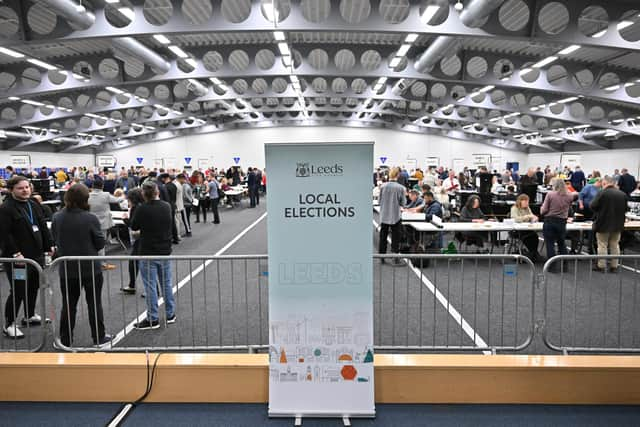
Closer to home, the same lesson applies. In Leeds, complacency finally met consequence. This is not about tribalism; it is about accountability. For too long, the city was taken for granted.
Daxa Manhar Patel is a leadership coach, author and solicitor.