
Frontier technology could well prove to be a lifeline for the NHS - Ismail Mulla
Artificial intelligence (AI) has well and truly arrived. It is becoming embedded in more and more facets of everyday life. To turn away from it would be foolish. But equally foolish would be to embrace it without due care and consideration.

Handing over total control to algorithms developed by tech bros without any safeguards in place puts society in a vulnerable position. These aren’t philanthropists working out of the goodness of their hearts but often cerebral billionaires looking to add a few more zeros at the end of their venture’s balance sheet and to their net worth.
Just take a look at social media. Tech companies have run amok without suitable safeguards in place.
However, one place where I do now believe AI and robotics, applied correctly, could have a transformative impact is the NHS.

Our ailing health service has often felt like a fax machine in an era of emails. A mangle in the age of the tumble drier. So it’s hardly the place you would look to for the deployment of AI. However, as last weekend’s edition of The Yorkshire Post showed, there is a quiet revolution underway in healthcare and it’s one that could help lift our ailing NHS from the sickbed while also delivering an uplift in positive patient outcomes.
Imagine an AI algorithm helping identify a hidden heart condition that increases a patient’s risk of having a potentially fatal or life-changing stroke.
That is what the algorithm called FIND-AF is doing. The technology searches people’s GP records to identify red flags that suggest they are at risk of developing AF in the next six months – and these people are then offered further testing to confirm a diagnosis.
The fact that this was developed by scientists and clinicians at the University of Leeds and Leeds Teaching Hospitals NHS Trust is a reminder of the skills and expertise that we have here. Skills and expertise that we talk down at our peril. It’s a position of strength that the region can build from.
Key to the deployment of frontier tech in the healthcare system is the role of scientists and clinicians. They need to be at the heart of the development. Not tech bros looking to purchase another penthouse in New York.
It’s not just AI that presents an opportunity for the NHS. Robotics has come a long way as well. In 2023/24, some 70,000 robotic-assisted surgeries were carried out in the NHS in England, but the number is expected to rise to around half a million over the next decade.
One of the big problems in the NHS is that of staff retention. Especially when it comes to frontline staff. Robotic technology is ergonomically better for surgeons and sees them suffer less from fatigue. This should enable them to operate for longer and retire later.
Jonathan Cowley, a consultant colorectal surgeon at Calderdale and Huddersfield NHS Foundation Trust, said: “The surgeons that use the technology find it comfortable – they’re sat down rather than being stood at a patient’s bedside.
“Nobody has been using it long enough to know whether that means people can work into their mid-70s rather than mid-60s but theoretically there should be less orthopaedic neck problems with time, so it’s better from a quality of life perspective.”
What must be stressed is that we are a long way away from autonomous robots and even if that does become a reality, they cannot replace surgeons. The guardrails can never be removed.
While robotics and AI are becoming more embedded in the diagnosis of patients and delivery of care, there is scope for more of the administrative burden to be taken on by frontier technology. But once again there needs to be human oversight.
What happens when an elderly patient is unable to track down the time for their next appointment? Or if their medication has changed and they require further clarification?
Talking to automated lines is frustrating enough as it is, nevermind when you’re requiring medical assistance.
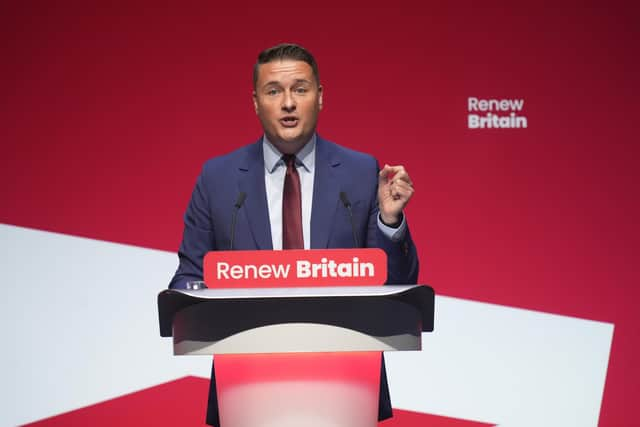
When the Health Secretary Wes Streeting unveiled the Government’s plans to turnaround the stricken tanker that is the NHS and he started talking about AI and robotics being at the heart of it, I confess to rolling my eyes. Not another politician offering a quick fix, I thought. But if harnessed properly, frontier technology could well be a lifeline to the NHS.
In fairness, Streeting has first-hand experience having undergone robotic-assisted surgery when he had treatment for kidney cancer so you could see why he would be such an advocate.