
Gender stereotypes are still holding women back - Freddie-Nicolle Brace
Much has been said about how difficult it is for women to start their own businesses, with unconscious bias and systemic sexism sitting at the forefront of the problem. But the most recent data shows that more women than ever before are pushing through to found start-ups.

In fact, in 2023 the UK saw an unprecedented 164,000 incorporations by women founders, the highest number on record for a single calendar year. The number of female founders has grown so fast in recent years that 2023’s total is more than double 2018’s figure – a veritable boom.
Consequently, there are now 1.6 million female-owned businesses in the UK, 76 per cent more than in 2003. Interestingly, there has been a particularly marked rise in female entrepreneurship since the pandemic, with women hoping for a better work-life balance thanks to the enhanced flexibility that comes with being a founder, according to Small Business Britain.
Without taking away from these results, and the positive effect of more female-founded businesses across the UK economy, it is crucial that we remember the bigger picture. Simply put, while progress is being made, huge structural issues continue to inhibit women from growing and scaling successful businesses in line with their male counterparts. These underlying challenges faced by female entrepreneurs do not magically disappear after the incorporation of their companies.
Most of the obstacles affecting women from operating businesses successfully do not revolve around their skill sets, but are instead a continuation of the unconscious (and sometimes not so unconscious) bias that remains prevalent across UK society, and globally.
This is particularly evident in the field of investment and funding. A business's growth is critical to its longevity and success, and access to funding is, of course, the lifeline. This is not a problem for businesses led by all-male teams, which took 85.1 per cent of the UK funding raised in the first half of 2023, while their all-female counterparts took home just 3.5 per cent, according to Beauhurst’s landmark report.
It is well established that people tend to believe in, trust, and therefore invest in people similar to themselves. Given the significant lack of female investors and female-led venture capitalists, women are at an instant and obvious disadvantage. An individual’s gender has an effect on the types of questions that will be asked of them in a venture capitalist setting, as proven by the Harvard Business Review in 2017. More specifically, this means that male founders receive more positive lines of questioning, such as how their business can grow and scale, while the more negative and sceptical questions are reserved for women, honing in on potential problems and the inherent worth of the business.
In short, women in business are not taken as seriously as men. Gender stereotypes are very much alive and well in 2024, with women still being seen by many as emotional, rather than logical, housekeepers and carers, rather than leaders in business or beyond.
Breaking gender stereotypes and dealing with minimal funding is not the only barrier faced by female entrepreneurs. One would hope that, given the aforementioned obstacles, there would be plenty of support and mentoring opportunities. Alas, no.
Most disappointing of all is that none of these points are new. They have been reiterated time and again by women hoping to change the status quo. Hopefully, the findings of the UK government’s Women-Led High-Growth Enterprise Taskforce Report will be taken more seriously, thereby giving female entrepreneurs the platform and level playing field they have long been denied.
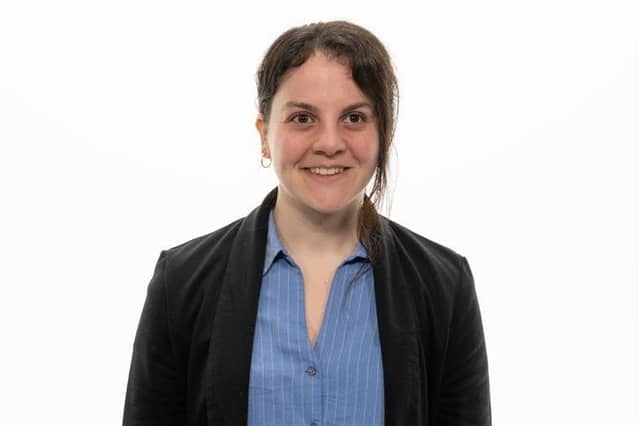
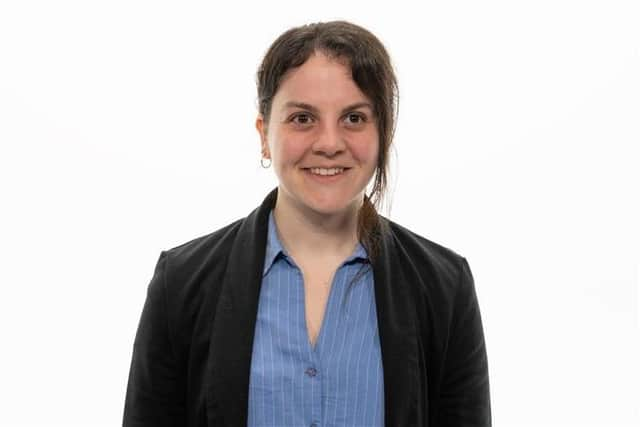
Freddie-Nicolle Brace is head of legal at 1st Formations.