
Gibraltarians are not just ‘British people abroad’ nor are they Spanish, they have their own culture and identity - Kayleigh Beardsley
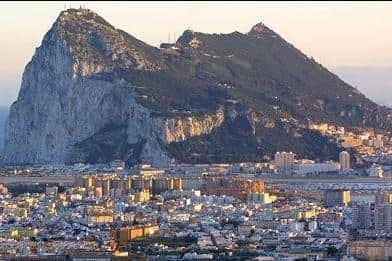
Gibraltar may be one of the smallest territories in Europe, but few places carry such an outsized political identity. For Spain, it remains an unresolved territorial claim. For Britain, a lingering symbol of imperial history. After spending a summer in southern Spain and visiting the territory, it became clear to me that the people most affected by the dispute are often the ones ignored within it.
Although tensions have somewhat eased following the legal uncertainty that followed Brexit, small disputes surrounding Gibraltar continue to persist. Working for a summer in the south of Spain, I spent time on both sides of the frontier and saw first-hand how centuries of disagreement had shaped attitudes in the region.
Whilst shadowing a story on the waters surrounding the territory, I spoke to both Spanish fishermen and Gibraltarians about the ongoing tensions at sea. Spanish fishermen were sure that those on the Rock were sailing in their ‘patch’ but the Gibraltarians we spoke to were not interested in the port and wanted freedom to sail on their own shores. It was clear the centuries of back and forth had nurtured a distaste between the two sides of the border.
My trip, though short, also opened my eyes to the strength of Gibraltarian identity. I was fortunate enough to attend Gibraltar National Day, where thousands gathered in the main square to celebrate the 1967 referendum in which Gibraltarians overwhelmingly voted to remain under British sovereignty. Having lived in England my entire life, I thought I understood displays of national pride but the atmosphere in Gibraltar was unlike anything I had seen before. A covering of red, white, and blue as far as the eye could see. The sheer number of British flags which I had only seen replicated at the 2012 London Olympics; it was a big shock to me.

I knew the people of Gib wanted to remain British, but I had never understood the depth of emotion attached to that identity. It was even more evident when Fabian Picardo, chief minister of Gibraltar, took to the stage in Grand Casemates Square to speak to the attendees. He gave an emotional speech that highlighted just how important community, resilience, and belonging was for the locals. Ending with a big display of confetti and crowds celebrating late into the evening.
Spanish claims over Gibraltar lack the consideration of the most important factor of all: the wishes and identity of the people living there. The dispute is frequently framed around treaties, geography, and imperial history, yet the only people consistently speaking for Gibraltarians are the Gibraltarians themselves and their opinion has remained undeniably clear for more than three centuries.
At the same time, Gibraltarians are not just ‘British people abroad’, despite how many in Britain perceive them, but rather they have their own culture shaped by conflict and imperialism. British culture was familiar to the residents as it was everything they had ever known, generations passed down what they were taught and it had become the Gibraltarian way of life. Being labelled Spanish solely due to the geographical location of the land was not considering the lives and feelings of the community that were currently living there. Constantly being pressured by Spain pushed them away and gave them the feeling they were being antagonised instead of welcomed with open arms.
Ironically, much of the modern identity was strengthened by Spanish pressure itself. During Franco’s regime, the strain put on the people to force them closer towards Spain had the opposite effect. The closure of the frontier in 1969, following the referendum in which over 99 percent of voters chose to remain under British sovereignty, was intended to isolate the territory and pressure its residents into reconsidering their loyalties.
Families were separated, jobs were lost and connections between Gibraltar and Spain were severed overnight. Yet rather than weakening British identity on the Rock, these policies reinforced it. Gibraltarians understood the political pressure being placed upon them, and many responded by distancing themselves further from Spanish culture and embracing a stronger sense of collective identity. The failure of these efforts became clear decades later.
After the border reopened and relations somewhat improved, another referendum in 2002 once again produced an overwhelming rejection of shared sovereignty with Spain. Despite years of pressure and uncertainty, the population’s position had barely changed.
What many people don’t see in the tensions over Gibraltar is the humanity behind the politics. The opinions of the locals seem to only matter when being used for political gain and strengthen the argument for either side. Yet centuries of political pressure and isolation helped manifest an even stronger community and unite the thousands of people who inhabit the area. Gibraltar is no longer just a question of sovereignty or geography. It is a reminder that identity is shaped not only by borders and treaties, but by history and the determination of people to define themselves on their own terms.
Kayleigh Beardsley is a journalist studying at Leeds Trinity University.