
Government must act as the Iran war threatens our way of life - Jayne Dowle
Sir Keir Starmer will have a lot on his mind this Monday morning, but whatever crisis his leadership faces, we need someone, anyone, in government to lead as the Iran war begins to threaten our way of life. That is no exaggeration. Whilst Downing Street attention has been focused on what have turned out to be catastrophic local elections for Labour, the country has been left in limbo for more than two months now.
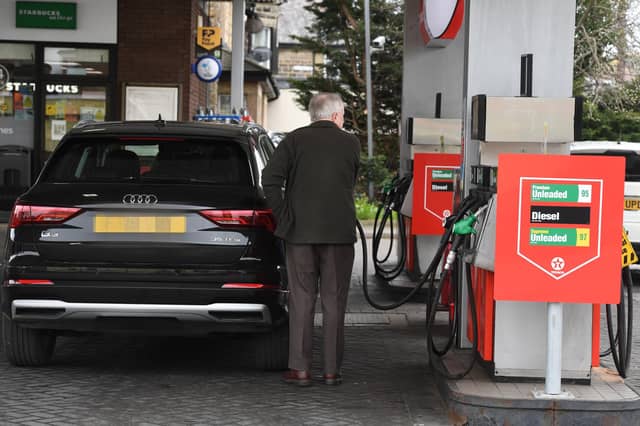


Airlines cancel thousands of flights and indicate that supplies of jet fuel are running perilously low, farmers warn that shortage of fertiliser will drive up food prices even further and mortgage rates climb, but the government has singularly failed to acknowledge the pain the crisis is causing ordinary people.
Such paralysis means it is falling to others to say what ministers will not.
A new report from the IPPR (Institute for Public Policy Research) recommends that Britain should lower speed limits for drivers and bring in a temporary 10p fuel duty cut as part of a package of measures to combat the detrimental effect of hostilities in the Strait of Hormuz.
A fifth of the world’s oil normally flows through the Strait; but Iran’s blockage of this vital artery has trapped oil tankers and container ships and driven energy prices up across the world.
Capping legal speed limits at 20mph in towns and cities and 60mph on motorways would help reduce fuel demand, the think tank recommends. This should be coupled with “advice” on driving more efficiently, increased home working, car pooling and swapping short trips to walking and cycling.
Forgive me for a slight sense of déjà vu here, but didn’t the motoring organisations, including the AA, make similar suggestions weeks ago when the impact of President Trump’s bombardment of Iran started to see pump prices of petrol and diesel climb?
There was more than a hint of Harry Enfield’s spoof 1930s newsreader creation Mr Cholmondley-Warner about the AA’s instructions – to save fuel, avoid harsh braking by anticipating traffic lights and roundabouts, for example – but at least they were constructive. From what I’ve seen on the roads since, most drivers have taken precisely no notice whatsoever.
“Advice” would be nice, but if we are to weather the fiscal storm, orders might be more effective. Is the hangover of the Covid pandemic lockdowns so bad that government no longer has the courage to tell people what to do?
Yes, huge mistakes were made six years ago and much hypocrisy uncovered, but a strong and confident government should be able to rise above this and lead from the front.
If nothing is done inflation is predicted to soar. Recommendations from the IPPR also include bringing in a new energy price cap of £2,000 a year to support consumers and keep inflation, which could soar as high as 5.8 per cent from the current rate of 3.5 per cent, under control.
Such a rise in inflation will have significant impact on the cost of living, for everyone.
Any interventions of support, including a cut in fuel duty, would come at a cost to the treasury, putting further pressure on the servicing of the national debt. But this must be weighed against the very real possibility of stagnant economic growth.
It would also anger the Cabinet’s supporters of net zero, such as Ed Miliband. The Secretary of State for Energy Security and Net Zero’s stock response is to point towards the UK becoming energy self-sufficient through wind farms and other forms of clean energy generation.
This however, adds – sorry – fuel to the fire of consumers. Clean energy is a hugely ambitious notion that won’t help today, tomorrow or even next year. And it won’t help drivers trying to get to work, or haulage companies delivering food and essential supplies, or the NHS filling up ambulances and paramedic vehicles.
As staple services pay so much for more for diesel and petrol it is inevitable that increases will be passed on to the public one way or another.
Food prices have already risen by 50 per cent since 2021, according to research from another think tank, the Energy and Climate Intelligence Unit (ECIU). That means in just five years the price of what we eat has gone up at the same rate as it did over the previous two decades.
Such acceleration of costs is becoming unsustainable for so many households. Starmer, who came to power promising to end the reliance of 2.8 million people – that’s four per cent of the UK population – on food banks surely must know this, as must Chancellor Rachel Reeves. She recently told The Yorkshire Post that fuel duty remains “under review”, but how much longer can “under review" continue?
This and many other questions remain outstanding.
For all he has done wrong, Starmer has been right to prioritise international diplomacy over direct action over Iran. Thankfully he has not dragged us into war.
He has flown around the world to meet foreign leaders, behaving with dignity and decorum, even in the onslaught of fierce personal and political insults from President Trump. However, this is only half the story. Back home, such detachment is leading the country seriously adrift.