
Government’s response to crisis in palliative care does not reflect the scale or urgency of the issue - Victoria Wharton
Palliative care in England is in crisis. New research recently published by Marie Curie revealed that 170,000 people a year die without the care they need. That is nearly one in three people. Without urgent action, unmet need is projected to rise by 23 per cent by 2050, meaning more than 212,000 people in England could die each year without the care they need.
The UK government's response to this crisis does not reflect the scale or urgency of the issue. Recently, the Health and Social Care Committee revealed that palliative and end of life care services in England are ‘inadequate’ and dying people face a ‘postcode lottery’ of care, whilst the Public Accounts Committee (PAC) have issued one of the starkest warnings to date. The PACs inquiry heard that if no new funding is injected into the sector before the new financial year, hospices would be forced to reduce services further.
The long-promised Palliative and End of Life care Modern Service Framework, which has been delayed until the Autumn, provides the UK Government a critical opportunity to guarantee 24/7 support in every part of the country, delivered by a suitably trained workforce. Only a commitment to change backed by genuine accountability and transformative funding will move care out of hospitals and into the heart of communities.
Meanwhile, our health system has become reliant on emergency departments and hospitals as a safety net for people nearing the end of life - not because they are the best place for care, but because alternatives are either unavailable or unsuitable. Sadly, for far too many dying people, the final days of life involve stressful and often entirely avoidable emergency admissions, with care delivered by teams under immense pressure, and discharged either being rushed or unnecessarily delayed.
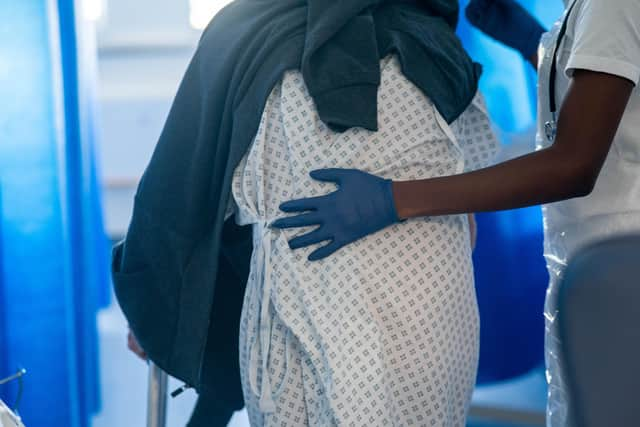

In Yorkshire and the North East 7.2 per cent of dying people have three or more emergency admissions in the last 90 days of life. The quality of hospital-based end of life care, and the transition from hospital to home is critically important. Both are currently falling short.
The 10 Year Health Plan for England committed to “end the disgraceful spectacle of corridor care” by 2029 and a recent document issued by NHS England outlined a plan to tackle overcrowding in hospitals by opening dedicated areas in emergency departments to prioritise people who are likely to need "extended" care.
While creating new extended stay areas may help manage overcrowding, it does not address the underlying reasons why so many dying people end up in emergency departments in the first place. With 14 per cent of all emergency hospital admissions involving people in their final year of life, Marie Curie is calling for palliative care specialists to be integrated into all emergency departments.
This would allow earlier identification, assessment and treatment of people who are dying, and - where appropriate - support their safe discharge to a preferred place of care. Ensuring dignity for dying people is both a moral imperative and a clear strategy to improve overcrowding. Investing in and prioritising palliative and end of life care reform would substantially reduce pressure on overburdened NHS services, including A&Es.
Take our Responsive Emergency Assessment and Community Team (REACT) service in Bradford. In partnership with the Bradford Royal Infirmary, this service sees Marie Curie specialist teams working in the emergency department and the local community to identify people at the end of life earlier. Instead of hospital admission, patients, where appropriate, are admitted to the care of the REACT community arm, also known as the virtual ward, where they can access community or hospice-at-home services. REACT provides specialist and holistic multidisciplinary support for up to 72 hours while arranging appropriate ongoing care in line with the patient's wishes.
This innovative service reduces unnecessary hospital stays, prevents dying people from spending their final days on busy wards, or in A&E corridors and ensures earlier referral to palliative care – improving both access to palliative care and patient experience. Our data has shown that the service has cut the average time spent in hospital during the final year of life from 38 to 17 days.
Marie Curie is also working with Leeds Hospitals Charity, alongside Royal Brompton & Harefield Hospitals Charity in London, as part of a current research funding partnership. Working together, we will generate evidence to influence policy and practice, ensuring that care in hospitals, and transitions home, reflect what matters most to patients and families – aiming to close evidence gaps and improve palliative and end-of-life care in hospitals.
Dying well should not depend on where you live or what you can give to a charity. We owe it to every person in Yorkshire and across the country that when the time comes, they can rely on a system that delivers care and dignity – not just for some but for all.
Victoria Wharton is director of Caring Services, North of England at Marie Curie.