
Greater accountability is needed to rebuild trust in politics - Daxa Patel
As the nation digests the outcome of the second phase of the Covid Inquiry, the phrase "too little, too late" weighs heavily on us all. We faced an unprecedented event, and the failures of the state were colossal at many levels. Looking back, after Brexit and the 2019 election, Prime Minister Boris Johnson had only one month of ‘normal’ governance before the world was engulfed by the coronavirus crisis.
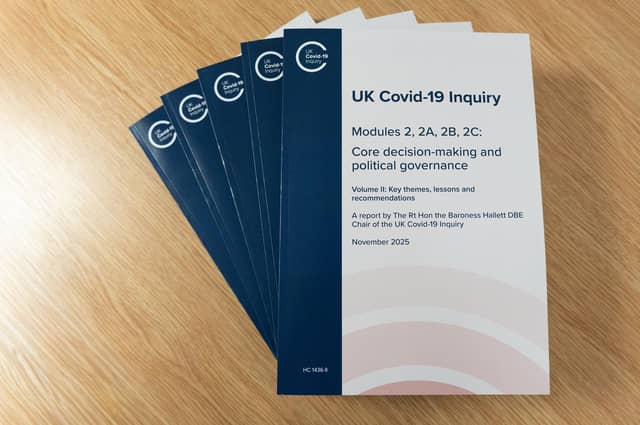

Criticising the £200m spent on the inquiry seems easy, and the scathing remarks from former PM Johnson and Dominic Cummings after the report's release are no help. What we urgently need as a nation and as leaders is to support those left behind - those struggling with the aftermath of this catastrophic pandemic and learn from the mistakes so history never repeats itself.
A clear thread runs throughout the findings: failures in communication, the erosion of public trust, lack of democratic accountability, absence of humility, and a scarcity of honesty. I say ‘we’ because this was a collective failure.
Johnson may disagree, but he cannot deny that while we navigated uncharted territory, his light-touch leadership style failed abysmally. He thrived as Mayor of London, but as Prime Minister, he was out of his depth. The repeated claim of “following the science” without genuinely listening caused harm on every front.
I applaud Baroness Hallett, Chair of the Covid Inquiry, for her candour and compassion in presenting the eight-hundred-page report. Her sensitivity and respect shone far brighter than those who led the government.
This second report focused on whether loss of life could have been reduced. Of course, decisions were made under unimaginable pressure and uncertainty. But the report reveals a deeper crisis: mistrust and poor communication between all four governments, with political actions contributing more to deaths than the virus itself. This is a painful yet inescapable truth for those who continue to grapple with the loss of loved ones.
At the individual level, we must not forget the human toll: families barred from bedside farewells, funerals so restricted that basic comforts like the touch of a hand were denied. Sons and daughters visiting parents in care homes could only knock on windows to unseen or unresponsive relatives. Imagine the loneliness and fear of vulnerable residents, cocooned or sent back from hospitals without testing simply to free up beds.
The collateral damage hit those already disadvantaged the hardest, while political leaders flagrantly broke their own rules to attend private parties.
A close friend of mine, then a chief executive of a respected charity, also primary carer for her mother, described the words she was reading as - toxic, chaotic, indecisive, and utterly lacking urgency, and so on. She was not shocked by the report’s findings, having lived through it. She followed every rule to protect her beloved mother, who nonetheless died. The grief and trauma she carries are shared by millions. Yet those responsible for this profound mismanagement face no real consequences. Had this been a private organisation, leaders might have faced corporate manslaughter charges. Instead, elected officials walk free.
My friend’s voice echoes the silence and sorrow of every bereaved carer and child whose loved ones did not die from Covid alone, but from government failings.
Baroness Hallett’s findings were polite - too polite. The truth is the former Prime Minister, and his ministers were incompetent at best.
Yet, amid this disaster, remarkable achievements emerged. The rapid development and rollout of the vaccine, the furlough scheme that safeguarded jobs and businesses, and the tireless dedication of NHS professionals, scientists, key workers, and countless others.
Beyond policy failures, the behaviours of political leaders themselves inflicted deep wounds on public trust and morale. The repeated spectacle of those in power breaking their own rules, offering half-hearted apologies, or shifting blame, has bred disillusionment. Today’s politicians cannot simply rest on the laurels of regretting past mistakes; they must take bold, consistent actions to restore faith in governance. If not, we risk slipping into a society where apathy and mistrust become the new normal.
We stand as the first and the last generation to have lived through this pandemic. With this comes an immense responsibility and an opportunity for pride: to ensure we do more for each other going forward so no one is left feeling unseen, isolated, or unloved. We need softer, more empathetic leadership and less bureaucratic gridlock.
This virus did not discriminate; it affected every one of us. Now, we must unite under one mission: to demand greater accountability that fosters transparency, rebuilds trust, and honours the sacrifices made.
Daxa Manhar Patel is a leadership coach, author and solicitor.