
Heatwaves are heaping pressure on Yorkshire’s coastal services - Jayne Dowle
When the sun beats down and the temperature starts hitting the high 20s, it’s all too tempting to pack up the car and head for the coast, but council bosses are urging us to think twice.

It might sound counterintuitive - after all, the good weather boosts tourism and brings much-needed income to our coastal communities, including Scarborough, Filey, Whitby and Bridlington.
However, rather like the rest of use, coastal services face unprecedented pressure when the mercury begins to climb.
Recent super-hot weather has impacted street cleansing, commercial waste collection and the public convenience network, Coun Richard Foster, North Yorkshire Council’s executive member for the environment, announced ahead of a full council meeting this week.
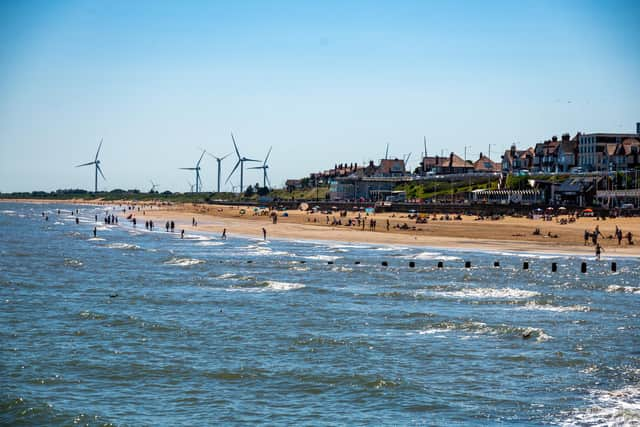

Valuable “key learnings” had been “captured” Foster said, praising relevant teams for their effective response to challenging situations, mobilising additional resources and working collaboratively together. These “learnings” will “strengthen… resilience ahead of future peaks in demand”.
If this sounds like preparation for going into battle, perhaps that is because it is. Anyone who has been to the coast - or lives there - in recent weeks will have seen the sheer amount of rubbish day-trippers leave behind, seemingly without a thought for the environment they have just enjoyed.
If a bin is full to overflowing, responsible people take their litter with them and find a suitable place for disposal later. Too many just don’t care, adding to the pile of takeaway cartons, bottles, cans and unmentionable items festering next to bins. Would they do this outside their own homes? Probably not, but coastal locations, as well as countryside beauty spots, are simply taken for granted.
What such selfish people don’t realise is that our natural resources should never be taken for granted. Rising global temperatures are already a key warning that nature is under stress.
Even the North Sea itself is officially in ‘marine heatwave’ status. At between 15 and 19 degrees C, seawater temperatures are currently around two degrees higher than what is considered ‘normal’ for this time of year, according to the Met Office – this means they’re in ‘moderate’ to ‘severe’ heatwave.
Although the sea is warmer than it could be, the shock of entering cold water, and other dangers such as strong tides, undercurrents, vegetation and submerged rocks, can prove fatal to the unwary, a spokesperson for North Yorkshire council added.
At least 18 people, many of them young, have died by drowning in open water so far this year in the UK, in May and June alone. These tragedies should encourage others to take the greatest of care, but inevitably, there will be more deaths to come. North Yorkshire Fire and Rescue Services have added their authority to the council’s warning; overburdened emergency services put everyone at risk.
All of this points to one thing. As a country, we are not prepared for heatwaves. Those of us with long memories can harp back to the long, hot summer of 1976, when the UK sweltered for weeks on end and we queued for water from standpipes in the street.
But this was 50 years ago, and the world was a different place back then. Millions of people – my own family included – had no access to a car, so we couldn’t just nip off to the coast whenever we felt like it. There was respect for public places, including beaches, countryside and parks, and Keep Britain Tidy, a litter campaign supported by those furry early recyclers, The Wombles.
There was also rather more respect for authority. If a politician or a police officer or even a newsreader, gave a warning most people did listen and pay attention.
I wouldn’t want to go back 50 years, but the point remains that social habits have changed hugely in half a century. And along with this, we’re now dealing not one with one year of heatwaves, but year after year.
Our society has been unprepared so far. Two in five adults say they have never seen information on how to prepare for a heatwave, according to research by the British Red Cross, and four out of 10 persist in regarding heatwaves as a positive event.
This is especially worrying, creating a gap between public perception and the necessary measures required to protect ourselves from intense heat, especially if we’re young, older or vulnerable.
Although North Yorkshire Council raising concerns might sound doom-laden, its approach should be singled out for praise.
As the British Red Cross points out, being prepared for a heatwave will impact how easily you are able to manage it. Heatwaves often develop quickly, giving us limited time to take precautions.