
How a mansion tax can help stop the decline in living standards - Andy Brown
One of the key reasons why so many ordinary working people feel angry and frustrated with their political leaders at the moment is that their living standards have been static or have declined for decades.
Economic statistics tell us that the Gross Domestic Product of the United Kingdom and the United States have both risen but at a very slow pace. They also tell us that poorer and middle income earners have struggled whilst the very rich have taken an ever increasing share. Wealth is being sucked upwards not spread around.
Go into some of our more run down cities and towns and you don’t need to rely on statistics to see the impact of decades of decline and neglect. The closed shops in the High Street, crumbling housing stock and decaying former factories are all too easy to see.
Those who are wealthy seem to have become very skilled at avoiding tax, as off shore accounts and shady bitcoin sites overseen by prosperous accountants and lawyers proliferate. Those who work and do pay taxes are suffering under a heavy burden as they struggle to cover the costs of funding public services for an increasingly elderly population with expensive needs for health and care.

So, it is not surprising that increasing numbers of politicians and economists are beginning to look hard at whether the solution might be to introduce a wealth tax. If the very rich have been taking an unusually large share of our country’s wealth, then perhaps the time has come to address the imbalance.
How to do this effectively is therefore a really important question. If the very rich can dodge income tax, then there is every prospect that they can also dodge a wealth tax. Taxes need designing with skill and with care otherwise they produce perverse outcomes. As any farmer with a low income but valuable land learned from the clumsily designed changes in inheritance taxation on farmed land.
A simple tax on wealth could easily result in a lot more of the very wealthy registering their residence abroad. That didn’t happen when Norway introduced a wealth tax, but Norway is nowhere near as open an economy as Britain and there aren’t too many places on the planet where you can speak that language and feel at home.
What is much more likely to work here is to heavily tax the things that the very wealthy own or buy in this country and to use the money to reduce the tax burden on the poorest or to pay for services that we all need to use.
To give them a rare bit of credit the new Labour government did this when they introduced VAT on Private School fees. They were told those schools would close and thousands more children would arrive in state schools and that this would punch a hole in the money raised. A year on there is very little evidence of anything like that happening. The very wealthy still want their children to go to Eton and Harrow and are just paying a bit more for the privilege.
Taxing things that can only be afforded by the wealthy like a private jet is a much more reliable way at spreading the burden of taxation more fairly than a crude wealth tax.
Few rich people are going to decide to buy a bottom of the range Skoda instead of a top of the range Rolls Royce if the taxes on luxury cars are hiked significantly.
Indeed, for a lot of people the whole point of making the purchase is the status symbol so making a show off car more expensive is most unlikely to reduce its attractiveness and hit sales.
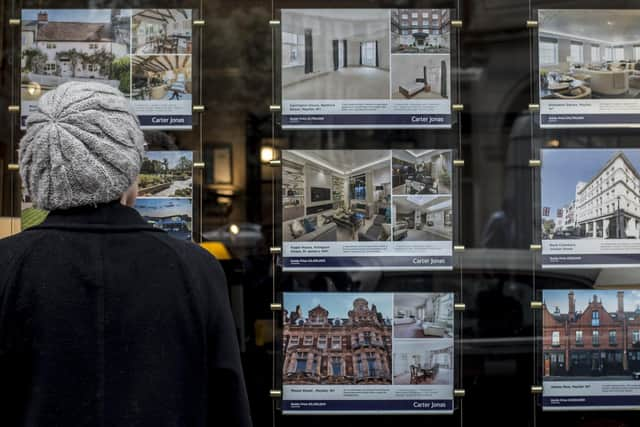
It is, however, when it comes to luxury homes that the potential for changes in taxation is greatest. At the moment, council tax is capped so that someone who owns a giant mansion pays no more than some people owning a much more modest detached house in an attractive location. The proportion of income spent on annual council tax by a young first time buyer is massively greater than the proportion spent by a football star on a million a week.
More significantly it is also lower than the rate of taxation paid by a rich oil magnate or an exiled millionaire on their comfortable home in the safe English countryside. A home which might be just one of multiple properties owned around the world.
Increasing taxation on physical property held in this country regardless of your real or convenient nationality ought to be a no brainer. It is a tax that can’t be dodged. You can’t move a mansion abroad and if the rich person sells up and moves abroad then there is one more property on the market that ultimately helps the housing crisis.
In the early 1960s when Winston Churchill was Prime Minister the top rate of income tax in the UK was over 90 per cent. It is now 45 per cent. If we really want to restore the era when Britain was great then we need to find new and imaginative ways of properly sharing the burden of maintaining the welfare state. A mansion tax would be a very effective first step.
Andy Brown is the Green Party councillor for Aire Valley in North Yorkshire.