
How a mass transit network in West Yorkshire can boost health outcomes - Linda Pollard
The new government has made kickstarting economic growth its top priority. That's most welcome. A vibrant, fully-functioning economy is vital for a healthy, thriving population, and we’re proud to be playing our part in driving both wealth and wellbeing.
The growth opportunity is significant: a recent report estimates that by reintegrating just half of those who have dropped out of the workforce due to ill health since 2020, we could boost the UK’s GDP by a massive £109bn over the next five years.
To help achieve this and deliver the government’s growth mission, we desperately need a better-connected West Yorkshire with easy access to both health services and economic opportunities.
Leeds Teaching Hospitals Trust is one of the largest and busiest acute hospital trusts in the country, with more than 20,000 members of staff treating almost 2 million patients every year. That’s a lot of people moving across the city and beyond every single day.
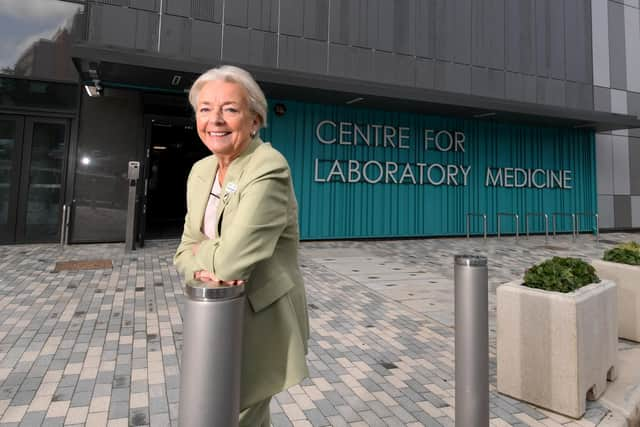

So we fully support Mayor Tracy Brabin’s vision to improve access to our city’s two biggest hospital sites – St James’s Hospital, and Leeds General Infirmary – through a new West Yorkshire Mass Transit network.
Not only would this allow our staff and patients to get to us more quickly, easily and sustainably, it would also contribute to the reduction of health inequalities in our region.
Because we know that poverty and poor health are interlinked – that our most deprived communities are also those with the most complex health needs.
Currently around a third of our staff regularly travel to work by car. We have an ambition to become one of the cleanest and greenest NHS Trusts in the UK, so we can leave a healthier legacy for future generations. Tracy’s Mass Transit plans will be a huge contributor to this effort.
While her decision to bring buses back under public control earlier this year was most welcome, much more needs to be done to ensure the region’s hospitals are as connected as possible to the communities we serve.
Each proposed route option for the Leeds Line would see an all important new link between St James’s Hospital and Leeds City Centre, which continues on to south Leeds and the White Rose Centre. This is vital for connecting our largest site, situated to the northeast of the city centre, to communities south of the river.
As we push ahead with our plans to build a state-of-the-art hospital for children, adults and maternity services at Leeds General Infirmary, access and connectivity are crucial. Strong public transport links will strengthen our ability to attract the very best healthcare workers, entrepreneurs and investors to our city.
Importantly, the Bradford line will also help to link those living in Bradford to the network, easing the burden on overcrowded intercity rail services.
It hardly needs me to add that Leeds – and by extension the wider West Yorkshire region – is the largest city in Western Europe without an in-built Mass Transit system.
In recent decades, the city has lagged behind the likes of Manchester, Sheffield and Newcastle, as each of them developed their own successful Mass Transit systems from the 80s onwards.
But Leeds was not always behind the other northern cities when it came to transport. Forward-looking town planners in the 60s re-drew the geography of Leeds to become “the motorway city of the 70s”.
Leeds’s connectivity with the country’s busiest motorways saw it thrive in the second half of the 20th century to become one of the North’s most economically important cities.
However, different times call for different solutions. With the ongoing climate emergency, as well as the city’s chronic traffic congestion and lack of reliable public transport, we need a revolution in accessible and affordable public transport to carry Leeds through the next century as a powerhouse of the North of England.
We need Mass Transit to help deliver the equitable economic growth that lifts communities out of poverty and reduces inequalities to improve the region’s health and wellbeing.
This is why it is so important for the people of West Yorkshire to have their say.
Make no mistake: the Mayor’s consultation is not just about starting construction in 2028, or getting the first lines up and running in the early 2030s.
It’s about contributing to a better-connected region for the next hundred years or more – so future generations, long after we are gone, can benefit from the decisions we make today.
So what are you waiting for? Get involved, have your say, and be a part of our region’s proud history.
Dame Linda Pollard is the chair of Leeds Teaching Hospitals Trust.
The West Yorkshire Mass Transit route options consultation is now open, and closes at midnight on September 30. For more information, visit wymasstransit.com