
How Boxing Day floods led to rebirth of iconic Yorkshire attraction - Gareth Henry
It is 10 years since York was inundated with some of the worst flooding in living memory.
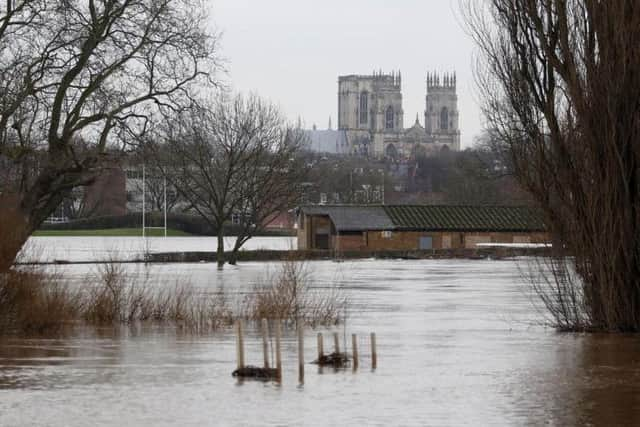
The high water levels in both the Ouse and Foss on Boxing Day 2015, exacerbated by the failure of the Foss Barrier, led to the basement of Jorvik Viking Centre ending up under a metre of filthy water – and the start of the rebirth of an iconic attraction.
The flood gave us a tabula rasa moment – from the point where the insurance assessors visited and told us that most of our recreation of Viking-age Coppergate, and the artefact galleries, would need replacing due to water damage, we knew we had to do something different, and took the opportunity to reimagine how JORVIK functioned.
We re-opened in April 2017 with a new version of JORVIK.

It was also the start of a turbulent decade, not only for JORVIK and its sister York Archaeology attractions, but for tourism in general.
Three short years later, and the Covid pandemic hit, and this really was a pivot point for tourism.
For a period, no visitors through the door, and even when restrictions were eased, the number of people permitted through the door was significantly lower than usual.
We turned to digital technology to deliver school workshops, and even held the world’s largest digital Viking Festival – That JORVIK Viking Thing – which reached over three million people around the world!
Staycations and limited overseas travel provided a boost in the first two years following the pandemic, with buoyant visitor numbers still enjoying York’s Viking history – but along the way, we lost two of York Archaeology’s attractions.
The Richard III Experience at Monk Bar never re-opened after the pandemic, and the Henry VII Experience at Micklegate Bar continued for two more years as the City Walls Experience, before closing in October 2024.
The pandemic also prompted a change in customer behaviour – a subtle shift where they started to understand the value of their patronage.
As visitor attractions, whose potential audiences are very much swayed by consumer reviews and ratings, this creates an additional drive to keep things refreshed and updated regularly!
Indeed, in November this year, one of the areas that generated the most negative feedback for us – JORVIK’s limited toilet facilities – received a make-over, and there hasn’t been a single complaint since!
It will be fascinating to see how the tourism landscape changes over the next ten years.
We’re potentially on the brink of having a visitor levy applied to all overnight stays in York and North Yorkshire, and the income that will generate could be transformative – supporting transport and city centre infrastructure to benefit locals and visitors alike.
However, this has to balance with affordability – inflation and a cost-of-living crisis is hitting every pocket, with people spending more per transaction but making fewer purchases, so competition for every pound is already high.
Fast forward another ten years, and what will York be like? It will perhaps have more in common with its Viking predecessor – more open spaces and fewer vehicles if the Castle Car Park regeneration comes to fruition.
The completion of York Central with an additional 2500 homes, new office, retail and hospitality space, plus parkland and public squares.
And maybe the next incarnation of JORVIK Viking Centre – bringing the sights, sounds and smells of Viking-age York ready for the next 25 million people to pass through its doors.
Gareth Henry is York Archaeology’s head of public engagement.