
How can the farming industry bounce back from the Government’s closure of SFI? - Neill Hogg
The sudden closure of the Sustainable Farming Incentive (SFI) at the start of the month has brought further uncertainty to the agricultural industry, leaving many farmers and landowners hesitant about their next steps.
With the industry already grappling with the changes to the inheritance tax regime, due to take effect from April 2026, this latest news brings another blow to those who rely on Government funding to support the financial viability of their farm businesses.
This latest decision risks undermining confidence in future and existing Government-led environmental schemes – many of which are intended to benefit farmers as well as the general public.
Alongside this, there has already been discussion that some farmers will pivot towards more intensive production to maintain financial stability. Many of those intending to ringfence land areas for environmental purposes are already planning to put this back into traditional arable rotations. If this turnaround does happen at scale, it could have unintended environmental consequences which will not support the 2040 Net Zero target being pursued by the industry.
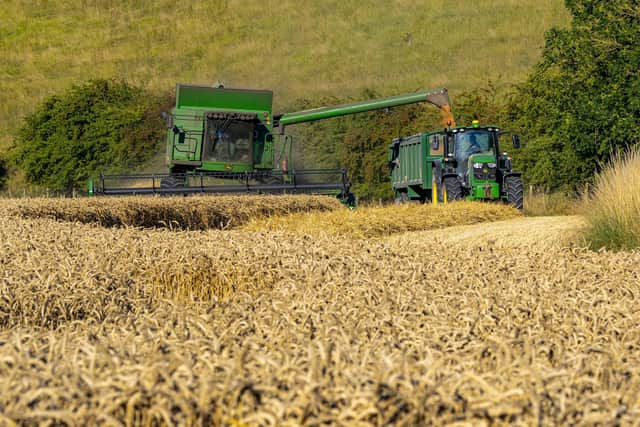

In times of ambiguity, it can be difficult to see the bigger picture, particularly when many environmental investments have been created with a long-term vision in mind. But I’d encourage farmers to focus on what they are able to control – working with experts, consultants and talking to peers about what is possible.
Despite the unexpected news, there are still several other Government-led schemes available for application which farmers can consider as part of their ‘toolbox’ of options. These may not all be linked to financial reward for implementing particular practices but can still support farmers and landowners in achieving business goals.
Alongside this, there are several emerging private finance routes for consideration. For instance, many banks are now offering green finance options with decent terms that encourage the continuation of sustainable farming practices.
Accessing private funding options gives farmers and landowners more control over the business decisions they are making, instead of relying on Government-led schemes which are always going to be at the mercy of political change. It shouldn’t be forgotten that funding options can be stacked, giving farmers flexibility to invest in various scales of projects to suit business intentions.
There are also wider platforms available which treat biodiversity and ecosystem services as tradable assets, unlocking new revenue streams for farmers and landowners.
A proactive next step farmers can take now is to develop a clear baseline of their natural capital assets. Understanding the full extent of the natural resources on their land provides a solid foundation for identifying and accessing funding opportunities that align with business goals.
Mapping these assets and having accurate data to hand means farmers can make informed decisions about land management, explore the most suitable financial incentives, and strengthen their resilience in an evolving policy landscape.
Despite this setback, the focus must remain on ensuring productive and resilient farmland for future generations. Now, more than ever, taking stock of available resources and seeking out opportunities beyond Government schemes will be key to navigating the path ahead and it is reassuring that these opportunities are out there.
Neill Hogg is the business development manager for York-based Fera Science.