
How can we expect children to take up sport if costs are prohibitive and there’s no space for them to play? - Ismail Mulla
As the Government rolls out weight loss jabs through the NHS this week, it brings into focus the obesity crisis that has come to afflict the nation. I’m not one for denying support for people who need it but there are fears that we could become a population that is dependent on Mounjaro.

Rather than reaching for a magic pill, or injections in this instance, the nation’s health would be so much better if the population was more mobile as a result of good habits.
However, we are headed for an iceberg of inactivity that could condemn future generations to a lifetime of ill health, especially those from underprivileged backgrounds.
The recent warm weather got me reminiscing with some old friends of how we would be making the most of every single minute under blue skies when we were whippersnappers.
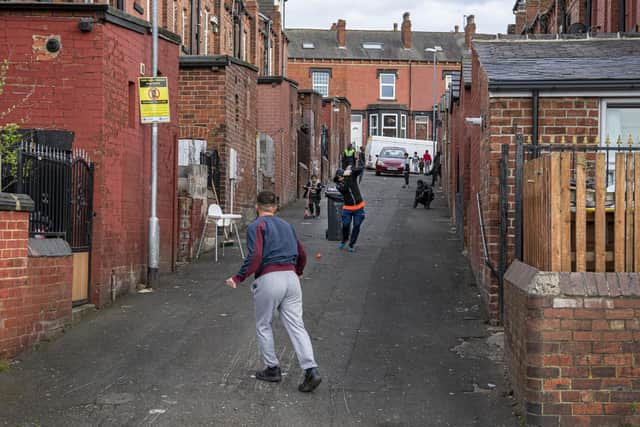

If we weren’t getting stuck into a game of football, we’d be spending hours out in the field playing cricket. If we had the time to get to the tennis court then several hours and no doubt plenty of calories would be burned there.
Life revolved around playing sports. We couldn’t sit still.
But young children’s lives these days seem to be spent staring at screens all day. While parents are at fault for thrusting a phone in their hands at an early age and allowing young minds to be rotted away by social media, years of poor political decisions have also left young families with little choice.
In the most deprived areas, you will be lucky to find a patch of grass without dog foul on it. Nevermind wide expanses of green space to host multiple games of cricket. And good luck finding a tennis court that is well maintained and not suffering from vandalism.
It’s only going to get worse if the current Government gets its way. There’s been a lot of talk about so-called grey-belt land and how that could be used for building much-needed housing. But that could well see patches of grass being eaten up that could have been used by young aspiring sports stars of the future.
On top of this there is also the issue of the cost of taking up sports. Take cricket for example, just acquiring basic kit could set a parent back hundreds of pounds.
Last week, a study from York St John University revealed huge disparities in cricket participation across state and private secondary schools.
The Over and Out? report specifically warned that the traditional hardball format of the game is increasingly out of reach for many young working-class boys.
While boys attending fee-paying schools continue to benefit from high-quality indoor facilities, elite coaching, and regular match play, there has been a significant decline in the teaching and playing of hardball cricket within state secondary schools.
Dr Andrew Scattergood, course leader for PE and sports coaching at York St John University, who led the study, said: “This is not about returning to some romanticised golden age. It’s about ensuring cricket remains a viable, inclusive, and aspirational sport for young people from all backgrounds.
“Without urgent intervention, the hardball game risks becoming the preserve of the privileged few.”
The funding is simply not there to not only provide the necessary kit but also to build teacher confidence and competence.
This obviously shouldn’t be just left to the Government. Sporting governing bodies need to go beyond paying just lip service and open opportunities for all.
But with cricket such a key part of the fabric of this region’s culture, it really is a shame to see that so many are missing out.
And society will be poorer for it. Rather than pursuing the game, young people’s interests will drift elsewhere. I won’t necessarily be towards another sporting pursuit.
On top of all the playing fields being sold off or left neglected, council-run leisure centres have fallen victim to rising costs.
As children, occasionally we’d save up enough pocket money to be able to club together and book a five-a-side court, a game of table tennis or even spend a day at the swimming baths.
Another childhood pleasure that is being taken away from young children today.
How can we expect them to be more active when they don’t have access to the facilities that previous generations enjoyed.
I’m sure there are a few community centres and projects still hanging on but austerity snuffed out many of them in areas of most need. In its wake are societal issues with some children falling into a life of crime.