
How councils need to adapt to a changing political landscape - Sophie Flinders
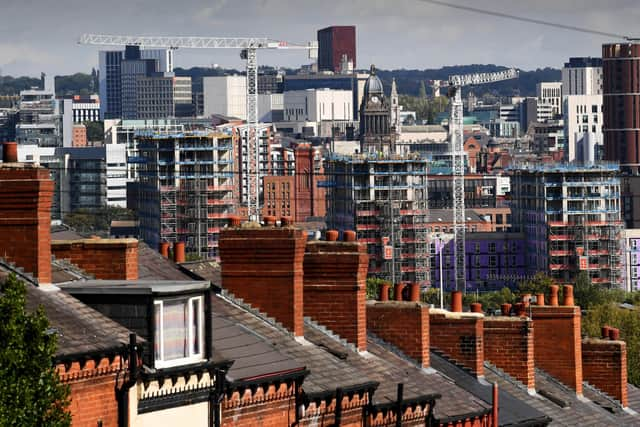
Leeds, like many cities in the UK, is undergoing a transformation, making parts of the city unrecognisable. The site of the former Leeds International Pool is now build-to-rent apartments and luxury student accommodation.
The land that used to house Queens Hall, a council owned iconic music venue which hosted The Beatles and Joy Division, is now a hotel owned by Marrico Asset Management. A building where the council used to provide free, in-person support to help residents find work is now home to an 83 unit development including “Leeds’ first £1,000,000 penthouse” — unaffordable to the vast majority of the city’s residents, where the median salary is £37,800.
The examples are innumerable: across England’s towns and cities, parcels of land are being sold to investors in a property-led development model that favours investors’ profits over affordable housing.
The process driving this transformation is less visible — the unsustainable funding system of local government. At least 42 local authorities, close to one in seven, have accessed the government’s Exceptional Financial Support programme due to unmanageable financial pressures. Local authorities are caught in a vice, with funding pressures from above and rising costs from below.

Local authorities’ fiscal headroom is squeezed from above. Local government faced more severe cuts from the austerity government than any other department. Our research finds that local authorities on average experienced a 30 per cent real terms reduction in central government grants since 2010.
Their headroom is restricted further because of debt servicing pressures. PFI projects are a mistake from the previous generation that saddle councils with debt and interest payments that rise with inflation.
Councils have also increased their leverage by taking out debt to speculatively invest in real estate, like hotels and shopping centres. With the aftershock of the Covid-19 pandemic and decline of the high street, many have backed the wrong horse and are facing trouble servicing this debt.
From below, councils face rising demand and rising costs for their essential services: housing, temporary accommodation and social care. Social care makes up a greater proportion of local authority spending now than it did 15 years ago. But it is not just increased demand, the higher cost of privately provided care aggravates funding pressures.
The largest private providers are making “materially higher profits” than expected in a functioning market. The lack of supply of social services means that local authorities often must accept the prices charged by private companies, as they have a statutory duty to provide care.
Faced with these pressures, local authorities are constrained by a limited set of solutions.
One approach is to replace lost funding by investing in commercial property. While speculative investment can work in the right economic conditions, it amplifies shocks and exposes councils to new financial instability — see Woking, Thurrock and Spelthorne for examples.
Another is to raise council tax. Council tax has increased by 31 per cent between 2020-21 and 2026-27 on average in England. Council tax rises stifle demand, add to cost of living pressures and are experienced unequally — with low-income households facing more of the burden.
The third option is to sell assets. Our research finds that Leeds City Council has raised close to three quarters of a billion (£739 million) in real terms from selling public assets since 2010, and more than half of it was raised in the last six years alone. It is estimated across England that £15 billion worth of land has been sold by councils since 2010.
Initially capital receipts, the term for the money raised through asset sales, could only go towards new capital investment, but as the local authority crisis deepened, the government relaxed its restrictions, accelerating the fire sale.
Since 2016, central government has allowed councils to use capital receipts for “any project that is designed to generate ongoing savings in the delivery of public services”, plainly, this includes funding massive staffing cuts in the name of service transformation, gutting councils by reducing them to their statutory services.
In the current crisis, distressed councils can now use asset sales to fund day-to-day services. The government initially intended for the 2016 policy to be a short-term solution for local government funding pressures, lasting from 2016 to 2019. However, successive governments have extended the policy to 2030, kicking the can down the road.
The public’s tolerance for short-term solutions that act as sticking plasters for complex social problems has run out. The gains made by Reform and the Greens in May’s local elections express a desire for a radically different politics. The answer is to move to a productive state that can tackle cost of living pressures. One that reduces the cost of care by bringing services in house, ending private companies profiting from the most vulnerable. One that cancels the remaining PFI contracts without compensation.
One that, rather than treating land as a financial asset to be liquidated in a crisis, uses public assets for community infrastructure and the kinds of services that make our towns and cities, and our lives, liveable.
Sophie Flinders is a senior data analyst at thinktank Common Wealth