
How did Julian Assange escape being ‘cancelled’, ending up a hero to his online disciples instead? - David Behrens
Finally, Michael Gove was right about something. With no seat to lose and nothing at stake next week, the outgoing MP for Surrey Heath rounded on party colleagues for placing bets on an election date they already knew. It was as bad as Partygate, he said: one rule for them, another for us.

Few disagreed. Four out of 10 under-35s told pollsters they were too disenfranchised to bother voting.
A cabinet minister, Alister Jack, was dragged into the row, even though he’d bet on the wrong date. I didn’t see anything wrong with that. He can’t have had inside information so he wasn’t cheating.
But social media said I was in the minority. And swimming against the tide of online opinion is futile; you risk being shut down if you express views the mob deems unacceptable. JK Rowling can tell you about that.

Social media was supposed to democratise public debate but its capacity to manipulate opinion has done exactly the opposite.
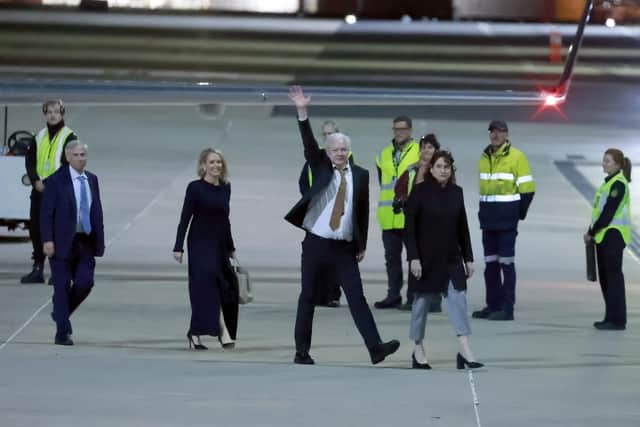
Take the case of Julian Assange: anyone else in public life facing the serious sexual allegations he did would have been ‘cancelled’ as quickly as Prince Andrew. Yet thanks to his army of online disciples he evaded the ‘me too’ movement and arrived home this week a hero. How did that happen?
And who is he anyway? The self-styled truth-teller and leaker of government intelligence who has been in largely self-imposed custody since 2012 is actually a computer hacker who as a teenager gained access to some of the most sensitive US installations, including nuclear weapon labs. In 1991 he was arrested as part of a group called International Subversives on 31 counts of computer-related crime. That rather undermines the messianic reputation he enjoys online; a white knight battling the forces of totalitarianism.
But so much of what we know about Assange is built on fantasy. Even his name is not what it seems. In his native Australian dialect it doesn’t rhyme with blancmange but with flange. It makes him sound less like an 18th century French aristocrat, more like something you find under the sink.
More important is the sexual misbehaviour of which he has been accused. Two women in Sweden alleged he raped and assaulted them and when Swedish officials sought his extradition he hid inside the Ecuadorian Embassy in London, claiming asylum. He wasn’t hiding from oppressive American authorities but from the Stockholm police.
By that time he had reinvented himself as a journalist, publishing under the banner of WikiLeaks sensitive diplomatic information that came into his possession. It became a cult, gaining traction online on the blind assumption that diplomacy is secretive and therefore undesirable.
The reverse is true. Diplomacy is the last defence against war. Where it succeeds, conflict is avoided.
And Assange didn’t seem to mind diplomatic intervention when it was protecting him in his Embassy hotel.
His supporters say his actions exposed US military crimes in Iraq and Afghanistan and that he was doing no more than the work of an inquisitive reporter. Depriving him of his liberty therefore threatened every tenet of press freedom.
But he is a poor ambassador for journalism. With freedom comes responsibility and in particular the duty to consider whether the public interest is served by publication. It is no service to democracy to dump online, as he did, unfiltered information that could well have compromised the western diplomatic alliance on which our defence against terrorism is built.
The clue to how WikiLeaks works is in its name. ‘Wiki’ is the Hawaiian word for fast and that’s how Assange operates. He offers dissenting public servants and whistleblowers a quick and convenient path to publication, no matter what the consequences. No normal journalistic outlet does that and that’s why US Intelligence has been so keen to prosecute him and him alone. They see him not as a journalist but as the teenage hacker he was.
So while his release was hailed in some quarters as a victory for press freedom, it’s stretching a point. The bigger threat to journalism was from Assange himself in abusing his responsibility to publish discriminately, in seeking to undermine the system rather than expose it.
But that’s not the popular view. To the supporters raising the £500,000 for his charter flight home, Assange is a 21st century Che Guevara and criticism of him is as unwelcome as a dog in a game of skittles.
I wonder how those women in Sweden feel about it, though. We may never know, for while he hid from justice all those years, their right to ever get a fair hearing lapsed. Once again, it was one rule for some, another for everyone else.