
How did we allow our healthcare system to become a lottery? - Daxa Patel
Change seems to be the buzzword, but does it mean change for the better? I hope the next government has the courage to go beyond sound bites. Labour will form the next government few people doubt that but they still need to win the public over.
This week we saw the Channel 4 Dispatches program ‘Undercover A&E NHS in crisis’ followed by the live debate on what the solutions could be. The first part was horrifyingly shocking while the live debate chaired by Krishnan Gurumurthy was uninspiring.
But credit to Channel 4 for secretly filming inside a major NHS A&E to remind us of the poor standards, and lack of care.
Not surprisingly, the Tory party refused to take part in the live debate afterwards, so the live debate was free of politicians.
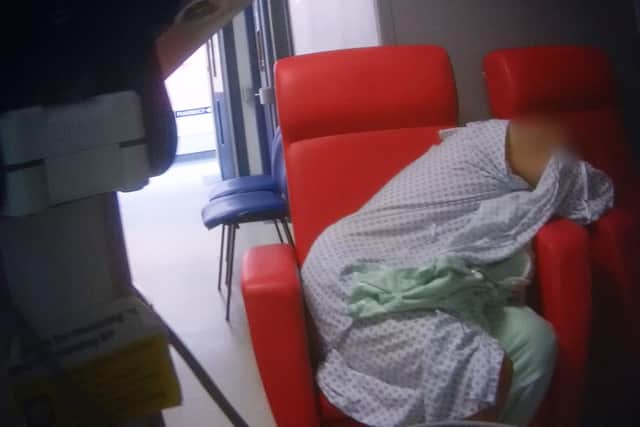

What Channel 4 Dispatches achieved was to remind us of some uncomfortable truths. I suppose, once standards are lowered the desensitisation to shockingly sub-standards of poor care kicks in. NHS England, and the relevant hospital trusts can apologise again, and again, and claim lessons are being learned but this will not improve public confidence in the health service unless we see actual evidence of positive patient experience.
The reminders included patients waiting for more than 24 hours in A&E often with no pain relief or even the basics, like toilets or bathrooms.
The program showed fit and sit areas in A&E with non-medically qualified staff in attendance, and often without supervision, along with poor hygiene care. The delay in treatment of a stroke victim resulting in an avoidable death seems too familiar to me, a clinical negligence solicitor. We heard how a grandma suffered an avoidable death and was not resuscitated because the medical staff said she had a Do Not Resuscitate (DNR) in her notes. It later transpired they had the notes of a male patient instead.
If that is not shocking enough, patients are caught by the ‘drop and go’ and the rapid handover conveyor process as ambulance staff are told not to hang about.
Notwithstanding legitimate arguments of lack of funding, capacity and properly trained staff, it seems as though NHS England have allowed certain hospital trusts to think that their duty of care is to protect their own, so the ambulance services can insist their paramedics ‘drop and go’ even if the patient is left by the side of a bin or a store room without any medical staff aware of the handover. Physician assistants create more paperwork for trained medical staff. The entire system is geared to wear the patient down as opposed to care or heal their pain.
Talented medical staff are leaving the NHS due to stress and burnout because management think they are empowering them to do their job with physician assistants, and we are left with a free health care system which at best is a lottery.
Missing medical notes, patients being left in a state of undress and with no regard to dignity or humanity, no food for people waiting for days in A&E sat on a chair, and no clinical observations plus the excess preventable deaths in A&E, all of this should be a serious cause of concern. Sadly, none of the party share their vision of the future of the NHS. Merely, reducing waiting lists is not going to tackle the bigger issues to medical health care.
We need to end the blame game. Yes, people are living longer, and our lifestyle could be improved. Yes, the pandemic made things worse, but the system has been in a state of crisis for a decade.
Tied into all this is the state of our primary and community health care system. I called the second part of the channel 4 live debate uninspiring because there were no bold ideas, and without potential decision makers in the room, the program served as a reminder only of what patients, and their families face daily up and down the country.
I have come across cases where elderly patients with dementia were discharged by their hospital without informing the family, and that too, in the early hours of the morning. The lack of beds can be due to the problems with social care and housing. How can a modern society like ours tolerate that as acceptable behaviour, and more importantly, what about ‘our’ duty of care to those who cannot fend for themselves?
GPs including pharmacies, community care, and secondary care all need a joined-up approach. Balancing the books is necessary but patient safety must be the focus.
There needs to be a burning desire from the next government to align with other party leaders to change the NHS and return it to what it was meant to be.
Money is not the only solution here. We need to retain talented staff and we need to bring back pride in patient care. Pay our doctors and nurses more so they are not tempted to work in the private sector. Incentivise students with grants on the proviso they must work in the NHS after qualifying. Make mental health care easy to access and bring back midwifery care in the community and provide for palliative care in the home. There is a solution here if we care deeply enough about our healthcare system.
Daxa Manhar Patel is a leadership coach, author and solicitor.