
How different would Britain look today if Labour had chosen Andy Burnham in 2015? - David Behrens
Boy, what a week that was… the temperature hit an all-time record for early summer and Andy Burnham plunged Labour into a meltdown of its own making. But this wasn’t the week just ended; it was 11 years ago.

Ed Miliband, humbled and humiliated by a disastrous election campaign that saw David Cameron returned to Downing Street with the promise of a yes-no referendum on the EU, was about to hand over the party leadership – and Burnham was the heir apparent.
How different would Britain look today if party members had followed convention and picked him instead of the outlier Jeremy Corbyn?
It’s a futile question. We can’t turn the clock back. Yet it was a Sliding Doors moment, a fork in the road at which different, parallel futures were laid out before us, had we but known it. It’s legitimate to wonder what might have been.
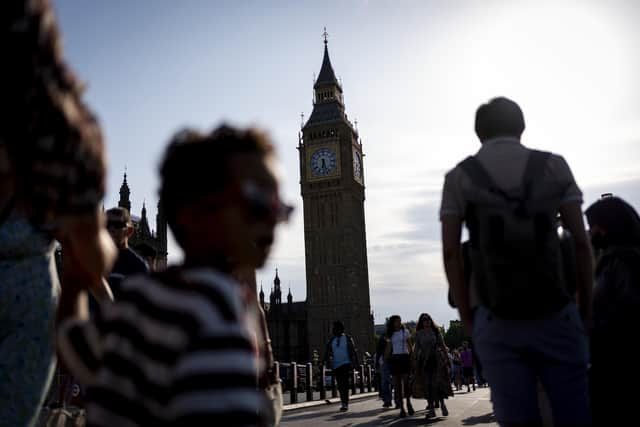

That summer of 2015 was when the rot set in. It took hold in the Brexit vote the following year. Burnham was a Remainer and campaigned as such. Corbyn was a vacillator. He’d voted against the Maastricht Treaty and when asked how he felt about the EU on a scale from one to 10, he grudgingly gave it seven.
Would a coherent Labour campaign in support of its official policy to Remain have swayed more of its core supporters at the crucial time? The result was so narrow that it might easily have tipped the balance.
A great deal has been made this week of the number of Prime Ministers we’ve gone through since then: seven, including Keir Starmer’s successor. They’ve been the silver balls in a giant Westminster pinball machine, each new one flipped from bumper to bumper before finally disappearing down the black hole at the bottom. The day Labour backed Corbyn over Burnham was the day the money went in the slot.
Heatwaves aside, Britain is not the same place as it was in 2015 and nor would it have been if Burnham had taken over Labour that summer. The scars of the last decade run much deeper and wider.
But the extent to which extremism has become an accepted part of the political discourse is a wholly new phenomenon. The range of social ideas that the public finds acceptable at any given time – the so-called Overton window – has been pushed wide open. Partly it’s because social media freely disseminates inflammatory and false information; partly because the mainstream parties have lacked motivational, believable voices of their own.
An Andy Burnham-led Labour Party in 2015 would have not necessarily have prevented the disunity. And Burnham himself was not then as universally popular within the party as he suddenly is today. He had been Health Secretary under Gordon Brown and appeared to many a remnant of a washed-up government whose time had passed. If he hadn’t become Mayor of Manchester he’d have been dancing off against Ed Balls on Strictly.
Yet along with the hapless Miliband, he is the great survivor of the Brown shipwreck. Now they are thrown together as unlikely shipmates, at least until the next mutiny.
Miliband’s tin ear makes him a liability to Captain Andy. For the last two years, in a government that could never make up its mind, Ed was the one constant: he was constantly unpopular. While his colleagues were playing catch-up with public opinion, he was doggedly clinging to a Net Zero agenda that Reform had turned toxic. It almost didn’t matter to him; he’d lost the public’s support in 2015. It was never coming back.
This failure to catch the nation’s mood was what defined the Starmer years. The policies were not wholly wrong but they were communicated so badly that wrong impressions were allowed to fester. When the stink became overwhelming, they were reversed. Starmer’s seesawing was so consistent that even now it is not beyond chance that he will U-turn himself and unresign.
The mistakes were too many and too early. Within four weeks of taking office ministers had stripped pensioners of their winter fuel pittance and given striking public sector staff above-inflation rises. Two two announcements came within minutes of each other, without explanation or context, and they set the tone for what was to follow.
Labour had forgotten what it should have learned from its last successful PM. Tony Blair was narcissistic, authoritarian and Messianic but he knew how to put a message across. And that is what Burnham must do if he is to reverse the meltdown and seize back the initiative from the populist far-Right.
By the way, the heatwave of 2015 was over after a few days, then it rained until September. It didn’t even last as long as a Labour manifesto.