
How do you square forcing young people to do national service with the freedoms that veterans fought for? - David Behrens
The world will fall silent on Thursday and pause for a moment on its relentless path towards self destruction as we remember the sacrifices of those who brought it back from the brink last time. But even in the brief stillness, will we hear the voices of the few who remain?

Doug Baldwin was just 18 when he landed in France, three weeks after D-Day. Captured alone in a Normandy village he was taken prisoner and spent nine months as an enforced labourer in the German coal mines.
“I thought I was going to die, but it didn’t bother me,” he said of his arrest . “I didn’t think it was going to hurt much.”
When he arrived home the week before VE-Day, he was malnourished and starving. His sense of value was forged then and has never left him. Freedom, he said this week, is the key to a good life.
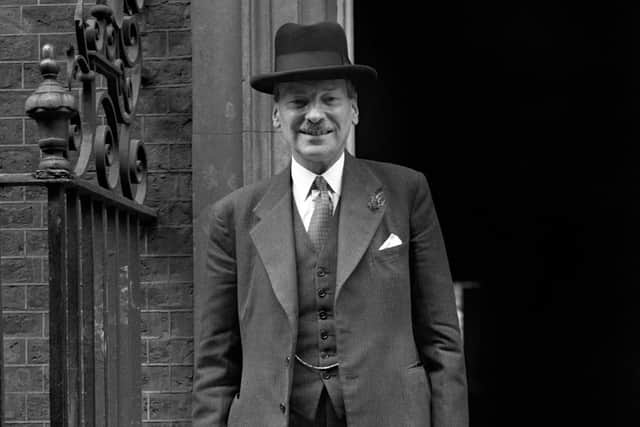

Freedom was what Doug and everyone else of his generation was fighting to preserve. They didn’t want their children and grandchildren to go through what they had. They longed for a time when compulsory military service would be rendered unnecessary.
So how does that dream square with the Prime Minister’s stated intention to bring it back? That’s something to contemplate during the two minutes’ silence.
Rishi Sunak’s apparent plan to return teenage Britain to a world of square bashing and saluting officers raises more questions than it answers. He is trying to court an older electorate who might otherwise be tempted to endorse the ragbag extremist coalition of Reform UK. But he clearly hasn’t thought through the consequences because most of those voters are also grandparents who would be appalled at seeing their family members prevented from studying for their A-levels or enjoying their first year at university.
And while there is undeniably a section of teenage society not in work or in school that would benefit from the type of discipline national service demands, the key word is ‘section’. Imposing a punitive policy on everyone just because they’re 18 is as unjust as it is impractical.
More fundamentally still, the policy betrays a misunderstanding on the PM’s part of what it means to be an older voter. Mr Sunak and his eager young advisors have fallen into the trap of stereotyping everyone of a certain age as selfish, easy prey to promises of quintuple-locked pensions and blind to the struggles of those around them.
This is a dangerous political gambit. Younger voters – especially those with kids – will accuse the PM of sacrificing their children’s future to appease bigots within his own party. That in turn could expose older voters to the kind of prejudice currently reserved for other minorities.
The reality is that most of us – I suppose I must include myself in Sunak’s target demographic – are worried more for those we will leave behind than for ourselves. With the world stuck in reverse gear, how could we not be?
It was a similar sentiment that precipitated the Labour landslide last time we had a July election. That was in 1945, a few weeks after Doug Baldwin set foot back in Britain. His generation had fought to save Britain but they were looking forward, not back. They wanted their legacy to be a country that embraced change.
No such positive energy exists today. After a decade of broken promises and pie-in-the-sky policies we can use the election to hold to account those we consider responsible but we cannot endorse a new way forward because no party has envisioned one.
Sir Keir Starmer, our likely PM five weeks from now, is a pragmatist not a visionary – and while that’s not ideal I suppose it’s preferable to a sleight-of-hand merchant like Boris Johnson, a cut-price conjurer trying to pull flags out of thin air even though you can plainly see him stuffing them up his sleeve.
Yet Starmer could usefully borrow one tactic from Johnson – and from his own predecessor Clement Attlee in 1945 – in articulating a simple idea people can rally behind. Get Brexit Done. New Labour, New Britain. Labour Isn’t Working. Those were the slogans that won elections and next to them, Starmer’s ‘We’ll get back to you on that’ doesn’t really cut it.
Attlee in particular had two pitches to post-war voters: a national health service and what he called his “non-stop drive to provide a good home for every family” and both of those ambitions remain relevant today. Perhaps more so than at any time since.
That’s why the best service any politician can pay Doug Baldwin’s generation is to deliver the kind of Britain they risked their lives to protect; not pander to their imagined worst instincts by chipping away at the very freedoms they won for us.