
How Jo Cox stood out as a politician and why her message is more important than ever - Ismail Mulla
Oftentimes when you meet people in public life, you come away from said meeting uninspired. Politicians that have had every ounce of personality coached out of them. Bland bureaucrats who are so hung up on giving the most risk-averse answer to questions from journalists. Supposed leaders who defer to pre-prepared statements.

But on the rare occasion that you do encounter someone with a bit of spark about them, their star does shine in a sea of blandness.
Jo Cox was someone who certainly had a spark about her. I was still taking the first steps in my journalistic career when the Labour party made the decision to implement an all-women shortlist to select their parliamentary candidate for the Batley and Spen constituency in 2015 after long-serving MP Mike Wood announced he was standing down.
He was a solid MP. Having served the people of Batley and Spen since 1997, Mr Wood had a great reputation as a constituency first MP.
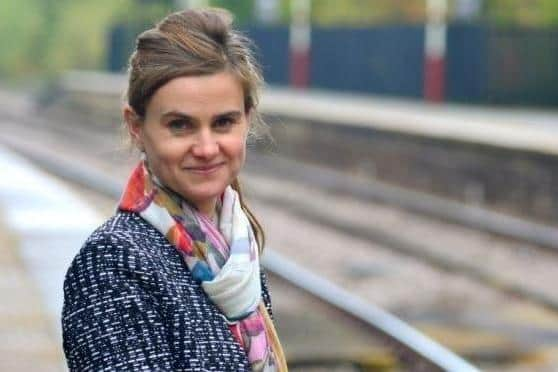

Upon announcing the decision, he said it would “allow the Labour party to find a new, younger candidate to carry on the work here”.
In stepped Jo Cox. She was young and pledged to carry on the work of Mr Wood. But she had even bigger ambitions.
When she was chosen as the parliamentary prospective candidate (PPC) for Batley and Spen, there was a storm in the tea cup. The men in the local Labour party were not happy at the decision to select the next candidate from an all women’s shortlist. However, the decision would prove to be the correct one.
My first encounter with Jo was when a contact of hers reached out about getting an interview with the little community magazine that I was working for at the time. Jo was keen on being heard by the people of Batley and Spen.
For the remainder of my time there Jo herself would be in direct contact with me with ideas she had for campaigns and columns she wanted to pen.
The thing that struck me immediately during our first chat was the energy that she had. There was no way that you could fake such enthusiasm for Batley and Spen. She said all the right things without sounding like it had been scripted by some political adviser in London.
Jo told me that she wanted to champion Batley as the bedmaking capital of the world. She spoke of how she wanted to bring the community together and why diversity was so important to Batley and Spen. She understood the challenges young people in this former mill town faced, having grown up there herself.
And she didn’t shy away from her own personal political ambitions, saying that she would be open to potentially serving in any future Labour Cabinet and wanted to be a regular on Newsnight pushing the issues that affect her constituents and the country at large.
For people in a small town like Batley, this was new, it was refreshing, it was exciting. Little wonder after that interview and several that she did subsequently with other journalists led to a groundswell of support in her constituency.
Here was a young woman who was on a journey and she was going to bring her people along with her on it.
As we approach the tenth anniversary of her death, I dug out some old emails that I had from her. She expressed her desire to run campaigns to stop Dewsbury and District Hospital from being downgraded, regenerating Batley town centre and housing.
Rewind to ten years ago to that fateful day on June 16. I still remember the day vividly. It was grim and wet. I’d just done an interview with the chairman of the bedding firm John Cotton Group in the morning and headed home to write it up. He talked about how the success of his firm in Mirfield went hand-in-hand with that of the bed manufacturers down the road. My mind immediately went to Jo’s words.
By the time I had got home and started writing the feature I was tasked with, news started filtering through about Jo Cox’s murder. It left me and fellow colleagues feeling numb. How could this happen? That too while she was conducting a constituency surgery.
Her death came against a febrile backdrop. The Brexit referendum campaign was in full swing.
The bitter irony is that the divisions that had become apparent then have only widened since. The need for politicians to connect with the public has never been more acute. And a decade on from that tragic day, we would do well to remember Jo’s immortal words "We are far more united and have far more in common than that which divides us."