
How our current food and agriculture systems leave us wide open to mass food shortages - Andy Brown
Many years ago I took a group of Inner London students on a trip into the countryside. When I saw some blackberries I picked and ate them. This simple act horrified most of the class. They simply couldn’t understand how I could dare to eat something I’d pulled from the side of a path.
Such a drastic lack of connection with where our food comes may be extreme but it is part of a dangerous pattern of separation between those who grow food and those who consume it.
What we get from the supermarket or the takeaway is frequently highly processed and seriously unhealthy. Sugar, fat and preservatives can all be useful parts of the food chain. Ultra processed meals that routinely contain too much of them are not. It is highly damaging to our health.
Around 15 per cent of our young children are currently living with obesity. By the age of 55 to 64 the number has risen to 36 per cent. One of the key reasons this country has large numbers of people claiming disability benefits is that they are too overweight to work effectively.
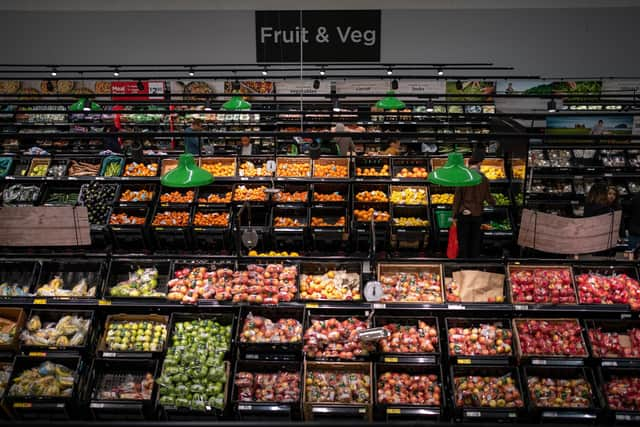

Some of the national obesity crisis is the result of health conditions which cannot be controlled and some of it is the consequence of choices which are made dangerously easy. Much of it is the direct outcome of an increase in consumption of highly processed ready meals and away from eating seasonal products of local origin that are cooked by family members who know how to produce healthy meals.
When Britain went through really challenging food shortages in the Second World War we managed to feed everyone much more healthily than we do now. That was the outcome of mass campaigns to teach people how to cook, strong encouragement to use all available land to produce healthy fruit and vegetables, eating in line with what the seasons provided and a national focus on avoiding waste.
Instead of building on that inheritance we have transformed ourselves into a nation that eats exceptionally badly. At every step in the food chain the pressure is on to weaken the connection between producers and consumers and to downgrade the quality and the healthiness of what we eat.
Farmers face enormous pressures over the price they receive for what they produce that have reached such a peak that a carton of milk in a supermarket will almost always be on offer for less than a bottle of sugar and caffeine ridden energy drink.
Faced with the brutal reality of price pressures it is incredibly hard for mass production farmers to make ends meet and the pressure is on to adopt unpleasant approaches such as mile long fields of heavily sprayed single crops or huge battery farms of cattle that never see an open field or a blade of grass.
The raw foodstuffs that farmers sell to the middle men is frequently transformed into heavily processed junk food that is sold to consumers short on time, money and skills in preparing food.
Somewhere along the line we stopped routinely teaching our young people how to cook what is grown in this country and how to make the best of what is seasonally available. We have many brilliant and highly popular programmes showing us how to produce designer luxury food but no nationally driven approach to educating young people on how to produce good healthy basic food.
Market economics has provided us with a deeply insecure supply system which involves just in time deliveries coming into our supermarkets every day from around the world. Any break in the delicate chain of supply would leave us short of 50 per cent of our food supplies and supermarket shelves would empty at speed.
That leaves us wide open to attacks by malicious actors who choose to target our IT-driven supply chains to punish us for actions such as supporting the brave people of Ukraine. It also leaves us wide open to price shocks when energy prices spike as a result of bad wars started by an American President.
We need to learn from the principles that enabled our war generations to survive serious challenges. That means supporting our farmers to produce much more of what we eat in sustainable ways and our consumers to understand how to make good healthy use of what is seasonally available.
It involves better use of farming subsidies, it involves building stronger direct sales mechanisms that put local farm produce in delivered fruit and veg boxes, and it involves helping our schools to cook food grown by British farmers for most school dinners and to teach all our children how to cook well.
We are often told that the first obligation of the government is to defend our nation. That is only partly true. Its first duty is to feed us, to house us and to keep us secure.
Our current food and agriculture systems leave us wide open to mass food shortages in any serious international crisis and facing a national obesity crisis that has become accepted as the norm.
Andy Brown is the Green Party councillor for Aire Valley.