
How the BBC’s coverage has let down farming and rural communities - Sarah Todd
While the bigwigs at the BBC face the wrath of President Donald Trump over the scandal of fake news it is important that the spotlight continues to shine on the broadcaster.

It is this reporter’s opinion that farming and rural communities are among the biggest victims of this trend towards slanting stories released to the public.
Absolute nonsense about subjects such as the greenhouse gas emissions of cows - more often than not minding their own business eating nothing but good green grass - have long been peddled.
There is a widely held perception among many farming folk that the BBC’s Countryfile has a bias against agriculture; critics arguing it often presents an urban-centric view of rural life.
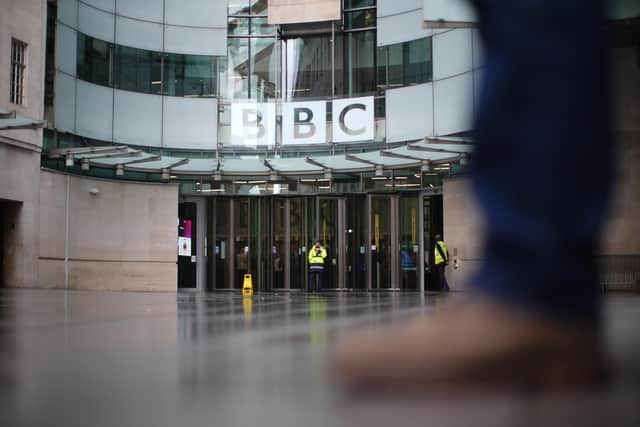

Its ‘coverage’ of all sorts of topics over the years such as badger culling and environmental issues such as pesticide use has led to a strawstack full of complaints.
As far back as 2022 the Countryside Alliance released survey results showing that out of 3,400 respondents an astounding 94 per cent rejected the claim that the BBC covers rural issues fairly and impartially.
At the time, Tim Bonner, who is still the Countryside Alliance’s chief executive, said: “If the BBC are to enjoy the support of rural viewers, it needs to make robust decisions about whether to employ controversial presenters with an overt and aggressive campaigning agenda.
"The BBC must also appreciate that the minority rural audience does not feel fully represented. There is a desire for rural programming for the countryside, not just about the countryside. In short, rural programming should not only take into account what urban viewers may find of interest, it must also showcase the value of important rural activities like farming, shooting, hunting and angling."
When it comes to individual TV programmes, nature-focused content such as Springwatch and Countryfile, came particularly under fire with over 90 per cent of respondents saying that rural issues were inadequately represented. More specifically, 89 per cent felt Countryfile failed to represent the countryside, with 79 per cent saying BBC Radio 4's The Archers also missed the mark.
Back when the Government’s family farm tax was first announced this listener tuned in to hear what David Archer and others down in the fictional farming village of Ambridge had to say on the matter. There was just some lily-livered aside about the need for farm inheritance tax to support the NHS. Absolutely and utterly not a true reflection of the angry and emotional conversations going on in farmyards the length and breadth of the countryside.
Same when it comes to actual news coverage of the first farmer protests down in London. This correspondent can remember writing in this very column about how the BBC went to interview an obviously large-scale farmer down south in prosperous Cirencester in Gloucestershire, around a kitchen table that would have graced any interiors magazine, rather than the type of small family farm that the arguments are mostly about. Back in February, the main BBC News didn’t seem to bother covering this later protest.
There are more tractor demonstrations planned for November 24, just before the budget, so it will be interesting to see how much airtime they are given. The National Farmers’ Union and other rural bodies would do well to take a tough line when it comes to ensuring fair coverage; time to be spinach rather than wet lettuce.
As an aside, it would be churlish not to say how excellent the BBC coverage was of the Remembrance Sunday parade. While watching it, it was hard not to think of how poor King Charles looked like he had the worries of the world on his shoulders.
These last few weeks so-called news has been popping up on my mobile phone, with photographs of various members of the Royal family. It would be untrue to say a ‘story’ about Andrew Mountbatten Windsor’s daughters, Princess Beatrice and Princess Eugenie, wasn’t read. Same with something unkind about the Duchess of Sussex. Over the last few months the amount of intrusion there has been into the Princess of Wales, including speculation about her hair following her cancer treatment, has been appalling.
All this takes us back to where we started and fake news. A resolution is made here and now not to click onto such stories anymore. The way the world is now, it’s becoming increasingly difficult to sort the wheat from the chaff, the real news from the rubbish.
The world’s woke won’t like it, but President Trump deserves our thanks for speaking up on the subject.