
How the new Great British Railways (GBR) risks morphing into the old failed British Rail (BR) - Tony Lodge
British railway history is littered with memorable dates and anniversaries. This year marks the 200th anniversary of the world’s first passenger railway between Stockton and Darlington.
But this year, a less recognised anniversary takes place – but a hugely important one for those who want better trains, value for money tickets, more routes and more choice. It is the 25th year of intercity rail competition on the East Coast Main Line which links Yorkshire with London and where the dominant train operator, LNER competes with two open access high speed train firms, Grand Central and Hull Trains. This successful mixed model occurs on no other main line in Britain.
Britain’s railways are at a watershed. Under privatisation, passenger journeys almost doubled. By the 2010s, private franchises were running three times as many trains between London and Manchester as the old British Rail (BR) had in the early 1990s. During the two decades between privatisation in the early 1990s and the pandemic, passenger journeys increased by 107 per cent and services increased by 32 per cent. During this period, passenger satisfaction in Britain was higher than any other major European railway. Revenue increased by 145 per cent in real terms, compared with only a 16 per cent rise in operating costs and £14bn of private investment was put into improving the train fleet.
The pandemic changed everything. In the year to March just 13 per cent of journeys are now made using season tickets, compared with 34 per cent before the lockdowns. Even though passenger numbers are close to 100 per cent of pre-pandemic levels, revenue is down by £1.4bn and stands at just 89.1 per cent as new working patterns lets commuters travel outside the old peaks. The taxpayer continues to cover an unacceptably high annual subsidy of £12bn for a sector which only delivers 2 per cent of all journeys taken by the public.
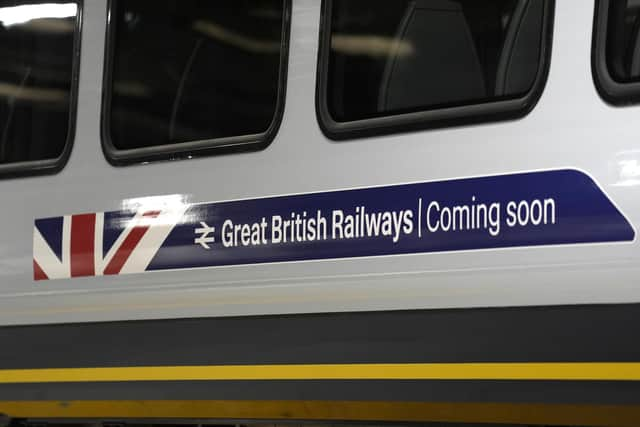

Consequently, ministers must now prioritise growth as they prepare to introduce the plan to create the state-owned Great British Railways (GBR), almost 80 years since Clement Attlee first nationalised rail after the Second World War. Without a ruthless focus on what passengers want alongside a demand-led model, then a spiral of managed decline alongside even higher subsidy, costs and fares could easily take root. GBR risks being a solution in search of a problem and morphing into the ghost of the old and failed BR, unless ministers develop a viable long-term vision to win more customers.
First, ministers should support a competitive model across the intercity high speed network so that GBR trains face on-track competition from non-subsidised ‘open access’ operators. The East Coast Main Line mixed model, where the government-run and taxpayer-backed LNER competes with the privately-run unsubsidised Grand Central and Hull Trains has meant better services, more routes, faster trains and cheaper tickets whilst at the same time bringing more passengers to the route.
LNER has grown quickly where it faces competition, such as at York and Doncaster but where it doesn’t and can charge higher fares – as on its Leeds to London trains – its growth has been notably lower. Importantly, European railways who have copied this successful model have seen a 40 per cent increase in passengers and fare reductions of between 20-60 per cent.
Second, Great British Railways should not regulate itself. In no other comparative and taxpayer dependent sector does the dominant market operator also control and deliver key elements of its own regulation, such as decisions on market access and charging. This could have huge implications for growth, competition and more rail freight. Only last month the Environment Secretary slammed the water companies for “marking their own homework” and pledged to end “operator self-monitoring”.
Third, GBR must adopt an unforgiving focus on making train travel as easy, cheap and user friendly as possible, not least when designing a new GBR ticketing app to replace those of the existing train operating companies. As well as competing with existing and popular ticketing sites it must not be designed by civil servants but instead by the world’s leading retail software leaders. GBR must also deliver a ‘Rail Miles’ loyalty scheme, which is years overdue and can be linked with purchases across hospitality and retail as well as more rail travel.
Fourth, the vast 52,000 hectare railway estate can and must generate much more income. Commercial and residential development, renewable energy generation, light parcel freight, health hubs at stations, alongside a higher quality retail offer are all underutilised sources of income. In particular, potential for lineside solar along swathes of Britain’s 9,848 rail network is a huge untapped opportunity on land the government already owns. We should learn from countries like Japan where one third of all revenue is from non-ticket sources.
Ultimately, rail planners must better appreciate what works and what their customers want. Anything less risks a doom loop of higher fares, fewer passengers and higher costs. It can and must be avoided.
Tony Lodge is a research fellow at the Centre for Policy Studies (CPS). He is author of Rail’s Last Chance – A four-point plan to save the railways published by the CPS.