
How to bridge the gap between employment and education - Ismail Mulla
Too often there is a big gap between education and the world of work. There is this idea that sitting in a classroom, engaging in rote learning ought to prepare youngsters for the next step in their lives but that is clearly not the case.

A recent study by the Institute for Public Policy Research (IPPR) found that only half of 18 to 24-year-olds felt ready for work when they left education.
Large numbers of young people are entering adulthood without the preparation needed to succeed in employment. This only increases the number of young people not in employment, education or training (Neet), which has already reached crisis point. One million young people aged 16–24 are now Neet, this is an 11-year high.
While a lot of the focus tends to fall on the start children have to their education, and rightly so as falling behind can condemn a young person to a life of underachievement, there needs to be greater emphasis on bridging that gap between the classroom and the workplace.
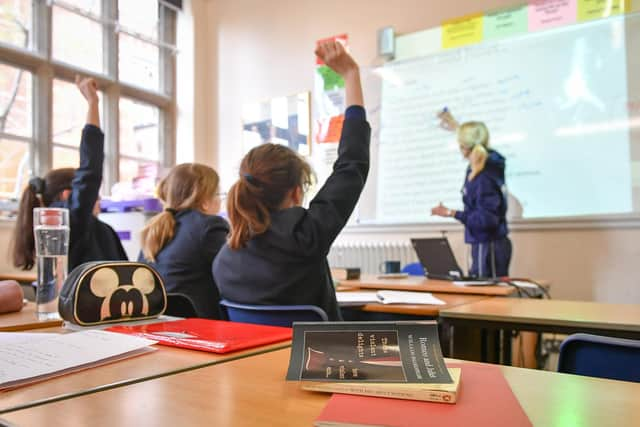

I’ve spoken to many businesses over the years who told me that schools were not producing work-ready youngsters. Some even took it upon themselves to fix this. They would do outreach work, sending in employees to talk to pupils. Bring schoolchildren over for factory tours. Even set up their own academies to plug any skills gaps that exist in their industry.
Pragmatic employers realise that they will never get the finished article when employing young people. Rather it is the potential that they are investing in.
Work experience can be a useful tool for helping young people at the very least understand expectations of the workplace. I cast my mind back to when I was on work experience from school - I ended up in the reprographics department of the local college. It wasn’t related to journalism but it showed me the discipline required in the workplace, turning up on time, making sure tasks were done correctly and dealing with others courteously, even if that wasn’t always reciprocated.
A few years later, while undertaking my degree, I did end up doing work experience at a newspaper, several in fact, and the general soft skills that I picked up stood me in good stead. As the shy and retiring type, I used to struggle striking up conversations with strangers but I knew it was something that I had to do through my time on work experience.
Casting back 15 years, I distinctly remember sitting in the old cavernous newsroom of The Yorkshire Evening Post and being told to contact such and such over the phone. I’d take a deep breath and get to work.
Striking up a conversation may be second nature to many but to introverts it can be difficult.
And that’s why I am not surprised to hear that there are many young people who don’t know how to speak to someone on the phone.
The younger generations have grown up in relative isolation. They spend their time on social media. Opting to communicate through text.
Business owners would often tell me that young people would be riddled with anxiety if asked to pick up the phone. I’ve occasionally seen it in the newsroom first-hand.
More schools are saying that they offer high-quality work experience. However, two in five 18- to 24-year-olds have never completed any work experience. The danger is that inequality will widen.
The high Neet level means that the Government cannot stand to one side and not do anything. If Sir Keir Starmer wants a legacy to pin his name onto, it should be that of building opportunities.
Throwing more maths equations, science conundrums or Shakespearean prose is not necessarily going to equip young people for the world of work. Schools need to open their doors to employers and the Government needs to make space in the curriculum to allow schools the time to focus on work preparedness.
That would not only tackle the Neet issue but also provide a boost to the economy. There are also a variety of social problems that could be circumnavigated.
Education should never just be about theoretical learning but rather inspiring the next generation to be creative in their thinking. They should know that they do fit in the workplace before they even leave the classroom.
One of the biggest influences on my education at school was an art teacher, yet I never had an artistic bone in my body. That’s because he was able to inspire me and countless other pupils with how he treated us and encouraged us to be the best versions of ourselves.